What Is Hydroponics? A UK Beginner's Guide
Written by Matt W on 23rd Jun 2026.
Hydroponics grows plants in nutrient-rich water instead of soil. Roots sit in or above a solution dosed with the minerals a plant needs, so growth is faster and water use drops by up to 90%. Six common systems exist, from passive jars to pumped channels. Indoors you also control light, temperature and airflow, which lets a UK grower harvest salad, herbs and fruit all year.
Key takeaways
- Hydroponics feeds roots a water-based mineral solution, with no soil involved.
- It uses up to 90% less water than soil because the system recirculates the feed.
- Most crops want a solution at pH 5.5 to 6.5 and a nutrient temperature below 22°C.
- Six systems cover almost every grower: Kratky, wick, deep water culture, ebb and flow, drip and NFT.
- Indoor UK growing adds three controls: light at 200 to 400 watts per square metre, steady warmth and constant airflow.
- A complete cabinet bundles the system, light and extraction so beginners skip the guesswork.
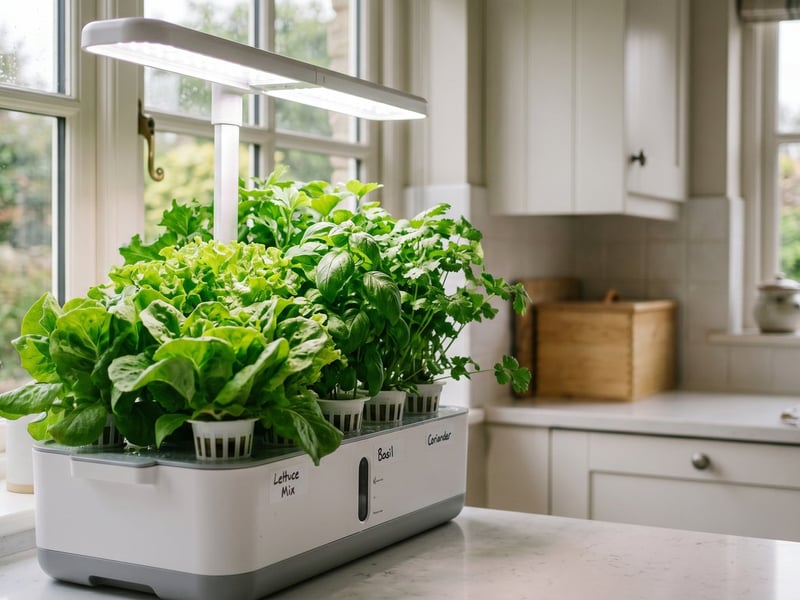
Grower's note: I tell every beginner the same thing. Get the water right and the rest follows. A cheap pH pen and a basic EC meter teach you more in a fortnight than any guide. Hydroponics looks technical, but once you can read the solution, the plants do the work.
- Matt W, Hydroponics UK
What is hydroponics?
Hydroponics is growing plants in water and dissolved minerals rather than soil. The roots take up exactly the nutrients they need from the solution. The plant spends less energy hunting for food and more on growth. Soil is only ever a delivery method for water and minerals. Hydroponics delivers both directly, which is why growth often runs 30 to 50% faster than the same crop in compost.
The word covers a family of methods, not one machine. Some keep roots permanently submerged in oxygenated water. Others flood and drain on a timer, or drip-feed each plant. All of them swap guesswork for measurement. You control the feed strength, the pH and, indoors, the light and climate too. That control is the whole appeal for a UK grower fighting short, grey winters.
How does hydroponics work?
A hydroponic system delivers a measured nutrient solution to the roots and keeps it oxygenated. Plants need oxygen at the root zone as much as they need feed. An air pump, or a film of moving water, stops the roots drowning. The grower mixes base nutrients into clean water and checks the strength with an EC meter. Then they set the pH into the 5.5 to 6.5 band, where most crops absorb minerals best.
An inert medium usually holds the plant upright. Clay pebbles, rockwool and coco coir all do this job without feeding the plant themselves. Our guide to nutrients, pH and EC walks through mixing a first reservoir step by step. Keep the solution below 22°C, because warm water holds less oxygen and invites root rot.
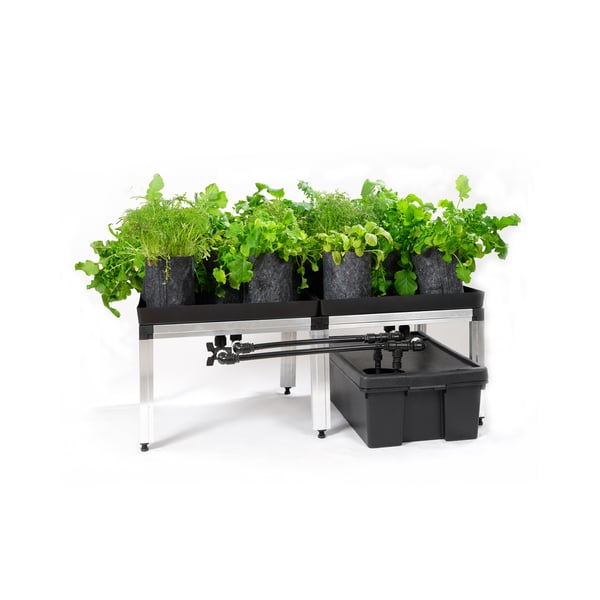
Shop the G-Tools Bonanza 3-in-1 system →
What are the main types of hydroponic systems?
Six systems cover almost every home and small commercial grow. They range from a passive jar with no pump to recirculating channels for rows of lettuce. The table compares them on effort, cost and the crops they suit. Our full systems guide goes deeper on each one.
| System | How it works | Effort | Best for |
|---|---|---|---|
| Kratky | Roots hang into still water, no pump | Lowest | Herbs, single salads, first try |
| Wick | A wick draws solution up to the medium | Low | Houseplants, slow feeders |
| Deep water culture (DWC) | Roots sit in oxygenated water full time | Low to medium | Fast leafy growth, beginners |
| Ebb and flow | A pump floods then drains the tray on a timer | Medium | Mixed crops, trays of plants |
| Drip | Emitters drip feed to each plant | Medium | Larger fruiting plants |
| NFT | A thin film of solution flows past the roots | Medium to high | Rows of lettuce and herbs |
Deep water culture is a friendly first pumped system. Our DWC guide covers reservoirs and aeration. The Kratky method removes the air pump for one short leafy crop.
For moving water, compare ebb and flow with our NFT channel guide.
What do you need to start hydroponics at home?
A working setup needs five things: a system, light, ventilation, nutrients and a way to measure them. Indoors the light replaces the sun, so it is the part most beginners under-buy. Aim for 200 to 400 watts of LED per square metre of canopy. The table below is a sensible first shopping list, with the parts we stock priced live.
| Part | What to look for | Our pick | Price |
|---|---|---|---|
| Complete system | Insulated cabinet with system, light and fan built in | G-Tools Bonanza 3-in-1 | £899 |
| Grow light | 200 to 400 W of LED per square metre | Sanlight EVO 3-100 | £455 |
| Extraction and filter | Fan matched to tent volume, plus carbon filter for odour | G-Tools PK2601 Eco Carbon Filter | £81 |
| Nutrients and meters | Two-part base feed, a pH pen and an EC meter | See our nutrients guide | from £8 |
Matt's Pick: G-Tools Bonanza 3-in-1
Best for: a beginner who wants one box, not a parts list
Why we rate it: the cabinet, light and extraction arrive matched and pre-wired. There is no sizing maths and no airflow guesswork on day one.
Price: £899
Watch out: nutrient temperature. The single most common beginner failure is warm solution. Above 22°C the water holds less oxygen, roots turn brown and slimy, and growth stalls within days. Keep the reservoir out of direct light and top up with cool water. Add an air stone before you blame the nutrients.
Where should a beginner go next?
Choose a method before buying separate parts. The six-system comparison narrows the method by crop and maintenance.
Then use our hydroponics starter-kit guide to compare current complete systems and missing equipment.
Is hydroponics worth it in the UK?
For year-round fresh food in a small space, yes. A 1m² cabinet can run a rolling harvest of salad and herbs all winter. No outdoor bed in Britain could match that. Running costs are mostly the light. A modern LED drawing 150 watts for 16 hours a day costs roughly 70 to 90 pence. A small grow runs at a few pounds a week.
The trade-off is attention. Soil forgives a missed watering; a hydroponic reservoir does not forgive a failed pump on a hot day. Start small and grow one easy crop before you scale. Many beginners start with a tray of microgreens to learn the rhythm. Lettuce in deep water culture is the natural next step.
We stock G-Tools and Sanlight because they take the failure points out of a first grow. Insulated cabinets hold temperature steady. Modular lights swap modules rather than ending up as landfill. Matched extraction keeps humidity in check. For most UK beginners, one complete cabinet beats a box of mismatched parts.
- Matt W, Hydroponics UK
Frequently asked questions
Is hydroponics better than growing in soil?
It is faster and cleaner, but needs more attention. Hydroponic crops often grow 30 to 50% quicker and use up to 90% less water. In return you check the solution regularly and rely on a working pump.
What can you grow hydroponically in the UK?
Salad, herbs, microgreens, strawberries, tomatoes and chillies all do well. Leafy crops are the easiest start. Fruiting plants need stronger light and a bit more experience.
Do I need special water for hydroponics?
UK tap water is fine for most growers after adjusting pH. Let it stand to off-gas chlorine, then set the pH to between 5.5 and 6.5. Hard-water areas may want a filter for fussy crops.
How much does it cost to run a hydroponic grow?
The light is the main cost, usually a few pounds a week. A 150 watt LED, run 16 hours a day, costs about 70 to 90 pence daily.
Is hydroponics hard for beginners?
No, if you start with one easy crop and a complete kit. Deep water culture lettuce or a microgreen tray teaches the basics with little kit.
How often do I change the nutrient solution?
Most growers refresh the reservoir every one to two weeks. Top up daily, check EC and pH, and change fully when the readings drift.