LED Grow Lights UK: Running Costs and How to Choose
Written by Matt W on 12th Jun 2026.
LED grow lights cost far less to run than most UK growers expect. At the current 28p per kWh, a 54W LED on a 16-hour day uses about 24p of electricity. A 20W bar over a microgreens shelf uses 9p. The numbers that matter when buying are chip efficiency, which should sit above 3 µmol/J, and honest wattage. This guide works through real running costs and the Sanlight range we stock.
Key Takeaways
- Electricity cost is watts x hours x unit rate. A 54W light for 16 hours at 28p/kWh is 24p a day, about £7.35 a month
- Chip efficiency above 3 µmol/J is the line between a modern fixture and an expensive heater
- Leafy greens and herbs need roughly 100 to 200W of efficient LED per m². Fruiting crops want 250 to 400W per m²
- A 600W HPS costs around £2.02 a day on a 12-hour cycle. An LED giving similar usable light runs at roughly half that
- Quality LEDs hold 90% of their output after 50,000 hours, so there are no yearly bulb swaps
- Dimmers matter: seedlings under a full-power flagship fixture get bleached, not bigger
Grower's Note
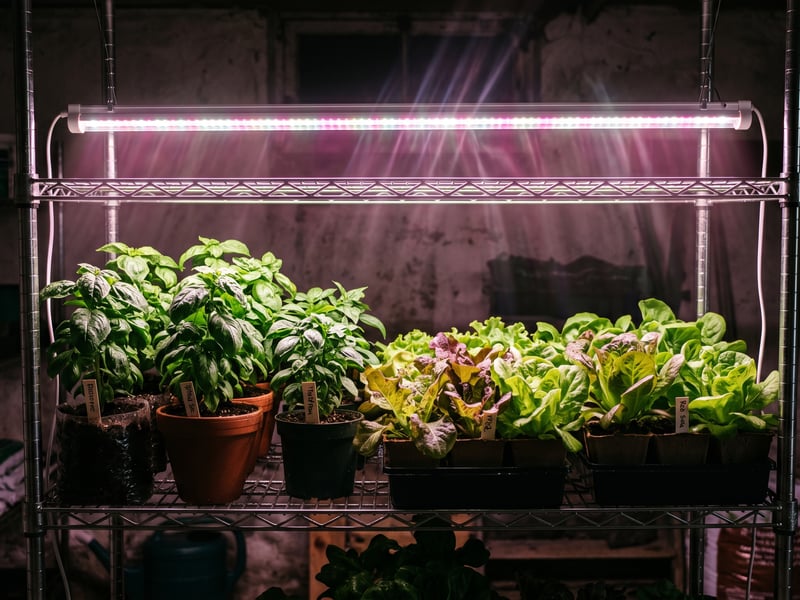
Ignore the marketing wattage on the box and find the draw wattage in the spec sheet. Cheap fixtures are sold on the wattage the chips could theoretically take, not what the driver delivers. The Sanlight gear we stock publishes draw figures: a Stixx 50 pulls 54W, a Flex II 20 bar pulls 20W. Those are the numbers your electricity meter sees.
How much does an LED grow light cost to run in the UK?
Take the fixture wattage, multiply by hours on, divide by 1,000, then multiply by your unit rate. That gives the daily cost. At 28p per kWh, which is close to the current price cap, the maths comes out like this:
| Fixture | Draw | Hours per day | Cost per day | Cost per month |
|---|---|---|---|---|
| Sanlight Flex II 10 | 10W | 16 | 4.5p | £1.34 |
| Sanlight Flex II 20 | 20W | 16 | 9p | £2.69 |
| Sanlight Stixx 50 | 54W | 16 | 24p | £7.26 |
| Sanlight EVO 4-100 | 265W | 12 | 89p | £26.71 |
| Sanlight EVO 6-150 | 400W | 12 | £1.34 | £40.32 |
| 600W HPS (for comparison) | 600W | 12 | £2.02 | £60.48 |
Two things jump out. Small bars cost pennies, so lighting a propagation shelf or microgreens rack is never the expensive part. And the old 600W HPS habit costs more per month than most of our LED bars cost to buy.
What does µmol/J mean and why does it matter?
Micromoles per joule measures how many photons of usable light a fixture makes from each joule of electricity. It is the efficiency figure for grow lights, the same way miles per gallon works for cars. A fixture at 3 µmol/J produces half as much light again as one at 2 µmol/J on the same electricity bill.
Every Sanlight fixture we stock, from the £138 Stixx 50 upwards, uses chips rated above 3 µmol/J. That single spec is why a smaller, better light often beats a bigger, cheaper one. You pay for photons, not watts.
How many watts of LED do you need?
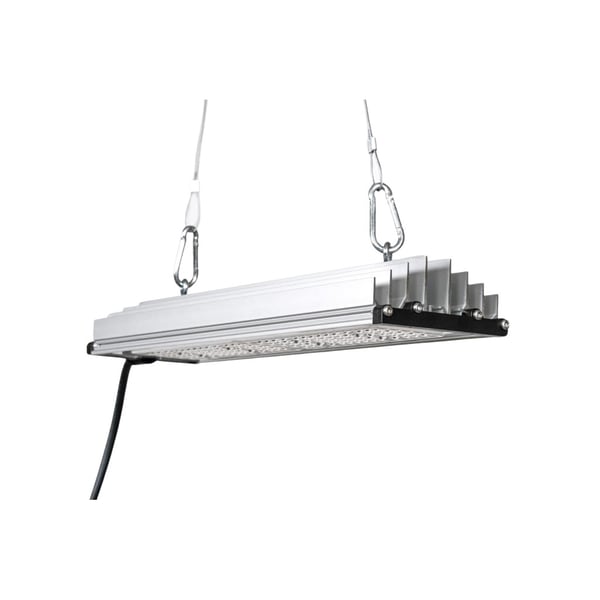
For leafy greens and herbs, plan on 100 to 200W of efficient LED per square metre. Fruiting crops like tomatoes and chillies want 250 to 400W per square metre. Microgreens and cuttings need far less, around 10 to 20W per shelf from a low bar mounted 15cm above the trays.
Those figures assume an enclosed, reflective space. An open shelf in a bright room wastes a share of its light into the room, which is one of the quieter arguments for an enclosure. Our comparison of grow cabinets and grow tents goes into reflectivity and heat in detail.
|
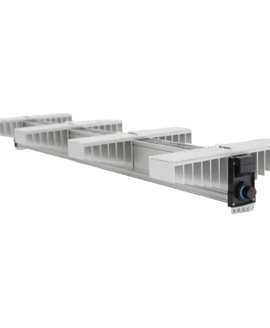
Matt's Pick for a 1m² CabinetBest for: serious crops in a 1m² grow cabinet or tent Why we rate it: the EVO 4-100 pairs chips above 3 µmol/J with 90° lenses, so the light lands on the canopy instead of the walls. The LED modules are replaceable, which means the fixture outlives the chips. Add the plug-in dimmer and it covers seedling to harvest. |
LED vs HPS: is the switch worth it?
Yes, and you can put real numbers on it. A 600W HPS on a 12-hour flowering cycle costs about £60.48 a month at 28p/kWh. The 400W EVO 6-150 is the standard swap for that lamp, with a higher photon output, and it costs £40.32 a month on the same cycle. That is £242 a year saved, so the fixture pays for itself inside three years. Bulbs shorten that further.
HPS bulbs lose output and need replacing every few cycles. The Sanlight chips hold 90% of their brightness after 50,000 hours, which is over eight years at 16 hours a day. Heat is the other difference. An HPS in a small space forces you into bigger extraction fans, and the fan has its own running cost. Our guide to grow room ventilation shows how lamp choice drives fan size.
Grower's Tip: light burn without heat
LEDs run cool enough to touch, so growers hang them too close and wonder why leaves bleach white. That is light burn, not heat burn. Respect the minimum hanging distance: 15cm for the Flex II bars, more for the big EVO fixtures at full power. If your light has a dimmer, start seedlings at 40% and work up.
Which Sanlight model fits your space?
Match the fixture to the job, not the budget to the biggest light. This is how the range we stock splits up:
| Model | Draw | Best for | Price | Verdict |
|---|---|---|---|---|
| Propagation light bar | Low power | Propagation shelves, microgreens racks | Compare current models | Use several bars for even shelf coverage |
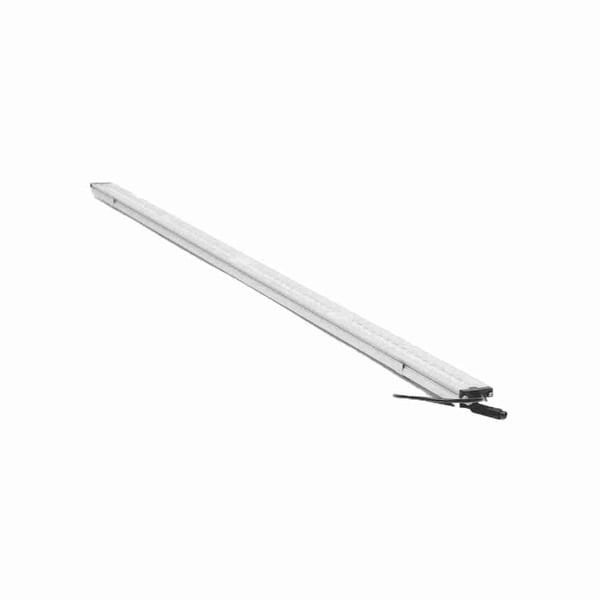
| Flex II 20 | 20W per bar | 1m shelves, multi-tier growing | £84 | 995mm bar, daisy-chains off one driver |
| Stixx 50 | 54W | Small cabinets, herbs, leafy greens | £138 | Silent, IP68, dims 10-100% |
| High-output LED | Match to the grow area | 1m² cabinets, fruiting crops | Compare current models | Choose by coverage map, not headline wattage alone |
| EVO 6-150 | 400W | 1.5m² and larger spaces | £815 | 1,090 µmol/s, the most light in the range |
If you are lighting a kitchen herb shelf rather than a cabinet, start smaller than you think. A single Flex II bar over a salad tray transforms winter growth for pennies a day. Our guide to growing herbs and salad indoors all year builds a full setup around exactly that.
"We stock Sanlight because the engineering is honest. Published draw wattage, chips above 3 µmol/J, and modules you can replace instead of binning the fixture. An LED you keep for ten years is cheaper than two you replace in five."
- Matt W, Hydroponics UK
Frequently asked questions
How much electricity does a grow light use per month?
Between £1.34 and £60 a month depending on wattage. A 10W bar on 16 hours costs £1.34 a month at 28p/kWh. A 54W LED costs about £7.26. A 600W HPS on 12 hours costs around £60.
Can you use a normal LED bulb as a grow light?
Not for real results. Household bulbs are tuned for human eyes, not photosynthesis, and a 10W ceiling bulb spreads its light everywhere. Purpose-built bars put a usable spectrum exactly where the canopy is.
How many hours a day should a grow light run?
Sixteen hours suits leafy greens, herbs and seedlings. Microgreens manage on 12 to 14. Fruiting crops typically run 18 hours in vegetative growth, then 12 in flower. A £129 Wi-Fi timer makes the schedule automatic.
Do LED grow lights wear out?
Slowly, over decades rather than seasons. Sanlight rates its chips at 90% output after 50,000 hours. At 16 hours a day that is more than eight years before you would notice the difference.
What is a good efficiency for an LED grow light?
Above 3 µmol/J is the standard worth paying for. Budget fixtures often sit nearer 2 µmol/J, which means a third more electricity for the same growth. The figure is in the spec sheet, and a missing figure is its own answer.
Is it expensive to start growing under lights in the UK?
No. A lit propagation shelf starts under £50. A Flex II 10 bar costs £42.50 and pennies a day to run. Costs rise with ambition, not with getting started.