Growing Herbs and Salad Indoors All Year in the UK
Written by Matt W on 12th Jun 2026.
You can grow herbs and salad indoors all year in the UK, but not on light from a window. Between October and March the daylight is too short and too weak, and basil on a winter windowsill dies slowly rather than grows. The fix costs pennies: a 20W LED bar over a salad tray uses 9p a day at 28p per kWh. With one lit shelf, loose-leaf lettuce gives a first cut in 28 to 40 days and three or four cuts after that.
Key Takeaways
- UK winter daylight drops to around 8 hours in December, and the strength through glass is a fraction of summer sun
- A 16-hour LED day fixes it: 9p daily for a 20W bar over one tray, 24p for a 54W light over a small shelf
- Loose-leaf lettuce, rocket and spinach are cut-and-come-again: one sowing feeds you for two months
- Basil wants 18 to 24°C and constant light. It is a grow-shelf herb in winter, never a windowsill one
- The G-Tools Kitchenfarm runs a full salad and herb supply on water and electricity, in under an hour a week
- Harvested trays keep up to 7 days in the fridge, so a two-floor unit covers a household continuously
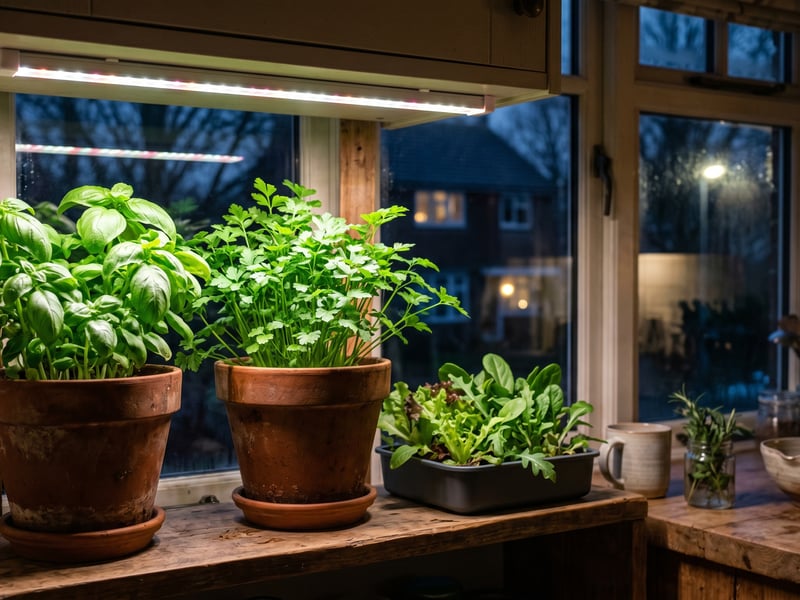
Grower's Note
Supermarket basil is bred and grown to look good for five days on a shelf, not to live on a windowsill. It arrives root-bound, twenty seedlings crammed in one pot, and it was always going to collapse. Sow your own seed under a cheap LED bar instead. The plant that grows up under that light is a different organism: compact, dark-leaved and genuinely perennial indoors.
Can you grow herbs indoors all year in the UK?
Yes, with light, and mostly no without it. From April to September a south-facing windowsill genuinely works for parsley, chives and mint. The other half of the year is the problem. December gives the UK about 8 hours of weak daylight, window glass cuts it further, and warmth-loving herbs like basil stall below 18°C however bright the sill looks.
The honest answer is that year-round indoor growing is a lighting question first and everything else second. A small LED bar on a 16-hour timer turns any shelf into a stable summer day, every day, for less than the cost of a text message. Our full breakdown of LED grow light running costs puts exact numbers on every fixture we stock.
Which herbs grow best indoors?
Basil, chives, parsley, coriander and mint cover most UK kitchens, and they split neatly by temperament:
| Herb | Likes | Sowing to first picking | Verdict |
|---|---|---|---|
| Basil | 18-24°C, 16h light | 4-6 weeks | Matt's Pick: the herb that repays a grow light most |
| Chives | Cool, moist, undemanding | 6-8 weeks | Nearly unkillable, regrows from every cut |
| Parsley | Cool, deep pot | 8-10 weeks (slow to germinate) | Soak seed overnight, then patience |
| Coriander | Cool, 14h light max | 4-5 weeks | Bolts in heat: sow little and often |
| Mint | Anything, anywhere | From a cutting in 3 weeks | Own pot always, it annexes neighbours |
Coriander is the one that surprises people. It hates the warmth that basil loves, so the two should sit at opposite ends of the shelf, coriander furthest from the light's warmth and sown fresh every three weeks.
How do you grow salad leaves indoors?
Sow loose-leaf varieties in a tray, give them 14 to 16 lit hours, and cut the outer leaves once plants reach 10cm, leaving the growing centre intact. The same plants regrow for another cut in 10 to 14 days, and a single sowing gives three or four harvests over roughly two months. Loose-leaf lettuce, rocket, spinach and mizuna all work this way.
Keep two trays running a fortnight apart and the rotation never breaks: one tray in cutting, one coming on. If you want speed over volume, the same shelf grows a tray of radish shoots in a week flat, and our guide to growing microgreens at home covers that whole fast lane, seed rates included.
|
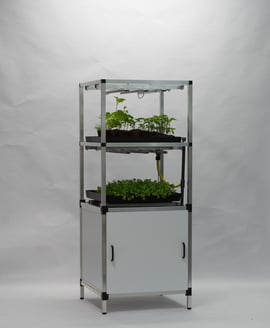
Matt's Pick for Hands-Off SaladBest for: a household salad supply without daily attention Why we rate it: the Kitchenfarm takes everything on this page and puts it in one fridge-sized cabinet: two lit floors totalling 0.54m², watering handled, inputs limited to water and electricity. It asks for under an hour a week, and harvested trays keep 7 days in the fridge. A third floor bolts on when you outgrow two. |
What does an indoor salad shelf cost to run?
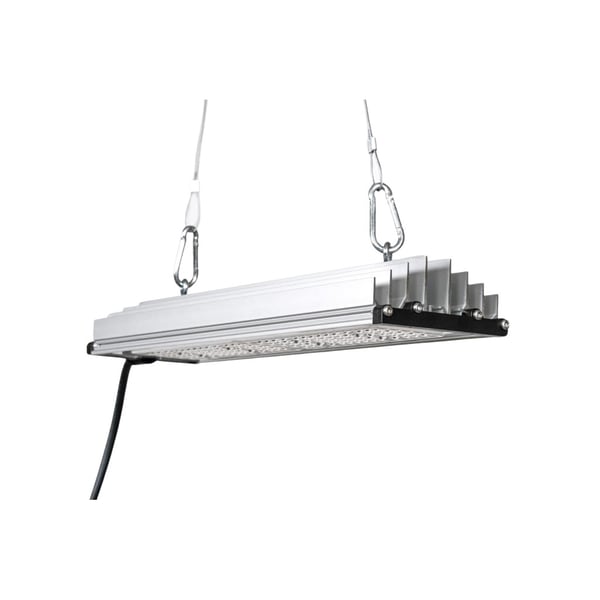
Less than the salad it replaces. A 20W Flex II bar on 16 hours costs 9p a day at 28p per kWh, which is £2.69 a month. A 54W light over a bigger shelf costs £7.26 a month. Set that against two supermarket salad bags a week at around £1.50 each and the electricity already wins, before counting the herbs that no longer die in pots on the windowsill.
Seed is the forgotten bargain in this sum. A £2.50 packet of loose-leaf lettuce holds several hundred seeds, which is more salad than most households eat in a year. The marginal cost of each tray after the kit is pence.
Grower's Tip: give salad shelves moving air
Tight rows of leaves on a warm shelf create a still, humid pocket, and that is where grey mould starts. A small USB fan on its lowest setting, angled across the trays rather than at them, keeps leaves dry and stems sturdy. In an enclosed cabinet this job is done by the extraction system, which is engineered in from the start.
How do you scale up to feed a family?
Vertically. Salad and herbs are shallow crops, so the answer is shelves, not floor space. A grow rack with a low-wattage bar per tier turns one square metre of floor into three or four square metres of growing surface. The 150-litre light-proof tank is sized to slide under the bottom tier and feed the lot.
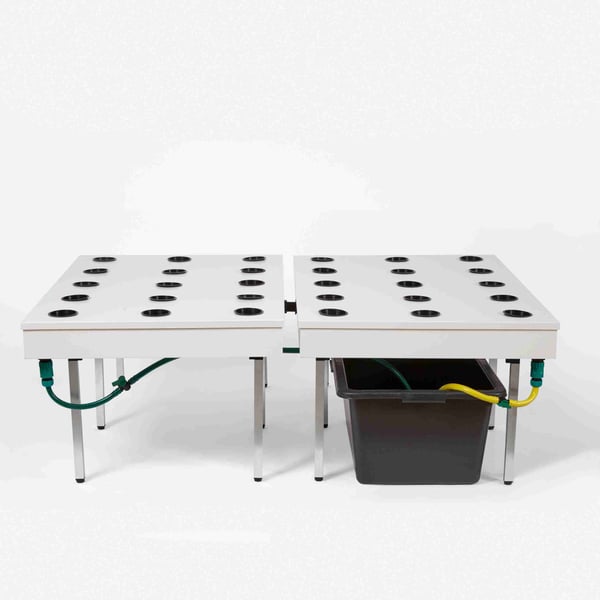
The step beyond that is circulating hydroponics. The G-Tools Flow systems stand lettuce in net cups over a constantly moving nutrient stream, from £735, and the growth rate over trays of compost is startling. No substrate also means no compost bags in the kitchen and nowhere for fungus gnats to breed. For a fully enclosed version of the same idea, our comparison of grow cabinets and grow tents sets out the options at every budget.
"The Kitchenfarm is the product we point at when someone says they kill every herb they buy. Two lit floors, water and electricity in, salad out, under an hour a week. It removes every reason the windowsill failed: light, warmth, watering and attention."
- Matt W, Hydroponics UK
Frequently asked questions
Why does supermarket basil always die indoors?
Because it is twenty crowded seedlings sold as one plant. The pot is root-bound on arrival and collapses within weeks. Seed sown under a grow light produces a compact plant that lasts months.
How many hours of light do herbs need indoors?
Fourteen to sixteen hours a day under LED. Basil takes the full sixteen. Coriander prefers fourteen and cooler air, or it bolts to seed early.
Can you grow salad indoors in winter in the UK?
Yes, under a grow light it grows as well as in May. A 20W bar on 16 hours costs 9p a day and keeps loose-leaf lettuce, rocket and spinach in continuous production.
How long does cut-and-come-again lettuce keep producing?
Three or four cuts over about two months. Cut outer leaves at 10cm and leave the centre growing. Resow a second tray a fortnight behind the first for an unbroken supply.
Is growing salad indoors cheaper than buying it?
Yes, once the light is on the shelf. Electricity for a tray costs under £3 a month against £12 or more on supermarket bags, and a seed packet lasts a year.
What temperature do indoor herbs need?
Most are happy at normal room temperature, 16 to 22°C. Basil wants the warm end and steady light. Coriander, parsley and chives prefer the cool end of the room.