Ebb and Flow Hydroponics: How It Works and What You Need
Written by Matt W on 12th Jun 2026.
Ebb and flow is the most forgiving hydroponic system a beginner can build. A pump floods a tray with nutrient solution 2 to 4 times a day, then gravity drains it back to a tank below, pulling fresh air to the roots as the water recedes. A complete setup costs from about £195: a moulded tray from £31.50, a table to stand it on, and an automatic kit with tank, pump and timer-ready wiring.
Key Takeaways
- Flood and drain works because roots want both water and oxygen. The drain phase is feeding time for air
- A typical schedule is 2 to 4 floods a day of 10 to 15 minutes in clay pebbles, fewer in rockwool
- G-Tools trays run from £31.50 (0.52 x 0.52m) to £89.95 (2 x 1m), moulded in UV-resistant virgin plastic
- The automatic kit adds a 36-litre tank, GT 800 pump and adjustable flow taps for £149.95
- Keep solution at pH 5.5 to 6.5 and EC 1.2 to 2.0 for leafy crops
- The 1.1 x 0.63m tray drops straight into a Bonanza 1m² grow cabinet
Grower's Note
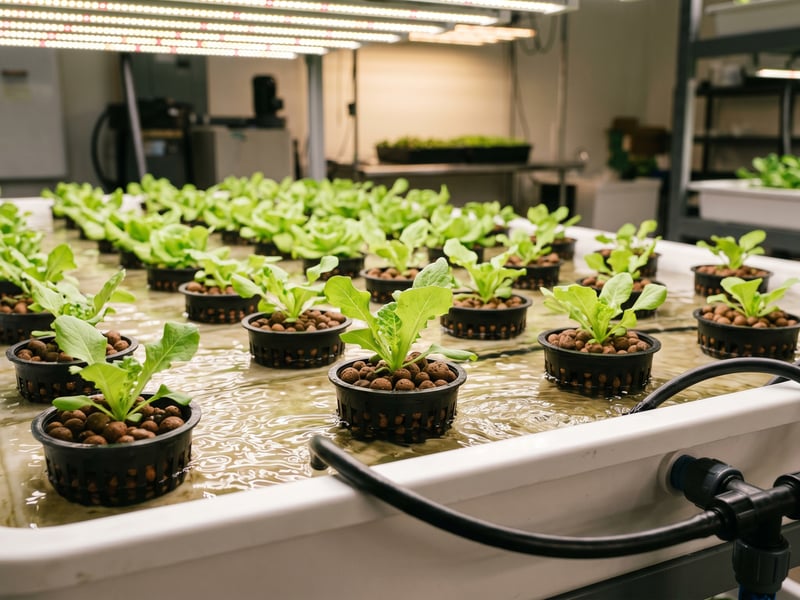
People overcomplicate hydroponics because the word sounds technical. Ebb and flow is a tray, a tank and a pump on a timer. The plants sit in pots of clay pebbles. Water comes up, water goes down, four times a day. If you can set a plug timer, you can run this system. Where beginners actually go wrong is skipping the cheap pH pen and wondering why growth stalls in week three.
What is ebb and flow hydroponics?
Ebb and flow, also called flood and drain, is a hydroponic method where plants stand in a watertight tray that periodically fills with nutrient solution and then empties again. A submersible pump in a tank below pushes solution up into the tray. When the pump stops, the same pipework drains everything back down by gravity.
The cleverness is in what happens during the drain. As the water level falls, it pulls fresh, oxygen-rich air down through the root zone. Roots get a drink and a breath in every cycle, which is exactly the balance soil growers spend years learning to judge by hand. That built-in margin for error is why we point first-time hydroponic growers here rather than at more sensitive systems.
How does a flood and drain cycle work?
A standard cycle floods the tray for 10 to 15 minutes, then drains for the rest of the period. In clay pebbles, which hold little water, run 2 to 4 floods spread across the lit hours. In rockwool, which stays wet far longer, one or two floods a day is plenty. Never flood during the dark period: cool, wet, dark roots are an invitation to rot.
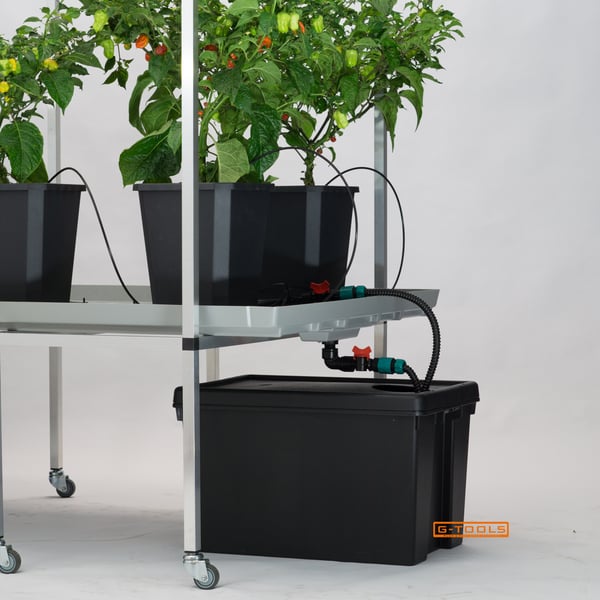
The G-Tools automatic kit makes the timing physical rather than digital. A tap on the inlet line sets how fast the tray fills, and a tap on the outlet sets how long solution stays in contact with the roots before draining away. Pair the GT 800 pump with any plug-in timer, set your floods, and the system runs itself for a week at a stretch.
Shop the Automatic Irrigation Kit →
What do you need to build an ebb and flow system?
Four parts: a tray, something to stand it on, a tank with a pump, and pots of growing medium. This is the full shopping list at our prices:
| Part | What it does | Options | Price |
|---|---|---|---|
| Grow tray | Holds the plants and the flood | 0.52 x 0.52m to 2 x 1m, UV-resistant moulding | £59 to £382 |
| Grow table | Raises the tray so gravity can drain it | Aluminium, sized per tray | From £155 |
| Automatic irrigation kit | Tank, pump, taps, drippers | Matched to tray size | £129 to £255 |
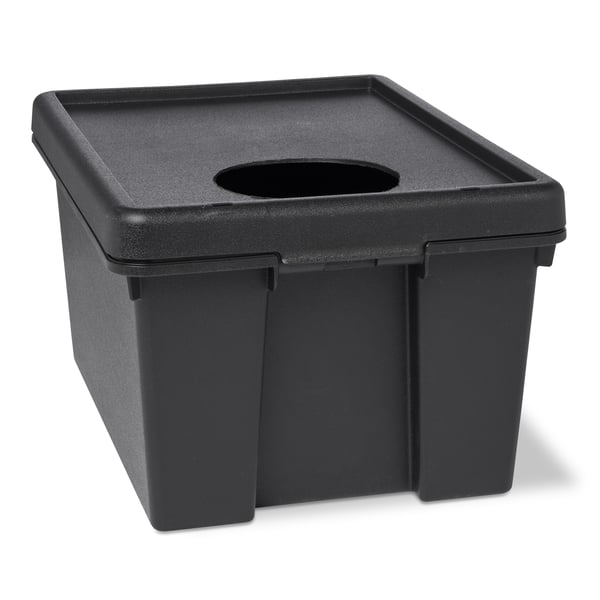
| Reservoir upgrade | More solution, fewer top-ups | 16 to 150 litres, light-proof | £22 to £92 |
The tray sizes map onto our cabinets deliberately. The 1.1 x 0.63m tray sits inside a Bonanza 1m² with the tank underneath on the cabinet floor. If you are still choosing the enclosure itself, our comparison of grow cabinets and grow tents covers that decision properly.
|
Matt's Pick to Automate the LotBest for: turning a tray and tank into a hands-off system Why we rate it: the two adjustable taps are the detail that matters. Fill speed and drain-back time are the levers that tune an ebb and flow system to your medium, and this kit puts both on a quarter-turn valve instead of guesswork. The included drippers also let the same tank feed pots directly if you change methods later. Price: £175 |
What growing medium works best in ebb and flow?
Expanded clay pebbles are the standard, and for good reason. They hold their structure forever, drain almost instantly, and give roots the air gaps the system depends on. Rinse them before first use and reuse them grow after grow. Rockwool cubes also work well for starting plants, usually nested into the pebbles once roots show.
Whatever the medium, keep the nutrient solution between pH 5.5 and 6.5, with an EC of 1.2 to 2.0 for leafy crops. A £15 pH pen and weekly tank changes prevent nearly every problem this system can throw at you. Light-proof tanks matter too: ours are opaque precisely because sunlight plus nutrients equals algae soup.
Grower's Tip: fit an overflow before you need it
A blocked outlet plus a running pump equals a flooded floor, and the failure always happens overnight. Fit an overflow lead-through to the tray, set just above your flood height, plumbed straight back to the tank. Our trays accept standard PVC push-fit couplings from any hardware shop. It costs a few pounds and turns the worst failure mode into a non-event.
How does ebb and flow compare to other hydroponic systems?
Every hydroponic method trades simplicity against speed. This is how the main options stack up for a UK home grower:
| System | How it feeds | Difficulty | Verdict |
|---|---|---|---|
| Ebb and flow | Timed flood and drain | Easy | Matt's Pick for a first system: forgiving and cheap to build |
| Deep water culture | Roots hang in aerated solution | Easy to start, less forgiving | Fast growth, but a failed air pump kills quickly |
| Drip irrigation | Drippers feed each pot | Moderate | Scales well, drippers clog and need checking |
| NFT channels | Thin film flows past roots | Moderate | Brilliant for lettuce, unforgiving in power cuts |
| Continuous flow (G-Tools Flow) | Constant circulation, no substrate | Easy to run | No medium to buy, nowhere for fungus gnats to live |
The continuous flow option deserves a mention for anyone allergic to substrate altogether. The G-Tools Flow systems circulate oxygen-rich solution past net cups around the clock, from £735, with the tank built into an aluminium table. No pebbles, no rockwool, and nowhere for fungus gnats or pythium to establish.
Browse water tanks and reservoirs →
Lighting and airflow decisions sit alongside the watering system, not after it. Our guides to LED grow light running costs and sizing grow room ventilation cover the other two corners of the triangle.
Continuous-flow growers can follow our NFT setup guide. For submerged roots, use the DWC setup guide.
"Ebb and flow is what we recommend first because the failure modes are gentle. Miss a flood and plants sulk rather than die. The G-Tools trays are moulded thick in virgin plastic with gutters that actually drain dry, which is the difference between a system you trust and one you check every morning."
- Matt W, Hydroponics UK
Frequently asked questions
How often should you flood an ebb and flow system?
Two to four times a day in clay pebbles. Each flood lasts 10 to 15 minutes during lit hours. Rockwool holds more water, so cut back to one or two floods. Never flood in the dark period.
What pH should hydroponic nutrient solution be?
Between 5.5 and 6.5 for almost all crops. Nutrients lock out beyond that window even with a perfect feed. Check twice a week with a pH pen and adjust with pH down or up solution.
How often should you change the nutrient tank?
Every 7 to 10 days for a small system. Top up with plain water between changes. A full refresh stops salt imbalances building up as plants drink unevenly.
Can you run ebb and flow inside a grow cabinet?
Yes, the tray sizes are matched to the cabinets. The 1.1 x 0.63m tray fits a Bonanza 1m² with the tank on the cabinet floor below the table.
Is ebb and flow good for beginners?
Yes, it is the system we recommend starting with. The drain phase keeps roots oxygenated automatically, and missed floods cause sulking rather than losses. Costs start around £195 all in.
Do you need an air pump with ebb and flow?
No, the drain cycle aerates the roots by itself. An air stone in the tank does no harm and helps in warm weather, but the system is designed to work without one.