NFT Hydroponics UK: Flow, Slope and Crop Guide
Written by Matt W on 17th Aug 2026.
Lettuce, basil, rocket and pak choi
2%, or 20mm fall per metre
237-296ml per minute per channel
Pump failure or blocked returns
NFT hydroponics sends a shallow nutrient film through slightly sloping channels. It suits compact, fast-growing crops with modest root systems. Start with a measured 2% slope and test 237-296ml per minute at each outlet. Keep the reservoir covered, inspect every channel daily and plan for pump failure before planting.
Key takeaways
- Use NFT for leafy greens and herbs, not large fruiting plants.
- A 2% slope creates 20mm of fall per metre.
- Measure flow at every channel instead of trusting the pump label.
- Keep light away from the reservoir and return pipe.
- Check roots, flow and pump operation every day.
- Keep a spare pump for a system carrying established plants.
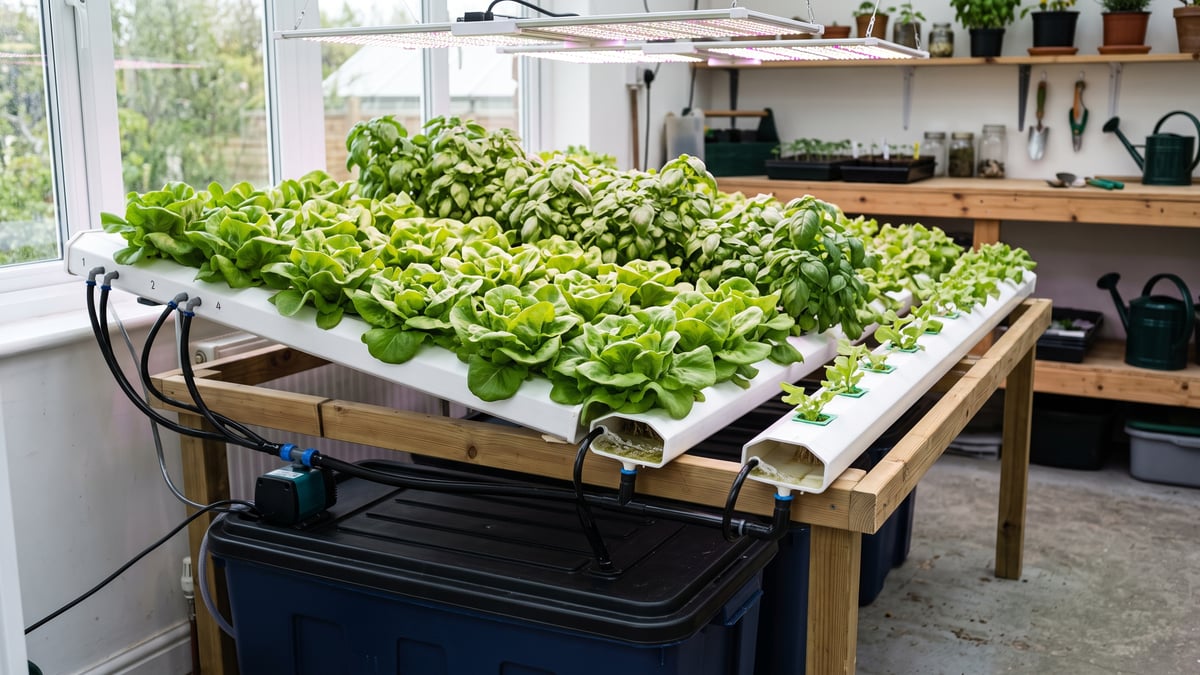
Grower's note: Mark the correct reservoir level before adding plants. That small reference line makes top-ups quicker and exposes unexpected water loss.
- Matt W, Hydroponics UK
What is NFT hydroponics?
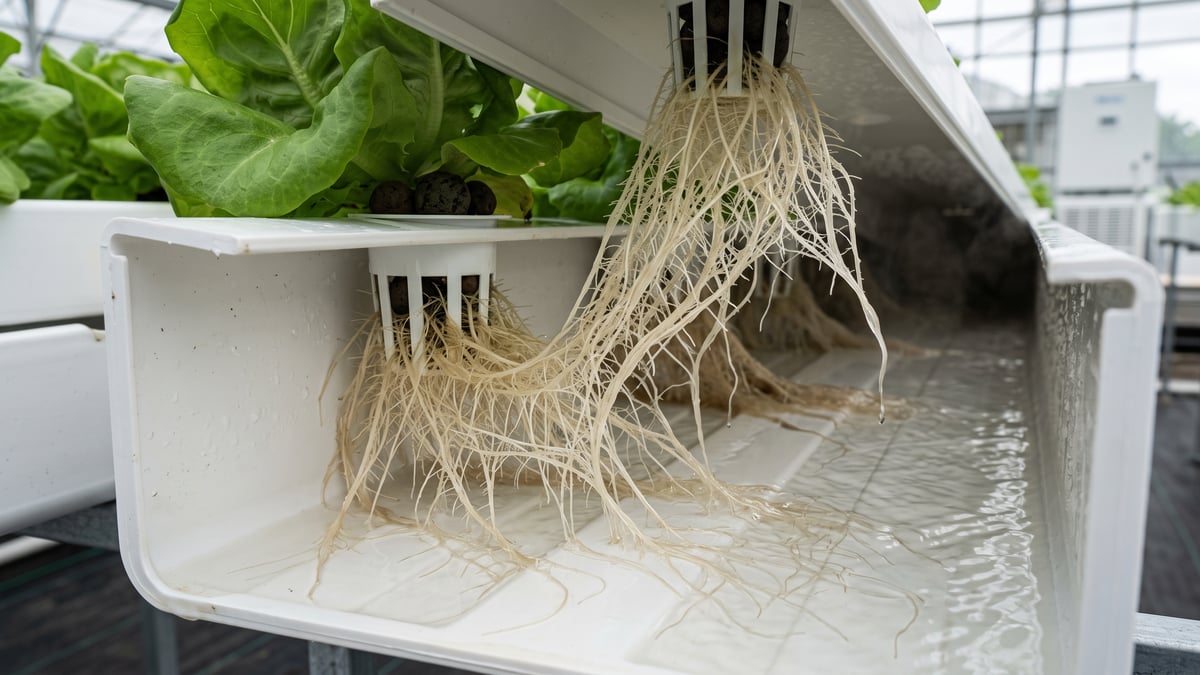
Nutrient film technique, or NFT, continuously pumps solution along a shallow channel. The solution touches the lower roots before returning to the reservoir.
Most roots remain exposed to humid air inside the channel. This supplies oxygen without submerging the entire root mass.
NFT is one of several recirculating methods in our hydroponic system comparison. It uses less growing media than pot-based drip systems.
Which crops grow well in NFT channels?
Choose lettuce, basil, coriander, rocket, pak choi and similar leafy crops. Their root systems stay manageable through a short crop cycle.
Oregon State University recommends NFT mainly for leafy greens and herbs. Its guide also warns that pump failure can damage crops quickly.
Read the Oregon State NFT guidance for the underlying system principles.
Avoid starting with tomatoes, cucumbers or large peppers. They need stronger support, hold more root mass and can obstruct narrow channels.
What slope should NFT channels use?
Start with a 2% channel slope. This means the outlet sits 20mm lower for every horizontal metre.
A two-metre channel therefore needs about 40mm of fall. Measure from the growing surface, not an uneven floor or bench.
| Channel slope | Fall per metre | Fall over two metres | Use |
|---|---|---|---|
| 1% | 10mm | 20mm | Only after even-flow testing |
| 2% | 20mm | 40mm | Practical starting point |
| 3% | 30mm | 60mm | Useful when drainage is sluggish |
Both Oregon State and UMass give 2% as a minimum slope. Real channels may need adjustment because roots and fittings change resistance.
How much flow does each NFT channel need?
The University of Minnesota suggests 8-10 fluid ounces per minute for each lettuce channel. That converts to roughly 237-296ml per minute.
Four equal channels therefore need about 0.95-1.18 litres per minute at the outlets. This is a measured total, not a pump-box rating.
Lift height and pipe resistance reduce the delivered flow. Select a pump only after measuring the vertical rise from reservoir to inlet.
Test one outlet with a measuring jug for 60 seconds. Repeat every channel and adjust valves until the readings are close.
See the University of Minnesota home hydroponics guide for its flow guidance.
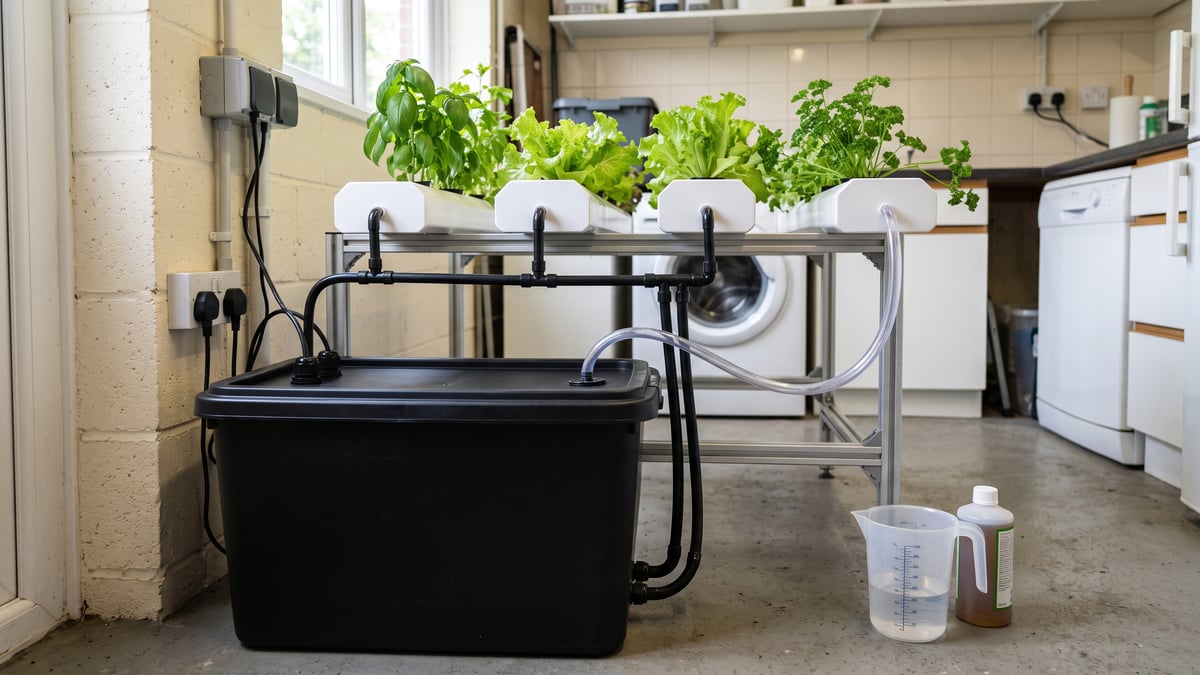
Plan for stopped flow. Check the pump daily and keep roots away from the return. A spare pump reduces recovery time.
What equipment does a home NFT system need?
You need opaque channels, net pots, a covered reservoir, a pump, delivery pipe, return plumbing and flow controls. Add nutrients, pH and EC meters, a timer for lighting and safe electrical connections.
The return must drain freely without flooding the channels. Fit an accessible filter only if you can inspect and clean it easily.
Browse our hydroponic watering equipment for pumps, reservoirs and fittings. NFT channels and return plumbing must be sourced separately.
A suitable indoor grow light is also required when daylight cannot support steady growth.
What pH, EC and temperature suit NFT lettuce?
Keep pH near 5.8-6.2 for a practical mixed-leaf starting range. Check it after nutrients are fully mixed.
For lettuce, use about 1.2mS/cm during early growth. Increase towards 1.5-1.8mS/cm as plants establish.
Keep the solution near 18-22°C. Warmer water holds less oxygen and can make root problems harder to control.
The RHS advises maintaining pH and EC, then renewing nutrient solution about every two weeks. Read our pH and EC guide before mixing.
How do you clean and maintain NFT channels?
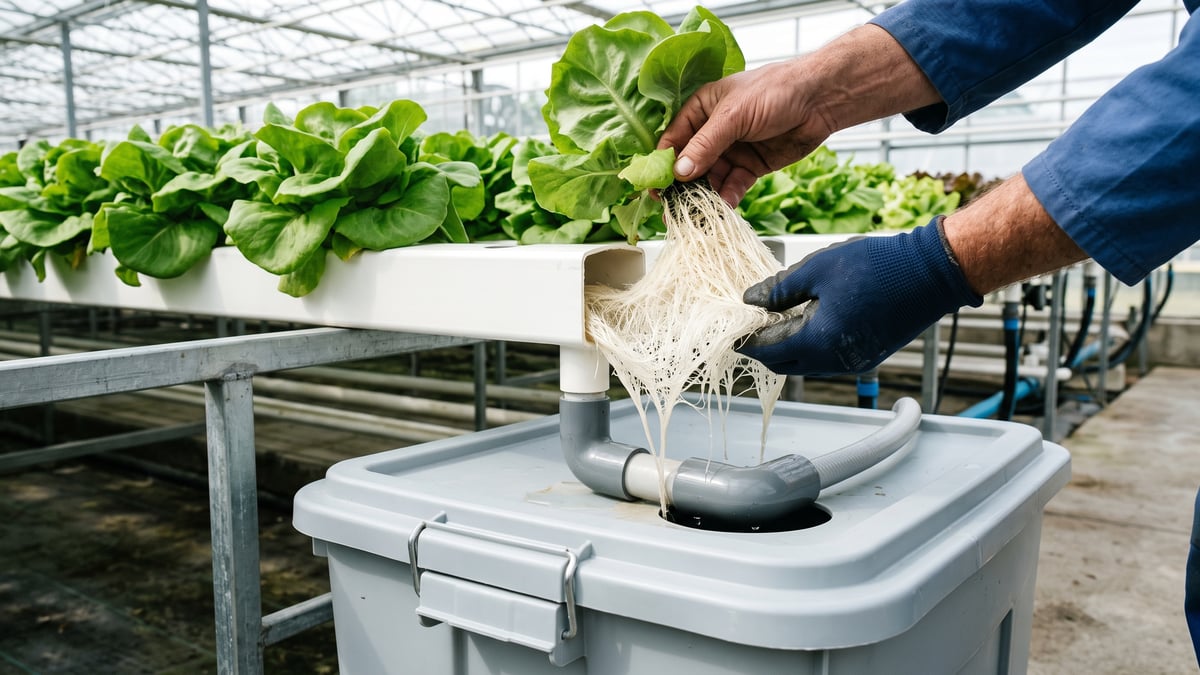
Check flow, pump sound, reservoir level and root colour every day. Remove fallen leaves before they reach the pump or return.
Top up with water, then measure pH and EC. Do not keep adding nutrients without checking the concentration.
Between crops, empty the system and remove loose roots. Clean channels, lids, pipework and the pump using the manufacturer's safe method.
Block light from wet surfaces to limit algae. Our temperature and humidity chart helps track the wider growing environment.
Is there a ready-made alternative to DIY NFT?
The G-Tools 3-in-1 system offers drip, ebb and flow, and shallow water culture. It is not a true NFT channel system.
However, it gives cabinet growers a ready-made recirculating alternative. Choose it when replaceable components matter more than building custom channels.
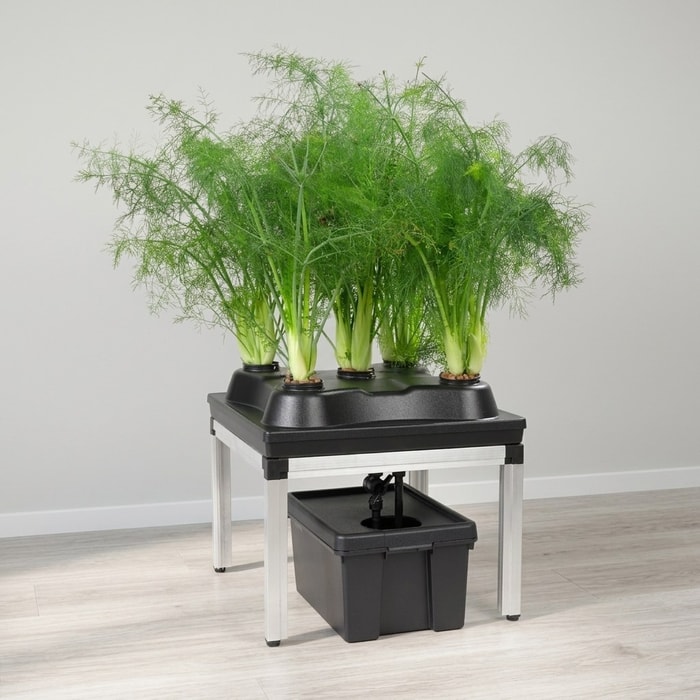
Buy the G-Tools 3-in-1 grow system for £665 →
Frequently asked questions
Is NFT hydroponics suitable for beginners?
NFT suits careful beginners who can inspect it daily. Flow stops and blocked returns need prompt action. Kratky or gravity-fed pots tolerate equipment failure better.
Does an NFT pump run continuously?
Most NFT systems run the circulation pump continuously. Constant flow keeps the shallow film moving. Follow the pump maker's operating limits.
How deep should the nutrient film be?
The film should remain shallow and leave upper roots exposed. Exact depth changes with channel shape, roots and flow. Avoid flooding the channel.
Can tomatoes grow in NFT channels?
Small varieties can grow, but they are poor first choices. Large roots obstruct channels and mature plants need strong support.
How often should NFT solution be changed?
Replace it about every two weeks as a starting routine. Crop size, water quality and reservoir volume can shorten that interval.
Why are my NFT roots turning brown?
Nutrients can stain roots, but slime or odour suggests trouble. Check temperature, flow, oxygen, cleanliness and damaged root tissue immediately.