Grow Room Temperature and Humidity Chart
Written by Matt W on 8th Aug 2026.
18-22°C and 55-70% RH
20-26°C and 55-70% RH
18-22°C for most crops
Measure canopy conditions, then ventilate
Aim for 18-22°C and 55-70% relative humidity for lettuce, herbs and young plants. Fruiting tomatoes, peppers and strawberries generally prefer 20-26°C by day. Measure at canopy height. Keep air moving gently across leaves, and extract damp air before lights switch off. Stable conditions matter more than chasing one perfect reading.
Key takeaways
- Place the sensor level with the top leaves, away from direct fan air.
- Keep most home food crops between 55% and 70% RH.
- Ventilate before the room cools and humidity rises.
- Use circulation fans for leaf movement, not a constant gale.
- Watch the root solution temperature as well as the room.
- Condensation means a surface has reached the air's dew point.
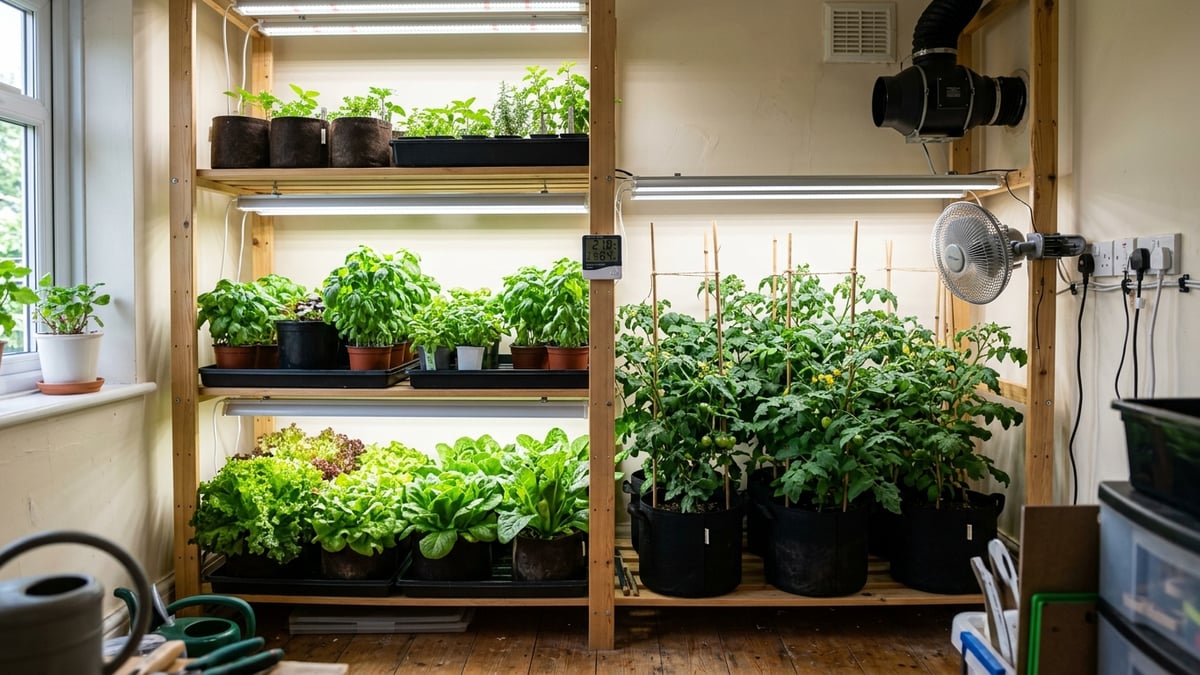
Grower's note: Check the highest and lowest readings, not just the number when you open the door. The troublesome period is often one hour after lights-off. Warm plants release moisture while the room cools.
- Matt W, Hydroponics UK
What temperature and humidity should a grow room be?
Use 18-22°C and 55-70% RH as a practical starting range for leafy food crops. Raise daytime temperature to 20-26°C for tomatoes, peppers and strawberries. Night temperatures can fall, but avoid sudden drops that create condensation.
Different crops and growth stages need different conditions. Cornell's controlled-environment work reports 25/22°C day/night and 60-70% RH for lettuce. It reports 25/18°C and 65-75% RH during tomato flowering. These are useful targets, not reasons to panic over a short excursion.
| Crop or stage | Day | Night | Relative humidity |
|---|---|---|---|
| Seedlings | 20-24°C | 18-21°C | 65-75% |
| Lettuce and salad leaves | 18-22°C | 16-20°C | 55-70% |
| Basil and soft herbs | 20-24°C | 16-20°C | 60-75% |
| Tomatoes and peppers | 22-26°C | 17-20°C | 55-70% |
| Strawberries | 18-24°C | 10-16°C | 60-75% |
| Most nutrient solutions | 18-22°C | 18-22°C | Not applicable |
Use the table as a home-growing band. Cultivar, light level and crop age all change the best set point. The Cornell lettuce handbook explains why temperature and humidity must be monitored together.
Where should I put the temperature and humidity sensor?
Place the sensor at canopy height in moving, representative air. Keep it away from a lamp, cold wall, humidifier outlet or fan jet. These positions produce readings that do not represent the leaves.
Move the sensor upwards as plants grow. Record daily high and low values. A cheap second sensor near the room inlet can reveal whether fresh air reaches the crop.
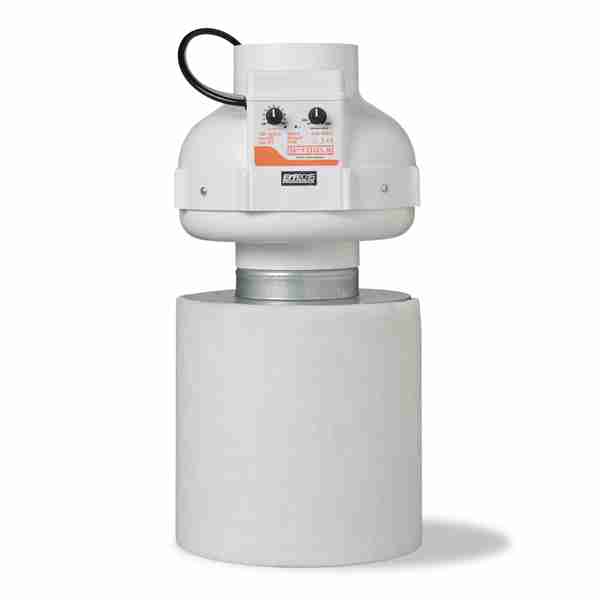
Matt's Pick: 125mm thermostat fan set
Best for: a small room or cabinet needing automatic heat control.
The 420m³/h fan has a thermostat and adjustable minimum speed. The paired filter shares its 125mm connection.
Price: £239
How do I lower humidity in a grow room?
Extract moist air and replace it with drier air. Run extraction before lights switch off, then maintain a lower background speed overnight. Remove standing water and repair leaks before buying extra equipment.
Warm air can hold more water vapour than cool air. When the room cools, its relative humidity rises. Penn State's greenhouse humidity guidance shows how heating incoming winter air lowers its RH.
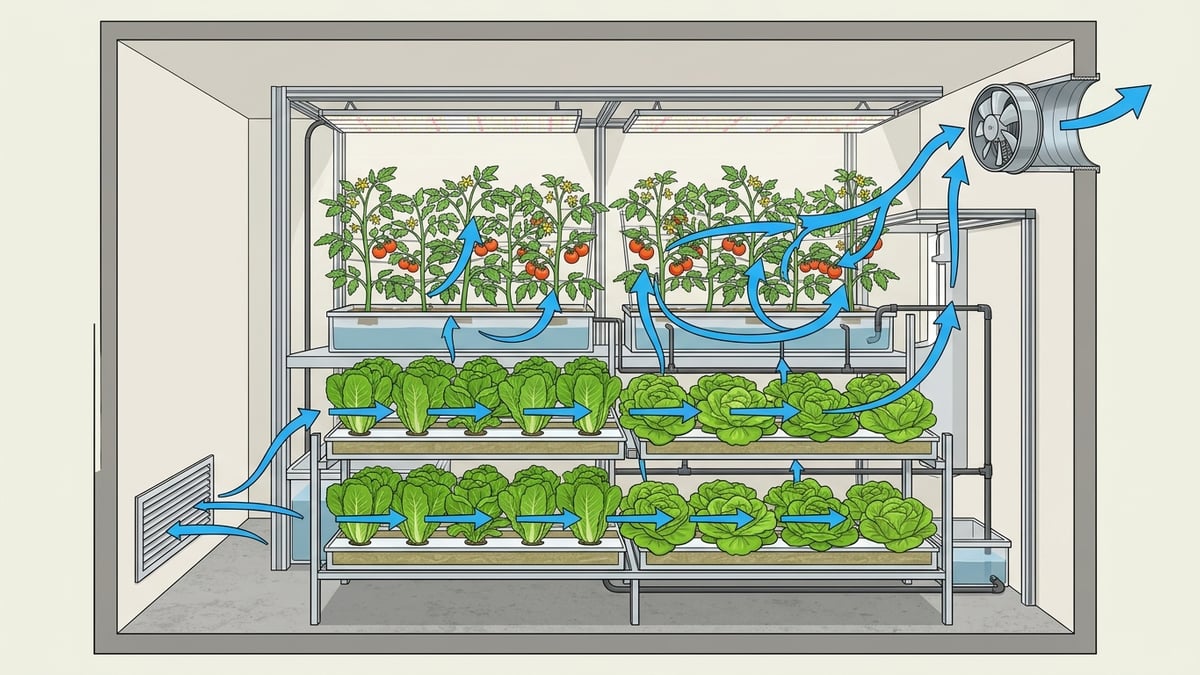
- Empty runoff trays and cover the reservoir.
- Open or enlarge the fresh-air inlet.
- Increase extraction in small steps.
- Move leaves gently with a circulation fan.
- Warm very cold incoming air before it reaches plants.
- Use a dehumidifier only when ventilation cannot remove enough moisture.
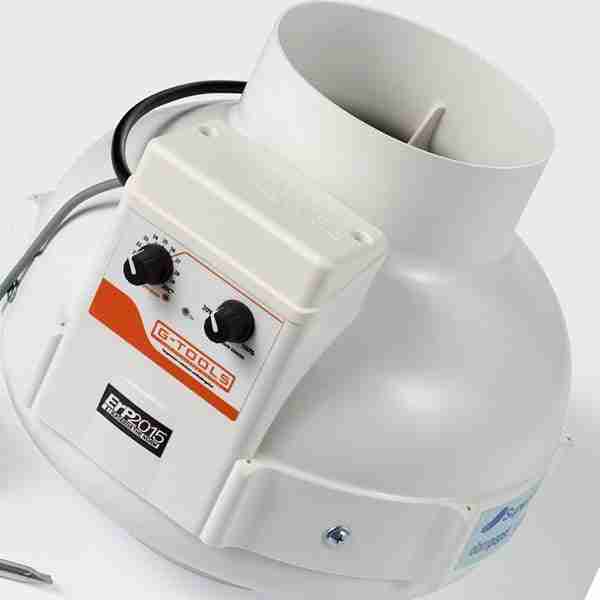
Buy the 420m³/h speed-controlled fan for £189 →
What causes condensation around hydroponic plants?
Condensation forms when a surface is colder than the air's dew point. Windows, outside walls and metal ducting are common cold surfaces. Water then settles where fungi and bacteria can use it.
Dry the surface and correct the cause. Add insulation where practical. Move warm air across cold corners and extract damp air before the nightly temperature drop.
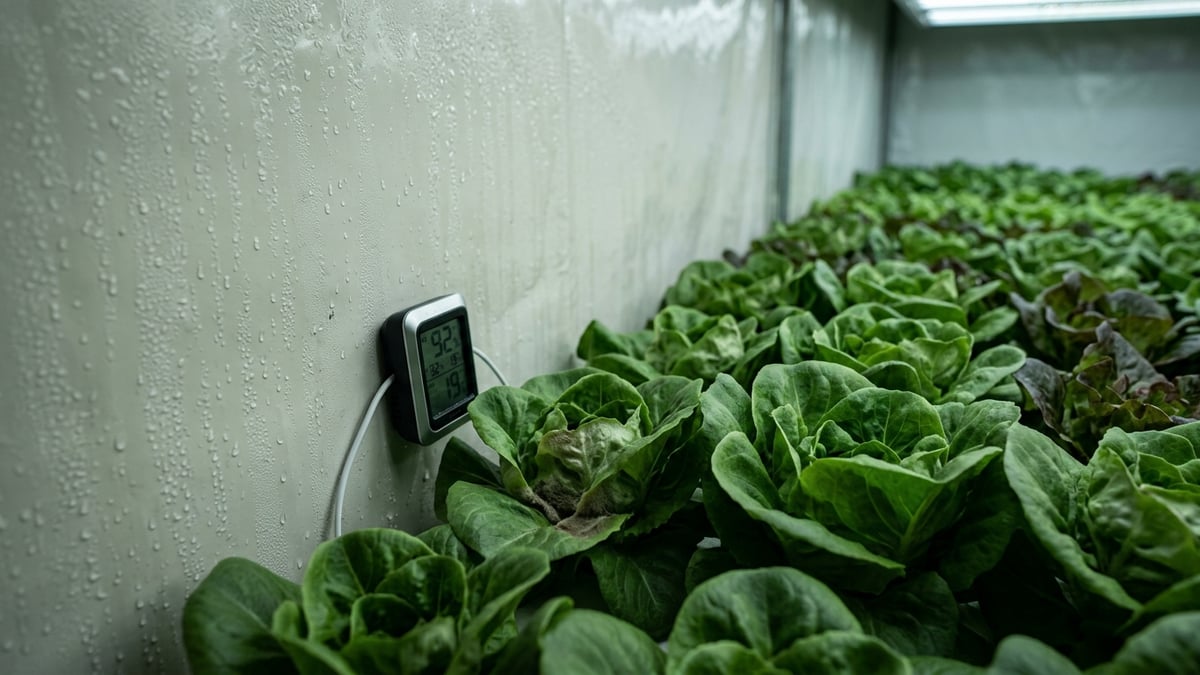
Watch out for wet leaves overnight. Dense leaves dry slowly after lights-off. Space plants properly and keep gentle airflow beneath the canopy.
What is VPD, and do home growers need it?
Vapour pressure deficit describes the drying force between a leaf and surrounding air. Temperature and RH create that difference. A very low VPD slows transpiration. A very high VPD can make plants lose water too quickly.
Home growers do not need to chase decimal points. First keep temperature and RH within a sensible crop band. Use VPD to compare conditions after your basic controls work.
Leaf temperature can differ from air temperature under strong light. An infrared thermometer helps if a chart seems wrong. Otherwise, canopy air readings are a sound starting point.
How should a controller operate an extractor fan?
Set a minimum speed that maintains air exchange overnight. Set a higher speed for rising daytime temperatures. Do not let the fan stop completely in a full, wet room.
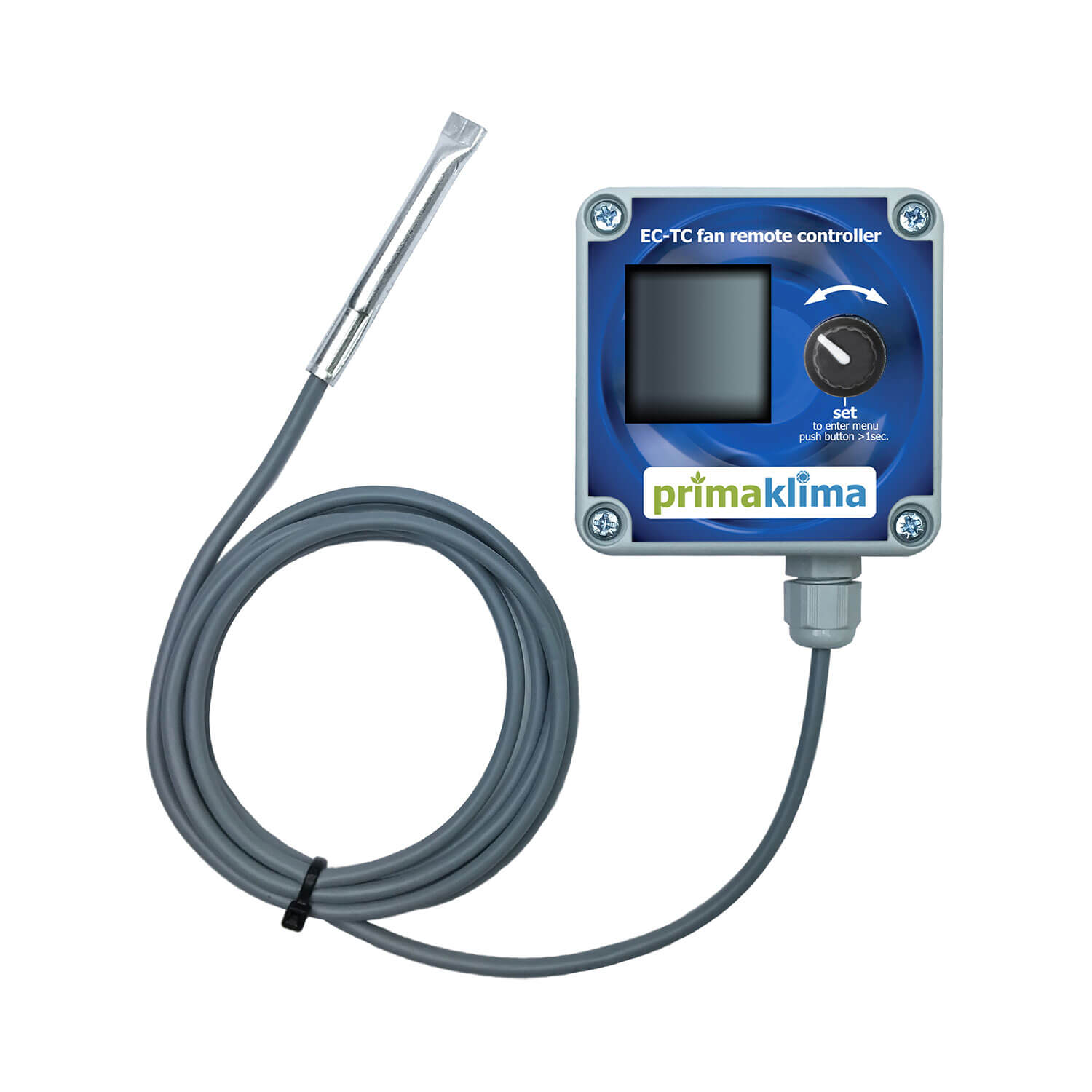
Buy the ECTC-1M fan controller for £132 →
The ECTC-1M controls compatible G-Tools ECblue fans through an RJ45 connection. Minimum and maximum speeds are adjustable from 0% to 100%. It does not control unrelated fan models.
When do I need a larger extractor fan?
Move up when the smaller fan runs near full speed but temperature or humidity still rises. Also count filter and duct resistance. Bends and long duct runs reduce delivered airflow.
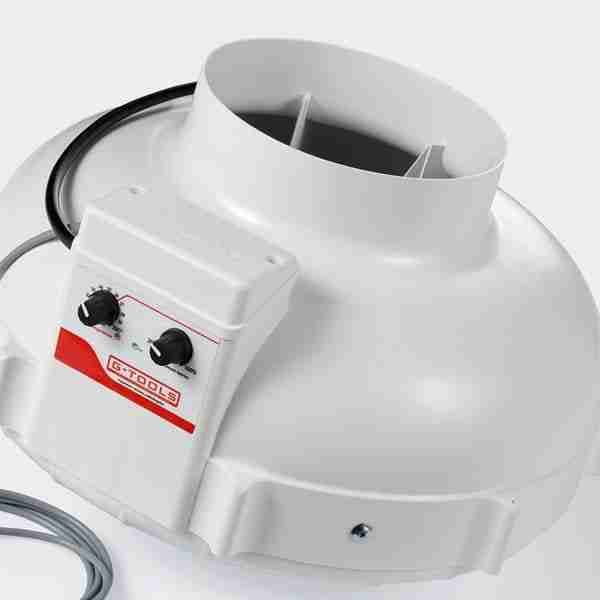
Buy the 800m³/h temperature-controlled fan for £209 →
Use our ventilation sizing guide before changing fan diameter. The carbon filter guide covers airflow losses and matching.
How do UK seasons change indoor climate control?
Winter air enters cold and becomes drier after heating. This removes moisture well but can chill roots and leaves. Mix incoming air before it reaches the canopy.
Summer air may already be warm and humid. Increase night extraction and reduce avoidable heat. Run lights during cooler hours if the room remains safe and light-proof.
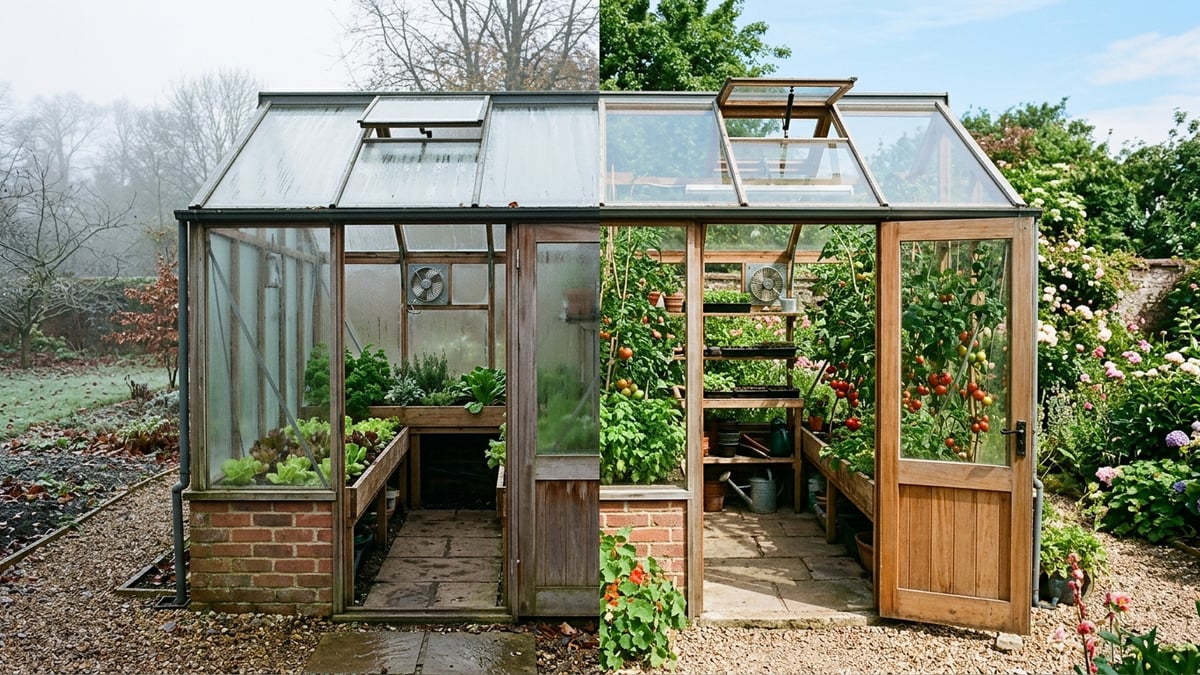
We favour variable or temperature-controlled extraction because British conditions change quickly. Fixed full-speed fans can chill winter salads. Uncontrolled low speeds can leave summer tomatoes damp. A controllable fan gives useful headroom without forcing one setting all year.
- Matt W, Hydroponics UK
Frequently asked questions
Is 70% humidity too high for a grow room?
Seventy percent is the upper edge for many mature food crops. Seedlings may tolerate more. Reduce overnight peaks and prevent condensation on leaves or walls.
How do I lower humidity when the lights are off?
Keep extraction running and remove standing water before lights-off. A small amount of heat can help cold air absorb moisture before extraction.
What temperature is too hot for hydroponic plants?
Sustained air temperatures above 30°C stress many common food crops. Tomatoes may stop setting fruit. Lettuce can stretch, turn bitter or bolt sooner.
Should a circulation fan blow directly on plants?
Use enough airflow to move leaves gently, without bending stems. A constant hard jet dries leaf edges and creates uneven conditions.
Why does humidity rise after lights turn off?
Cooling air holds less water vapour, so relative humidity rises. Plants and wet growing media continue releasing moisture during the change.