Carbon Filter Sizing Guide for Grow Tents
Written by Matt W on 23rd Jun 2026.
A carbon filter scrubs odour from the air your extractor fan pulls out of a grow tent. Size it by matching the filter's airflow rating, in cubic metres per hour, to your fan. A fan loses roughly 25% of its output once a filter and ducting are fitted, so size the fan above your tent volume and the filter at or above the fan. Keep humidity under 70% and the carbon lasts 12 to 24 months.
Key takeaways
- A carbon filter removes smell; it does not move air. The fan does that.
- Match the filter's rated airflow (m³/h) to your extractor fan, or pick a higher-rated filter.
- A fan loses about 25% of its airflow once a filter and ducting are attached.
- Work out tent volume, exchange it once a minute, then add 25% for the fan.
- A deeper carbon bed scrubs odour better, so avoid the thinnest budget filters.
- Keep humidity below 70% or the carbon clogs and fails early.
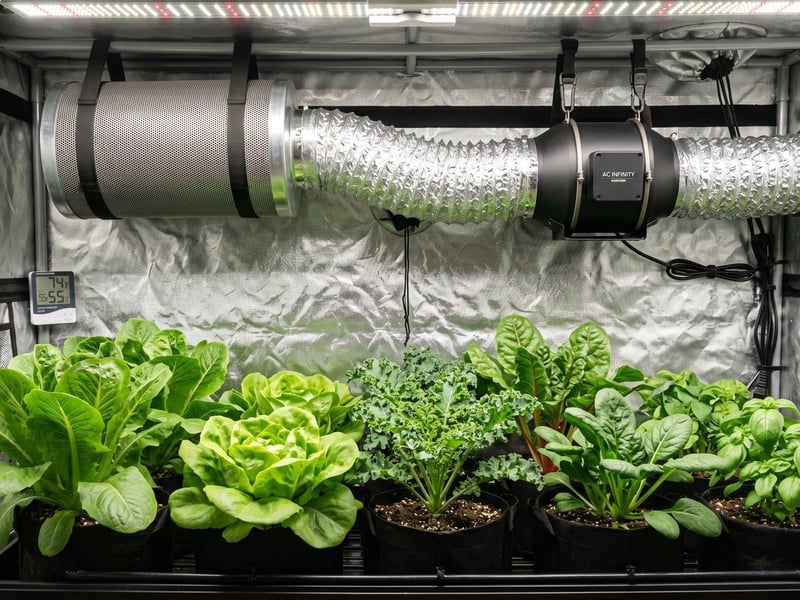
Browse our ventilation and filters →
Grower's note: The mistake I see most is a big fan bolted to a small filter. Air races through the carbon too fast to grab the smell, and the tent reeks anyway. Match the two, give the carbon time to work, and the odour problem disappears.
- Matt W, Hydroponics UK
What does a carbon filter do in a grow tent?
A carbon filter removes odour from the air before it leaves your grow space. Inside the cylinder sits a bed of activated carbon. As your extractor fan pulls tent air through it, the carbon traps the smell-carrying molecules and lets clean air pass. It does not cool the tent or move air on its own. The fan does the work; the filter only scrubs.
That split matters for sizing. You buy the fan to shift the right volume of air. You buy the filter to keep up without choking it. Get the pairing wrong and one of two things happens. A weak fan cannot pull through the carbon, or a strong fan pushes air through too fast to clean. Our full ventilation guide covers the fan side in detail.
What size carbon filter do I need?
Match the filter's rated airflow to your fan, measured in cubic metres per hour. Start with your tent. Multiply length by width by height in metres to get the volume. Aim to exchange that air at least once a minute. A 1.2m by 1.2m by 2m tent holds about 2.9m³, so it needs roughly 175m³/h of extraction before any allowances. The table shows which filter suits which setup.
| Carbon filter | Rated airflow | Suits | Price |
|---|---|---|---|
| G-Tools PK2600 Mini | 160 m³/h | Cabinet or small 60cm tent | £68 |
| G-Tools PK2601 Eco | 360 m³/h | 1m to 1.2m tent (most home grows) | £81 |
| Prima Klima PK K2602 | 620 m³/h | 1.2m to 1.5m tent | £96 |
| Prima Klima PK2603 | 800 m³/h | 1.5m tent or a 160mm fan | £155 |
| Prima Klima K2605 | 1300 m³/h | Multi-light room | £285 |
Pick a filter rated at or above your fan's airflow. A filter with headroom runs slower per square centimetre of carbon, which cleans better and lasts longer. There is no penalty for going one size up.
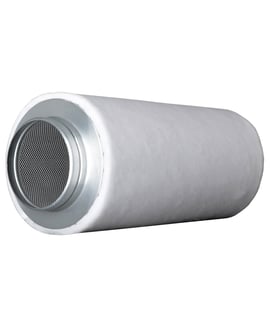
Matt's Pick: G-Tools PK2601 Eco Carbon Filter
Best for: a standard 1m to 1.2m home grow tent
Why we rate it: the 360m³/h rating gives a typical 125mm fan room to breathe. The light Eco body is easy to hang from tent poles, and the deep carbon bed holds odour well.
Price: £81
How do you match a carbon filter to your fan?
Size the fan first, then choose a filter that keeps up. A fan never hits its boxed airflow figure in real use. Once you add the carbon filter, the ducting and the bends, it loses around 25% of its rated output. So take your tent's per-minute extraction figure and add 25% to pick the fan. Then choose a filter rated at or above that fan.
Work the 1.2m tent example through. It needs about 175m³/h of air exchange. Add 25% and you want a fan rated near 220m³/h. A 125mm fan rated 360 to 420m³/h covers that easily, and the 360m³/h Eco filter matches it. Buying a fan and filter as a matched set takes the guesswork out, which is why we sell them paired.
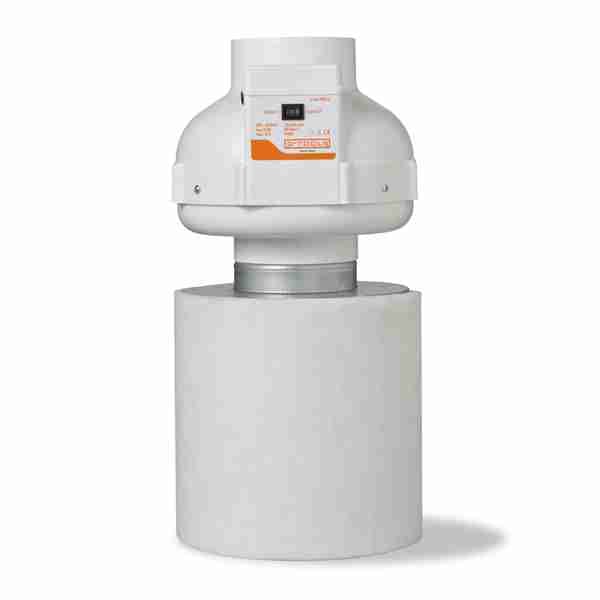
Shop the matched fan and filter set →
Watch out: a fan that is too strong. It feels safe to oversize the fan, but it backfires on odour. If air rushes through the carbon too quickly, it never makes proper contact. Smell then slips straight through a brand new filter. Use a fan speed controller to dial the airflow back to match the filter.
How long does a carbon filter last?
Most carbon filters last 12 to 24 months in a home grow. The carbon slowly fills up with the molecules it traps, and once it is saturated the smell returns. Two things shorten that life sharply. High humidity is the big one, because water vapour coats the carbon and blocks it. Keep your tent below 70% relative humidity and the filter lasts far longer.
A pre-filter sock is the cheap insurance. It wraps the cylinder and catches dust before it reaches the carbon. Wash or replace it every couple of months. When odour creeps back despite a clean sock and steady humidity, the carbon is spent. Fit a new filter. Run the filter inside the tent, with the fan pulling air through it first.
We stock Prima Klima and G-Tools filters for their deep, dense carbon beds rather than thin budget layers. Depth is what buys you contact time, and contact time is what actually removes the smell. Paired with a matched fan, they hold a grow tent odour-free for a year or more without fuss.
- Matt W, Hydroponics UK
Frequently asked questions
What size carbon filter do I need for a grow tent?
Match the filter's airflow rating to your extractor fan. For a typical 1.2m tent on a 125mm fan, a 360m³/h filter is the usual choice. Go up a size if unsure.
Should the carbon filter match the fan exactly?
Match it or pick a higher-rated filter. A filter with spare capacity runs air through the carbon more slowly. That cleans odour better and lasts longer.
Does the carbon filter go inside or outside the tent?
Most growers hang it inside, with the fan pulling air through it first. The fan then pushes the cleaned air out through the ducting. This keeps the loudest part outside the tent.
Why can I still smell my grow tent with a new filter?
Usually the fan is too strong or the filter too small. Air moving too fast skips past the carbon. Slow the fan with a controller, or fit a larger filter.
How often should I replace a carbon filter?
Every 12 to 24 months for most home grows. High humidity shortens that. Keep the tent under 70% relative humidity and use a pre-filter sock.
Do I need a carbon filter for growing vegetables?
Only if odour or stale air is a problem. Leafy crops smell little. A filter still keeps the air fresh and stops damp, musty build-up.