Growing Chillies Indoors: A UK Guide
Written by Matt W on 13th Jun 2026.
Growing chillies indoors lets UK growers beat a short, cool summer and crop ripe pods all year. The keys are an early start, real warmth and strong light. Sow from January to March, germinate at 24 to 30°C in a heated propagator, then grow under 14 to 16 hours of LED. Chillies are slow, so the early sowing matters. Indoors you also hand-pollinate and feed a bloom nutrient once flowers set. This guide takes you from seed to ripe pod.
Key Takeaways
- Sow from January to March: chillies are slow and need a long season to ripen
- Seeds need 24 to 30°C to germinate, so use a heated propagator, not a cold windowsill
- Give 14 to 16 hours of strong LED light a day once seedlings are up
- Indoors there are no insects, so tap the plant or hand-pollinate to set fruit
- Switch to a higher-potassium bloom feed once flowers appear
- Sow to ripe pod takes 4 to 6 months; superhot varieties take longer still
Grower's Note
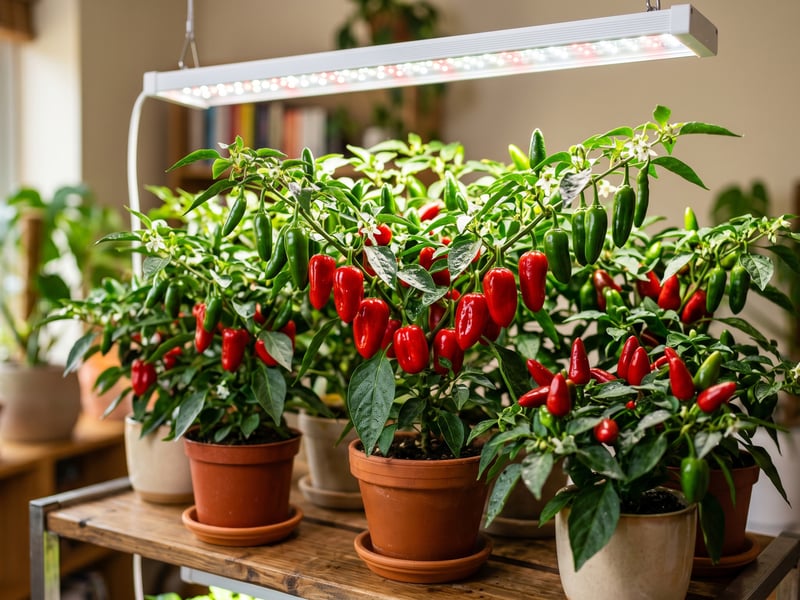
Chillies punish impatience. The two mistakes are sowing too late and growing too cold. A British windowsill in February is neither warm enough to germinate a seed nor bright enough to feed a seedling, so plants stall and the season runs out before the pods ripen. Give them heat to sprout, strong light to grow and an early start, and a chilli plant becomes one of the most productive things you can grow indoors.
Can you grow chillies indoors?
Yes, and indoors is often better than out in the UK. Chillies are tropical perennials that want warmth and light our summers struggle to provide. Grown indoors under a controlled light and a steady temperature, they crop earlier, ripen more reliably and can fruit through winter. A plant can even be kept for several years, cut back and brought on again each season.
The control is the point. Outdoors a cold August can leave a plant full of green pods that never redden. Indoors you hold the warmth and light steady, so the pods ripen on your schedule. That suits the slow superhot varieties especially, which simply run out of season outdoors in most of Britain.
When should you sow chilli seeds?
From January to March, and earlier for the hottest varieties. Chillies are slow from seed: it can be four to six months from sowing to a ripe pod, and superhots take longer. Sowing in midwinter under lights gives the plant the long season it needs. Sow into small plugs or cells, keep them warm, and pot on as they grow. This is propagation work, and our guide to propagation and seedlings covers the clean-medium method.
How warm do chillies need to be?
Seeds need 24 to 30°C to germinate, and the plants grow best between 18 and 30°C. That germination heat is the part a windowsill cannot give in a UK winter, which is why a heated propagator transforms results: warm the root zone and seeds that would sulk for weeks sprout in days. Once growing, chillies tolerate normal room warmth but stall below about 15°C, so keep them off cold sills and away from draughts.
|
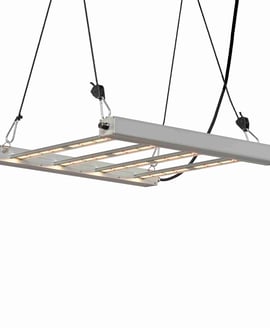
Matt's Pick for ChilliesBest for: a couple of chilli plants from seedling through to fruiting Why we rate it: the G-bars 170W LED has the output a fruiting crop wants, with a dimmer so you can run it gentle over seedlings and ramp it up as the plants build. Chillies fruit on light, and this bar delivers enough without the heat of old lamps. Pair it with a heated propagator to get the seeds away. |
How much light do chillies need indoors?
Fourteen to sixteen hours of strong light a day. Chillies are heavy light feeders, more demanding than salad or herbs, and weak light is the classic reason an indoor plant grows tall and leafy but never fruits. A good LED bar held over the plants gives steady, controllable light without scorching, and a dimmer lets you ease seedlings in before turning it up for fruiting.
Light costs money once it runs 14 hours a day, so match the fixture to the number of plants. Our breakdown of LED grow light running costs shows the electricity maths, and the table below compares the lights and a complete starter system for chillies.
| Option | Best for | Why | Price |
|---|---|---|---|
| Sanlight Flex II 20 | One or two plants | Slim bar, low running cost | £84 |
| Dimmable full-cycle LED | A small chilli grow | Output to fruit, dimmable for seedlings | Compare current grow lights |
| 3-in-1 Bonanza 0.35 system | A complete enclosed setup | Light, fan and structure in one | £665 |
| TriPart Bloom nutrient | Feeding the fruit | Potassium for pod set and ripening | £9 |
| Combination pH and EC meter | Keeping feed correct | Two readings in one tool | Compare current meters |
How do you get chillies to fruit indoors?
Pollinate the flowers and feed for fruit. Indoors there are no insects to move pollen, so set fruit yourself: tap the main stem daily to shake pollen loose, run a gentle fan, or brush each open flower. When flowers appear, switch from a grow feed to a higher-potassium bloom nutrient, which the plant needs to set and ripen pods. Our guide to nutrients, pH and EC covers the switch.
Grower's Tip: do not overfeed nitrogen
A chilli flooded with high-nitrogen grow feed makes lush leaves and few pods. Once flowers show, ease back the nitrogen and move to a bloom feed richer in potassium. The plant should look productive, not jungle-green. Overfeeding is as common a fruiting failure as weak light, and far easier to fix once you spot it.
How long do chillies take to grow?
Four to six months from sowing to a ripe pod, and longer for superhots. The timeline runs roughly: germination in one to three weeks, six to eight weeks as a seedling, then flowering, fruiting and the slow ripening from green to final colour. That last colour change can take three to five weeks on its own, which is why an early sowing and steady warmth matter so much. Rush the start and the season ends with green pods.
Keep the plant going and it rewards patience. A chilli is a perennial, so an indoor plant can be overwintered under reduced light and cropped again the next year, skipping the slow first months entirely. Many growers raise chillies in a small cabinet for exactly this control, which our comparison of grow cabinets and grow tents covers.
"Chillies are the crop that turns a windowsill grower into a serious one. Once someone ripens a Scotch bonnet in a British winter, they are hooked. We always say the same two things: start in January, and give them real light. Heat to germinate, strong LED to fruit, and a bloom feed when the flowers come. Get those right and the plant does the rest."
- Matt W, Hydroponics UK
Frequently asked questions
Can you grow chillies indoors all year?
Yes, under a grow light with steady warmth. Indoors you control heat and light, so chillies ripen reliably and can fruit through a British winter.
When should you sow chilli seeds in the UK?
Between January and March, earlier for superhots. Chillies are slow, taking four to six months to ripen, so an early start under lights gives a full season.
What temperature do chilli seeds need to germinate?
Between 24 and 30°C. A heated propagator gives that root-zone warmth, which a cold winter windowsill cannot, so seeds sprout in days rather than sulking.
How much light do indoor chillies need?
14 to 16 hours of strong LED a day. Chillies need more light than herbs or salad. Weak light gives tall, leafy plants that never fruit.
How do you pollinate chillies indoors?
Tap the stem daily or brush each flower. There are no insects indoors, so move the pollen yourself with a tap, a fan or a soft brush to set fruit.
Why is my chilli plant not fruiting?
Usually weak light or too much nitrogen. Give stronger LED light, switch to a potassium-rich bloom feed once flowers show, and pollinate the flowers by hand.