DWC Hydroponics UK: Lettuce and Herb Setup
Written by Matt W on 17th Aug 2026.
Lettuce, basil and compact herbs
18-22°C
5.8-6.2
Above 6mg/L when measured
Deep water culture suspends plant roots in aerated nutrient solution. A covered reservoir, continuously running air pump and stable water temperature make the method dependable. For lettuce, start near pH 5.8-6.2 and 1.2mS/cm EC. Raise EC towards 1.5-1.8mS/cm after plants establish.
Key takeaways
- Run the air pump continuously while roots are submerged.
- Use an opaque, lidded and food-safe reservoir.
- Keep nutrient solution near 18-22°C.
- Start lettuce near 1.2mS/cm, then use 1.5-1.8mS/cm.
- Inspect roots, water level, temperature and pump operation daily.
- Keep plugs above the water once roots reach the solution.
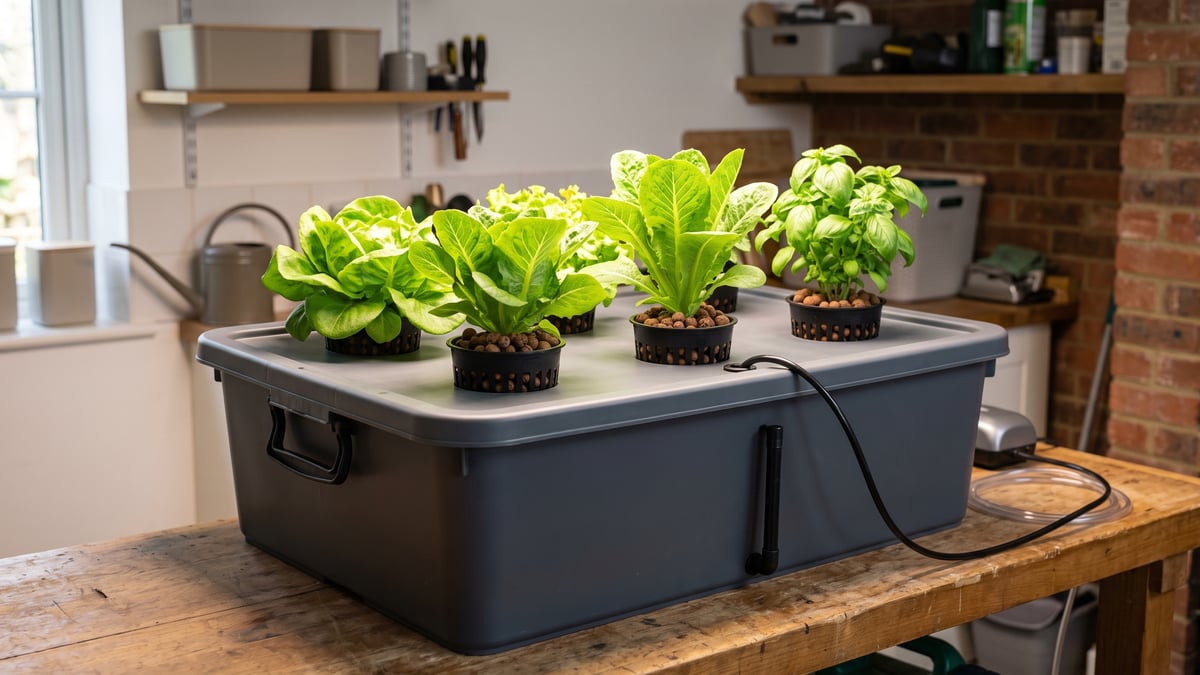
Grower's note: Lift one net pot during each daily check. Changes in root texture or smell often appear before the leaves show stress.
- Matt W, Hydroponics UK
What is DWC hydroponics?
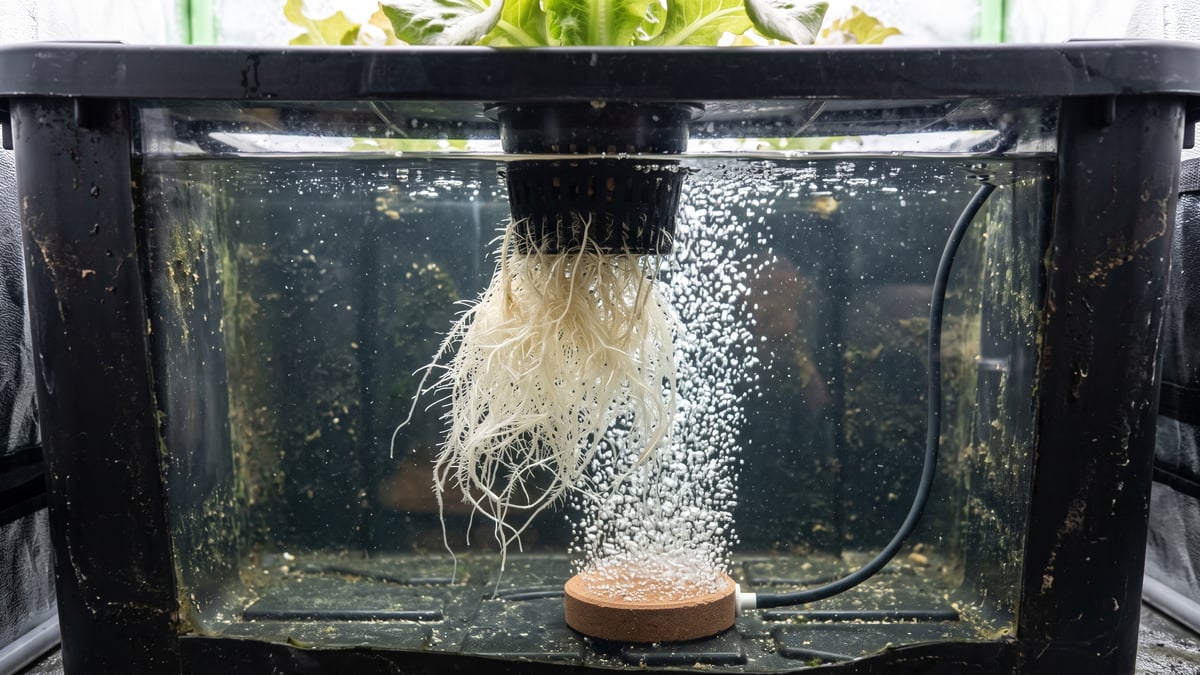
Deep water culture, usually shortened to DWC, holds roots in a reservoir of nutrient solution. An air pump feeds airstones below them.
The rising bubbles move water and increase gas exchange at the surface. Roots still need dissolved oxygen even though they remain submerged.
Our hydroponic system comparison explains how DWC differs from NFT, ebb and flow, and drip irrigation.
Which plants suit a home DWC system?
Lettuce, basil, pak choi and compact leafy herbs are sensible first crops. They grow quickly and need less physical support than fruiting plants.
Large tomatoes and cucumbers can outgrow a small reservoir. Their roots, water demand and support needs make them harder first projects.
DWC also reacts differently from the unpowered Kratky method. Kratky deliberately creates an air gap, while DWC uses powered aeration.
What equipment does a DWC setup need?
Use an opaque food-safe reservoir with a close-fitting lid. Add net pots, starter plugs, airline, airstones and an external air pump.
You also need hydroponic nutrients, pH and EC meters, a water thermometer and suitable lighting. A dissolved oxygen meter is useful, but optional.
Place the pump above the water line or fit a suitable non-return valve. This reduces back-siphoning if power stops.
Keep electrical connections away from splashes. Use drip loops and RCD protection around indoor water systems.
Browse our hydroponic watering equipment for reservoirs and air pumps. Choose an indoor grow light around the crop footprint.
How large should the DWC reservoir be?
More solution changes temperature and nutrient strength more slowly. Small containers are cheaper, but need closer monitoring during warm or rapid growth.
Allow at least five litres per mature lettuce as a practical home starting point. Ten litres per plant gives a steadier buffer.
A 30-litre reservoir can therefore hold three lettuce plants comfortably. Six plants leave only five litres each before roots displace water.
| Reservoir | Plant count | Water per plant | Monitoring load |
|---|---|---|---|
| 20 litres | Two lettuces | 10 litres | Moderate |
| 30 litres | Three lettuces | 10 litres | Moderate |
| 30 litres | Six lettuces | 5 litres | Higher |
| 47 litres | Four lettuces | Nearly 12 litres | Lower |
These figures are planning allowances, not fixed biological limits. The crop, room temperature and plant size change daily water use.
What water temperature and oxygen level does DWC need?
Keep nutrient solution near 18-22°C for lettuce and common herbs. Warm water holds less oxygen and encourages faster microbial growth.
Missouri Extension describes dissolved oxygen above 6mg/L as optimum for hydroponic crops. Measure near the roots if you own a suitable meter.
If you do not measure oxygen, watch the air pattern instead. Each airstone should produce steady bubbles and visible water movement.
Read the Missouri Extension hydroponic guidance for temperature and oxygen background.
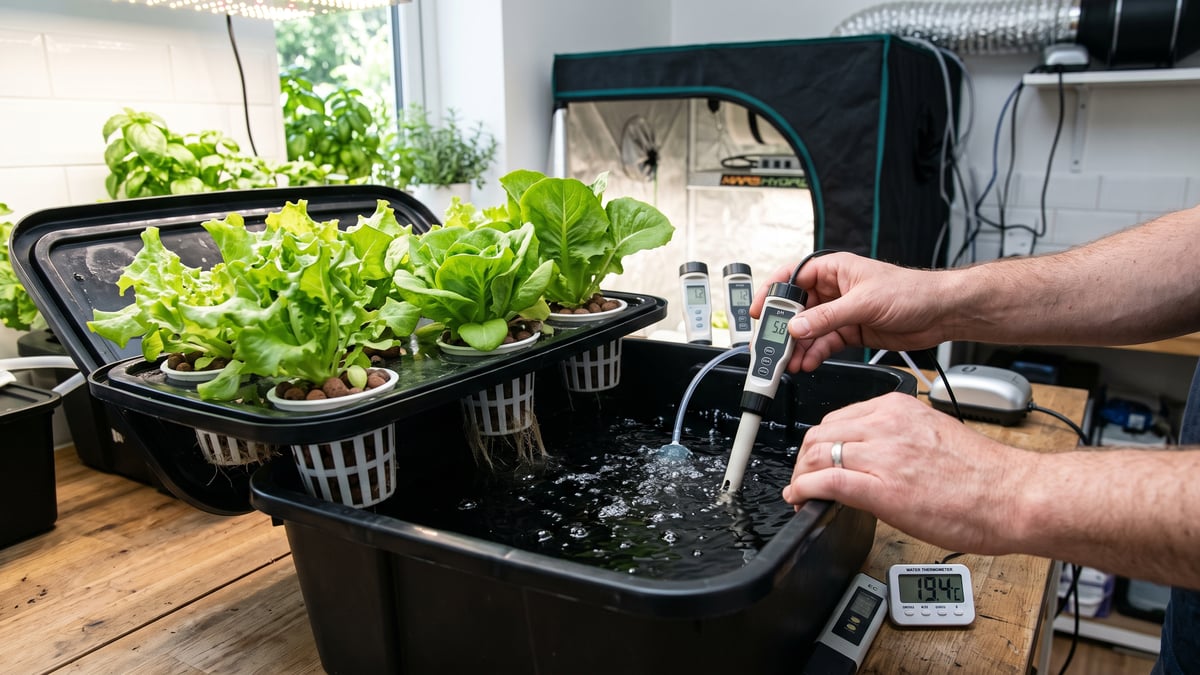
Do not switch aeration off overnight. Submerged roots continue respiring in darkness. Keep a spare pump if the crop matters.
What pH and EC should DWC lettuce use?
Start near pH 5.8-6.2. Measure after mixing nutrients and allowing the reservoir to circulate.
Use roughly 1.2mS/cm EC for young lettuce. Increase towards 1.5-1.8mS/cm once roots and leaves are established.
The University of Florida used 1.2mS/cm during germination and 1.5-1.8mS/cm during production. Its study involved NFT lettuce, so treat these as practical starting values.
Crop variety and water quality still matter. Our pH and EC guide explains calibration, top-ups and corrections.
How do you start lettuce in DWC?
Germinate seeds in a suitable starter plug. Move the seedling once roots reach beyond the plug and leaves are established.
Set the starting water level close enough for bubbles to wet the young root tips. Do not drown the stem or saturate the plug.
Lower the maintained water line once roots extend into the solution. Leave an air space beneath the net pot while aeration continues.
Provide gentle airflow across the leaves. Use our temperature and humidity chart to avoid a hot, damp canopy.
How often should DWC water be changed?
Check water level, temperature, pH, EC and aeration every day. Top up with plain water before deciding whether nutrients are needed.
The RHS suggests renewing hydroponic nutrient solution about every two weeks. Shorten the interval if values become difficult to correct.
Empty and clean the reservoir between crops. Wash lids, net pots, airline surfaces and airstones using methods suitable for each material.
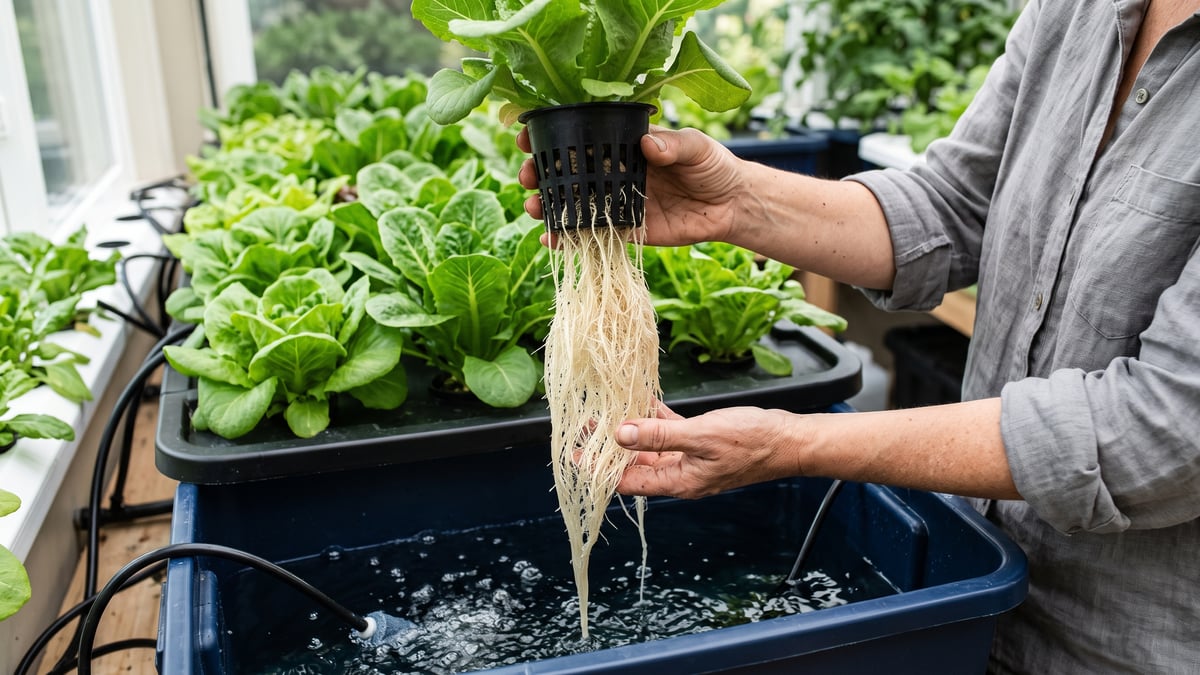
Clean roots are often white or cream, although nutrients can stain them. Slime, soft tissue or an unpleasant smell needs prompt investigation.
See the RHS hydroponics advice for general solution maintenance.
Which air pump suits a small DWC reservoir?
The AutoPot single-outlet pump can run one airline and airstone. It suits one small reservoir where the bubble pattern remains even.
Choose a multi-outlet model for separate reservoirs or several airstones. Avoid splitting one weak outlet until every stone produces useful movement.
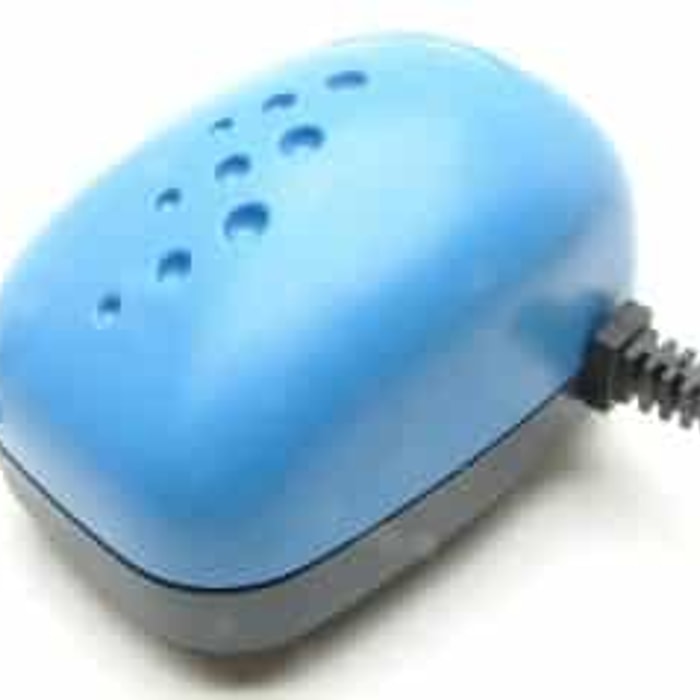
Matt's Pick: AutoPot Single-Outlet Air Pump
Best for: one small DWC reservoir with one airline and airstone.
This mains-powered Hailea ACO-2201 pump provides a simple single-outlet aeration source.
Price: £27
Frequently asked questions
Does DWC need an air pump?
Yes, standard DWC needs continuous powered aeration. The pump and airstone support submerged roots. Kratky uses an air gap instead.
Can DWC water be too cold?
Yes, cold solution can slow root and nutrient activity. Aim near 18-22°C for common leafy crops and avoid rapid swings.
Why are DWC roots brown?
Nutrient staining can be harmless, but slime is not. Check smell, texture, temperature, pump operation and water movement immediately.
How deep should a DWC reservoir be?
Six to eight inches is common for leafy systems. Reservoir volume and access matter more than depth alone. Keep roots submerged and aerated.
Can I grow tomatoes in DWC?
Yes, but large plants need more water and support. Start with lettuce or basil before managing a fruiting crop.
Should DWC bubbles touch the roots?
Water movement should reach the whole submerged root zone. Direct bubble contact is less important than adequate oxygen and circulation.