Kratky Method UK Guide for Lettuce and Herbs
Written by Matt W on 8th Aug 2026.
Roots create their own moist air gap
One lettuce in a four litre vessel
Use 5.8-6.2 for leafy crops
Use 1.2-1.8mS/cm for lettuce
The Kratky method grows a plant above a still reservoir of nutrient solution. It needs no water pump or air stone. Start with the net pot touching the solution. As roots grow and drink, the water level falls. Upper roots remain in a moist air gap for oxygen, while lower roots continue taking up water and nutrients.
Key takeaways
- Begin with lettuce, pak choi, basil or coriander.
- Use an opaque, food-safe container with a close-fitting lid.
- Touch the bottom of the net pot to solution at transplanting.
- Never refill a mature vessel to the original level.
- Keep the nutrient solution cool and out of direct sunlight.
- Use a separate vessel for each large or long-lived plant.
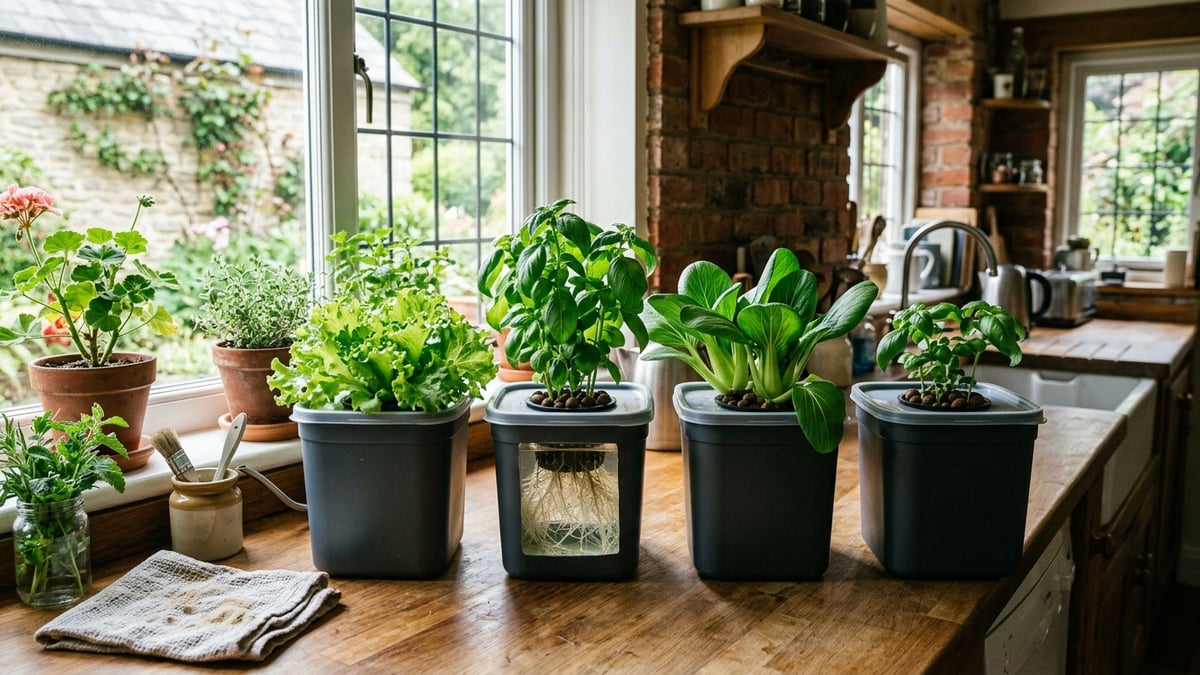
Grower's note: Mark the starting water line on your first vessel. Then leave it alone. New growers often top back to that mark and drown the upper roots which formed for air.
- Matt W, Hydroponics UK
What is the Kratky method?
The Kratky method is passive, non-circulating hydroponics. A net pot holds the plant above a fixed nutrient reservoir. There is no pump, bubbler or moving solution.
Bernard Kratky developed the method at the University of Hawaii. His published lettuce system completes a crop with one initial application of water and nutrients. It was designed for crops using less than two US gallons during their growing cycle.
Kratky differs from deep water culture. DWC keeps roots submerged and uses continuous powered aeration.
The original University of Hawaii method lists lettuce, coriander, spring onions, pak choi and watercress. That crop list makes more sense for beginners than large tomatoes.
How does the Kratky air gap work?
The seedling starts with its growing plug touching nutrient solution. Capillary action keeps the young roots wet. As the plant drinks, the water level falls below the net pot.
Roots above the water line stay damp and absorb oxygen. Lower roots continue absorbing solution. The widening air gap replaces mechanical aeration, provided the grower does not flood it again.
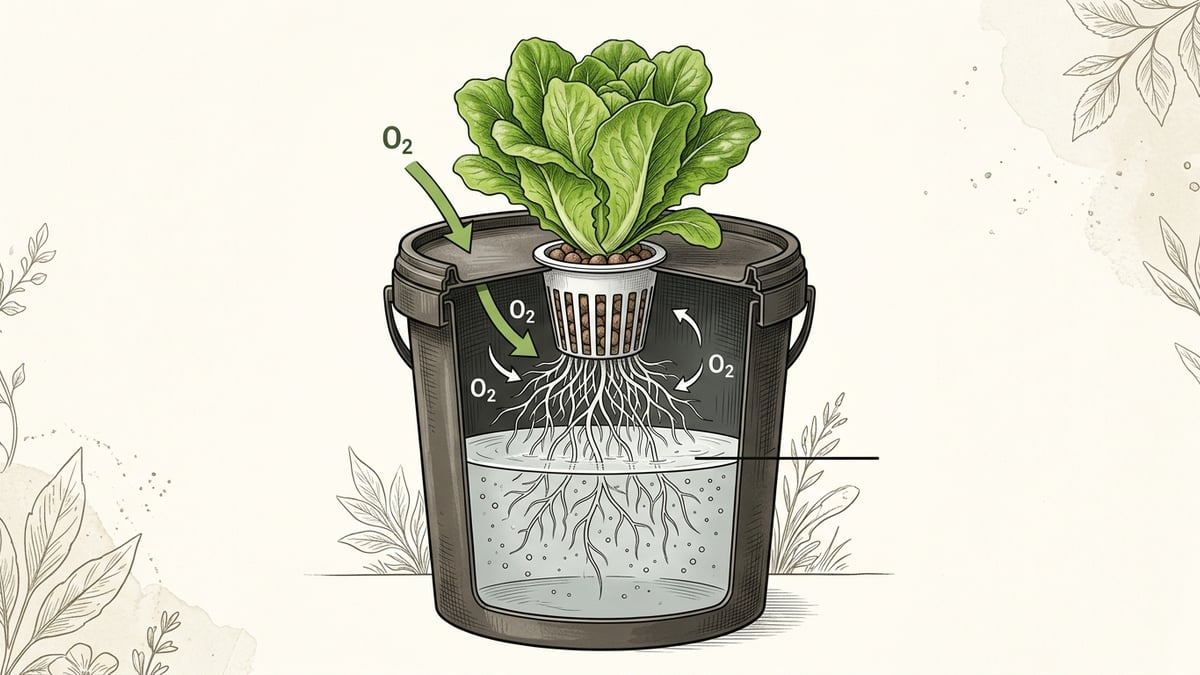
Watch out when topping up. Do not submerge established air roots. Add only enough solution to keep the lowest roots supplied.
What do I need for a Kratky setup?
You need an opaque vessel, lid, net pot, growing plug, seedling, water and hydroponic nutrient. Use a pH test and EC meter if your water or crop is unfamiliar.
A four litre vessel suits one lettuce. Use five to ten litres for a larger herb or pak choi. Long-lived fruiting plants need much larger reservoirs and closer management.
| Item | Beginner specification | Reason |
|---|---|---|
| Container | Opaque, food-safe, 4-10 litres | Blocks algae and holds one crop's water |
| Lid | Rigid and close-fitting | Supports the plant and excludes light |
| Net pot | 50mm for lettuce and herbs | Holds the plug while roots escape |
| Growing plug | Clean, inert and damp | Supports the young seedling |
| Nutrient | Complete hydroponic formula | Water alone cannot feed the crop |
| Light | Bright window or suitable LED | Weak light creates thin growth |

Matt's Pick: AutoPot All-Purpose Plant Food 1L
Best for: a simple one-part feed where the label covers your chosen crop and method.
The mineral formula stays stable in solution and leaves little sediment. Always follow the current label dose.
Price: £27
How do I build a Kratky system step by step?
- Wash the container, lid and net pot with clean water.
- Cut one hole that supports the net pot without letting it fall through.
- Mix nutrient solution using the product label and your starting water.
- Adjust leafy-crop pH to 5.8-6.2 after mixing.
- Fill until the solution touches the bottom 10-15mm of the net pot.
- Place one rooted seedling into the net pot.
- Close every gap that allows light into the reservoir.
- Check the plant and root colour twice each week.
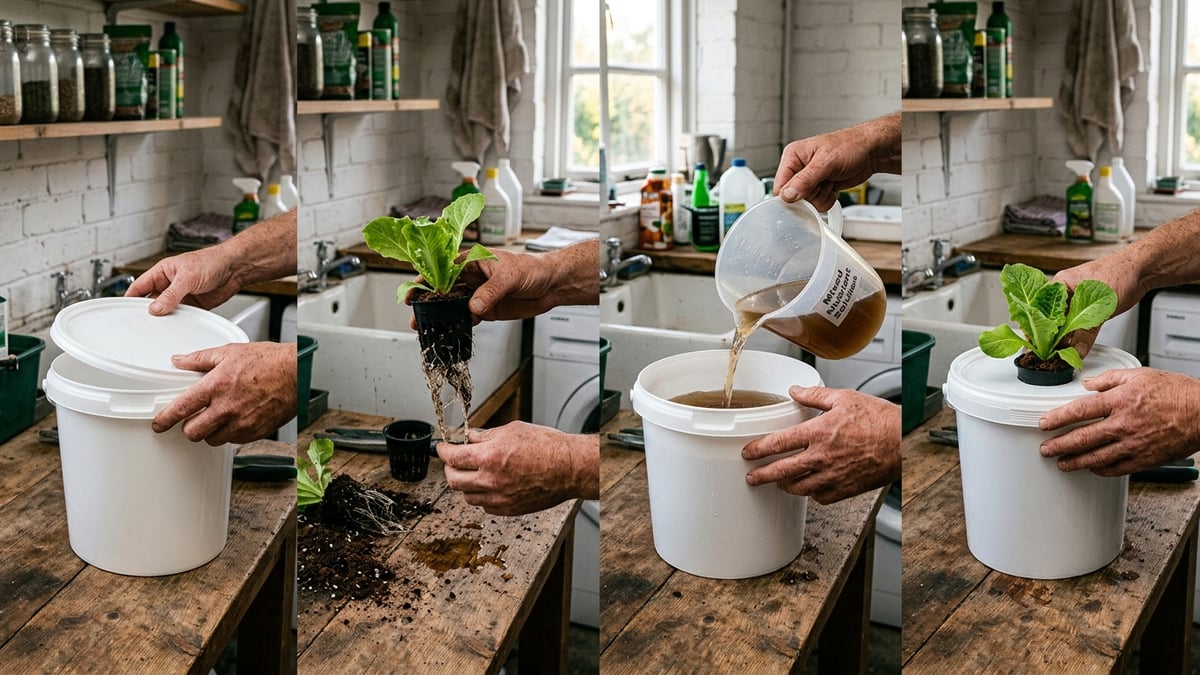
Do not put dry seed directly into a deep net pot. Germinate it in a moist plug first. Transplant when roots have reached the plug's outside edge.
What pH and EC should I use for Kratky lettuce?
Start lettuce at pH 5.8-6.2 and EC 1.2-1.8mS/cm. Young seedlings need the lower end. Mature plants can use the higher end if leaf tips remain healthy.
Oklahoma State lists lettuce at EC 1.2-1.8 and pH 6.0-7.0. Our narrower pH starting band leaves room for upward drift. See its crop EC and pH table.
Measure the starting water before adding feed. Hard UK water can already carry substantial EC. Kratky's 2009 paper warns that unwanted salts concentrate as water is consumed.
What are the best crops for the Kratky method?
Lettuce is the best first crop. Pak choi, basil, coriander, watercress and spring onions also suit passive growing. They finish quickly and need less water than mature fruiting plants.
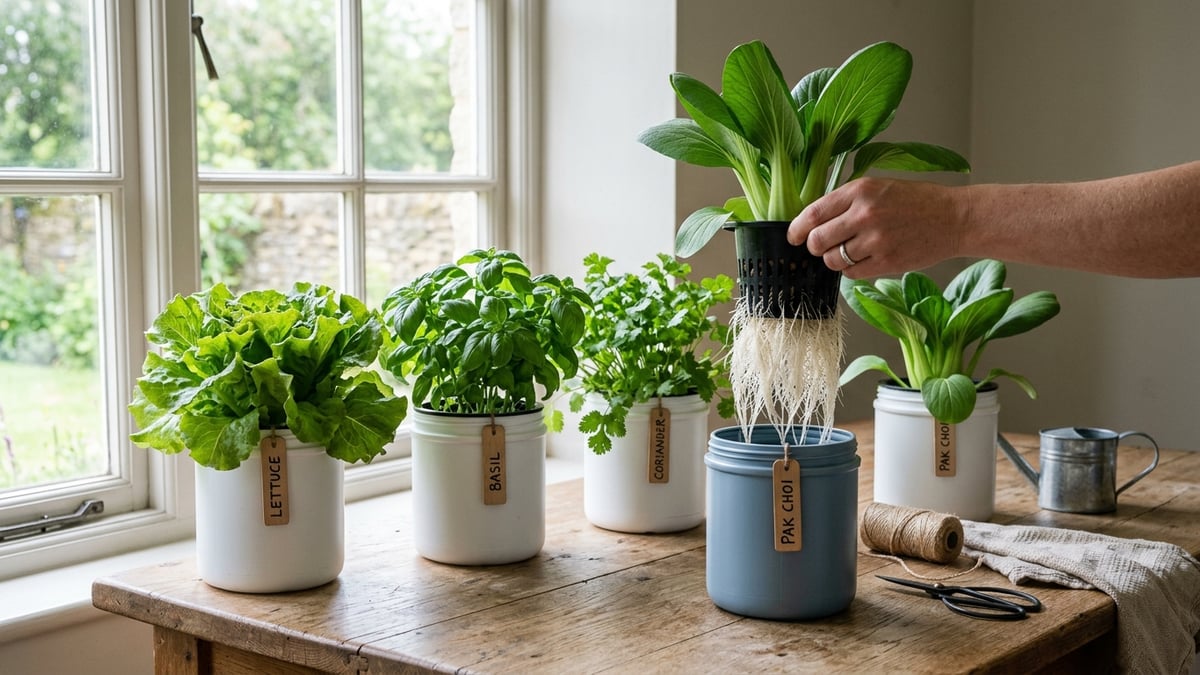
Tomatoes can grow with non-circulating methods, but they are not a sensible first attempt. One plant needs a large reservoir, strong support and a longer feeding plan. Start with lettuce and learn how quickly your room consumes water.
Do Kratky plants need a grow light?
They need adequate light, whether from sun or a lamp. A bright greenhouse may cover spring and summer crops. Indoor winter lettuce usually needs supplemental light for compact growth.
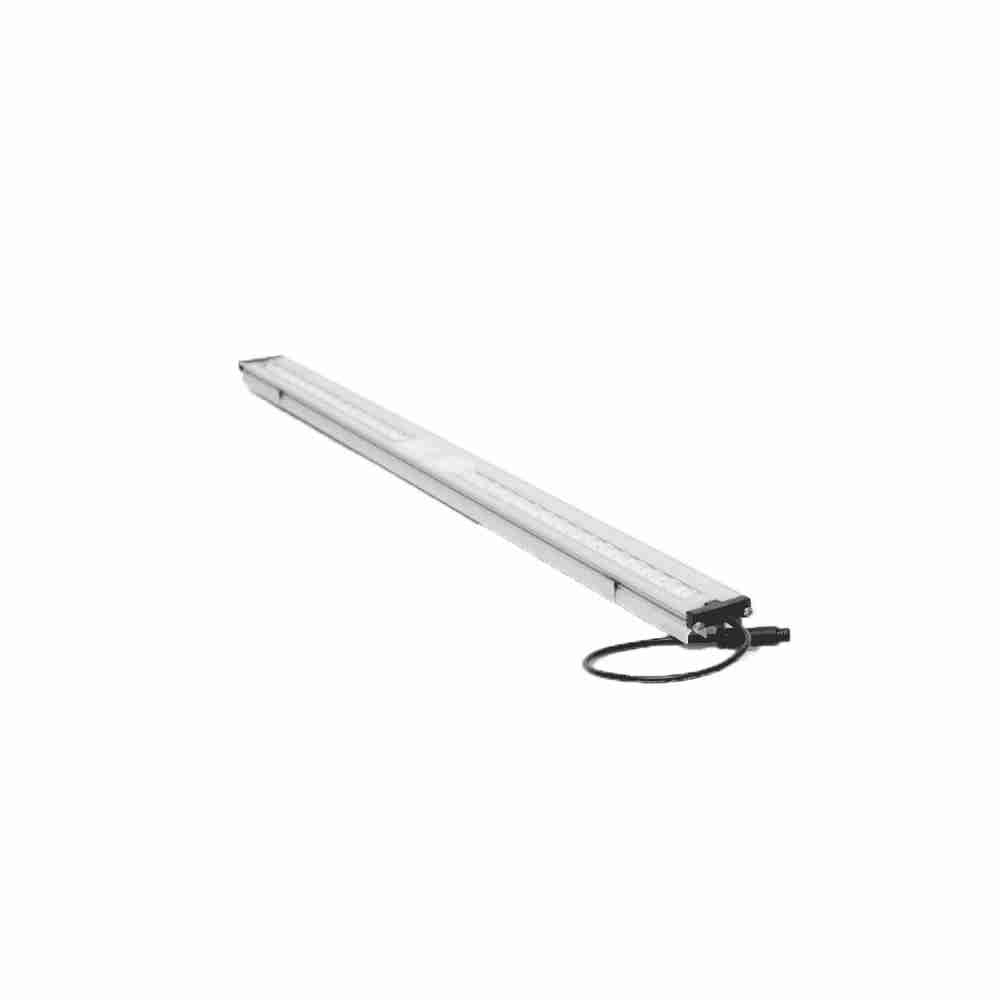
Buy the Sanlight Flex II 10 for £68 →
The 547mm Flex II 10 uses 10W per bar and can hang 15cm above suitable young crops. A driver is sold separately. Plan the complete bar, driver and cable system before ordering.
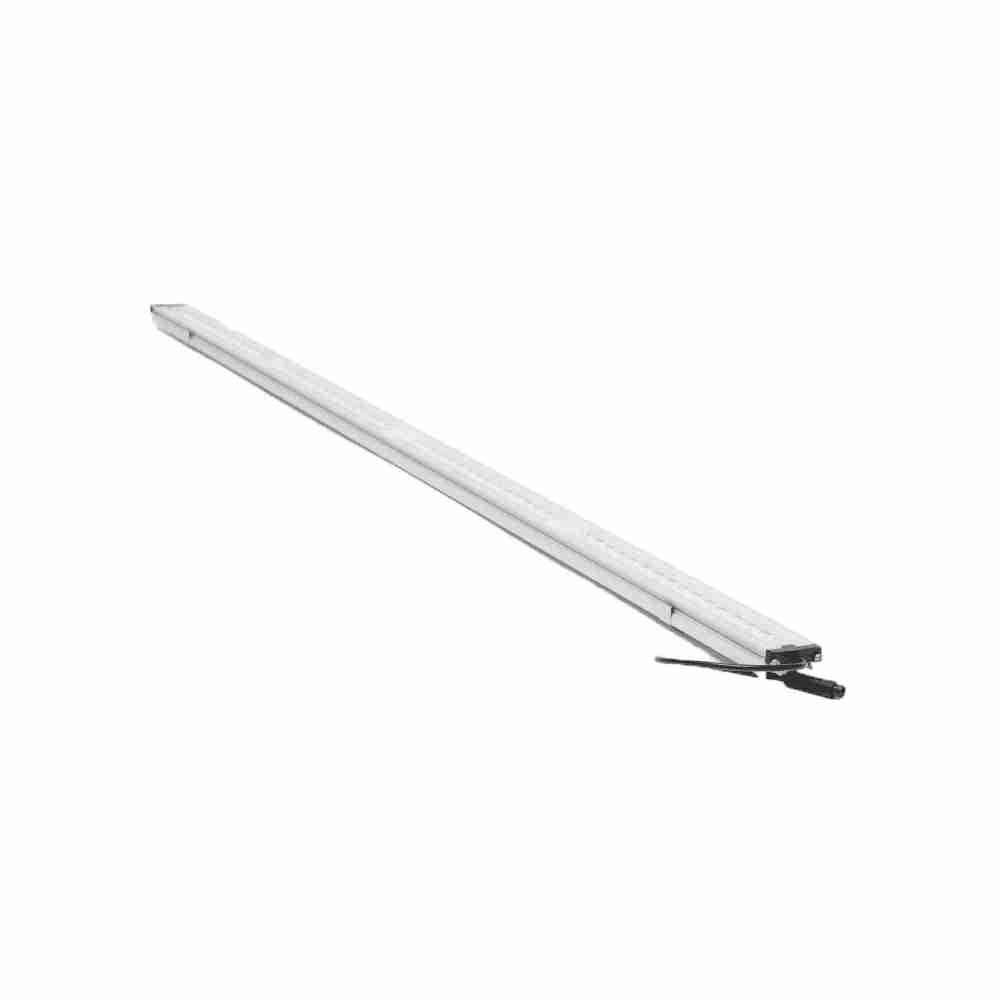
Buy the Sanlight Flex II 20 for £84 →
Use our grow-light distance guide and LED buyer's guide. Lamp distance depends on output, optics and crop response.
Can I use a separate tank with Kratky growing?
A classic single-vessel Kratky setup does not use a header tank. A separate gravity tank changes the water-level behaviour. It may refill the air gap unless a valve maintains a lower level.
A collapsible tank is useful for mixing clean solution or expanding into AutoPot irrigation later. Do not connect it directly to a mature Kratky bucket without controlling the level.

Buy the AutoPot 25 Litre FlexiTank for £44 →
Why are my Kratky roots brown or slimy?
Brown, slimy roots often indicate low oxygen, heat or microbial decay. Healthy new roots are usually pale and smell fresh. Nutrient dyes can stain roots without making them slimy.
Check water temperature, light leaks and the air gap. Remove the failed crop if roots smell rotten. Clean the container before starting again.
Algae means light reaches the nutrient solution. Wrap clear vessels completely or replace them with opaque containers. Do not rely on paint that may flake into the solution.
We do not pretend a passive bucket needs lots of equipment. Kratky's appeal is its simplicity. We stock stable one-part feed and compact lights because those solve genuine gaps. For automatic top-ups, move to a purpose-designed gravity system instead of flooding the Kratky air roots.
- Matt W, Hydroponics UK
Frequently asked questions
Does the Kratky method need an air pump?
No, established upper roots take oxygen from the moist air gap. An air pump turns it into another hydroponic method. Protect the air gap when topping up.
How often should I change Kratky water?
A lettuce crop can finish with its original nutrient solution. Replace foul, overheated or badly imbalanced solution. Clean the vessel between every crop.
Can I grow tomatoes with the Kratky method?
Yes, but tomatoes need large reservoirs and much closer management. Beginners should learn with lettuce or herbs before attempting long-lived fruiting crops.
Can I use a clear jar for Kratky hydroponics?
Only if you block all light from the nutrient solution. Clear reservoirs encourage algae. Use an opaque sleeve or container and inspect through a small covered hatch.
Should I top up a Kratky container?
Top up only enough to keep lower roots supplied. Never return a mature system to its original water line. That can drown established air roots.