Vertical Farming at Home: Grow More in Less Space
Written by Matt W on 13th Jun 2026.
Vertical farming grows plants in stacked tiers instead of across a single flat area, multiplying the yield from one square metre of floor. At home it means a multi-tier grow rack: two, three or more shelves, each with its own light and growing tray. Two tiers double your crop on the same footprint. It suits leafy greens, herbs and seedlings best, and turns a spare corner into a steady supply of fresh food. This guide explains how it works and what you need.
Key Takeaways
- Vertical farming stacks growing tiers to multiply yield from a fixed floor area
- Each tier needs its own light, because a shelf above blocks the daylight from below
- Allow 40 to 60cm of headroom per tier for leafy greens, less for microgreens
- Leafy greens, herbs, microgreens and seedlings are the natural fit; tall fruiting crops are not
- Ebb and flow trays bolt straight onto a modular rack, so you grow the system you already know
- A two-tier rack in a 0.7m x 1.1m footprint can crop more lettuce than a whole garden bed
Grower's Note
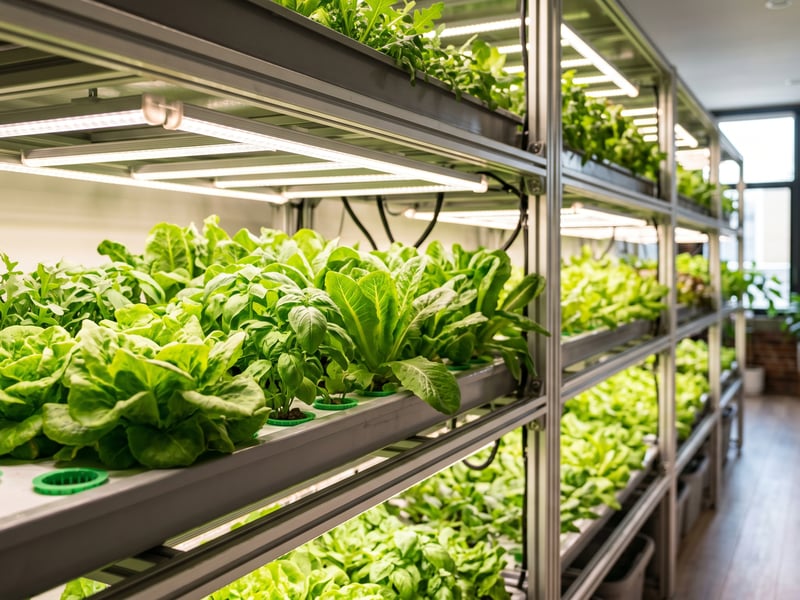
Most people have plenty of vertical space and almost no floor space. That is the whole case for going up. A grow rack turns the air above a worktop into productive growing area. The rule that catches beginners is light: every tier needs its own, because the shelf above casts the one below into shade. Light each level properly and a rack out-grows a windowsill many times over.
What is vertical farming?
Vertical farming is growing crops in stacked layers rather than spread across a single plane. Commercially it means warehouses of shelved racks under LED light, feeding cities from a small footprint. At home the principle is identical, just smaller: a rack with two or more growing tiers, each lit and fed on its own, so a 0.7m wide unit crops like several square metres of bench.
The driver is space efficiency. Land and floor area are the limits on how much you can grow, so growing upward sidesteps both. It pairs naturally with hydroponics, because soil-free trays are light enough to stack and clean enough to live indoors. The result is a steady, year-round harvest from a corner of a room.
How does vertical farming work at home?
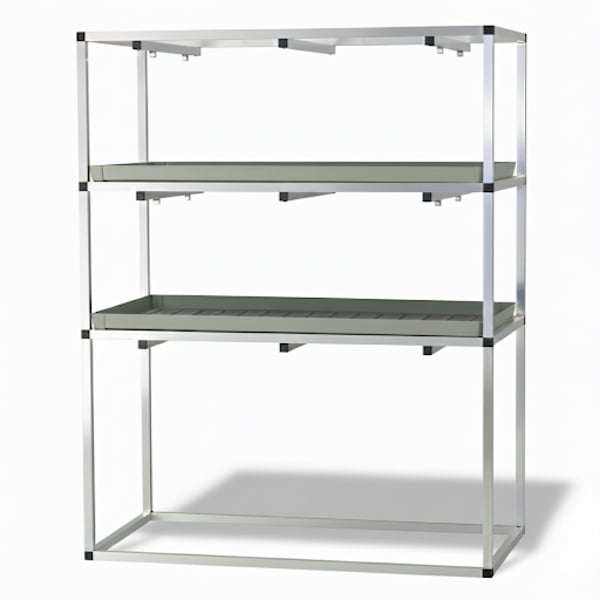
A home vertical farm is a frame holding two or more trays, with a grow light fixed under each upper shelf to light the tier beneath. Each tier runs its own growing system, usually ebb and flow or a thin nutrient film, fed from a shared reservoir below. You harvest the top while the bottom matures, or stagger sowings so something is always ready.
The engineering that matters is light and height. A shelf blocks daylight, so every tier needs a dedicated LED. And leafy crops need 40 to 60cm of clear height to grow into, which sets how many tiers fit your ceiling. Get the spacing and lighting right and each shelf performs like a standalone grow.
How much more can you grow vertically?
The maths is direct: each tier multiplies the floor area. Two tiers double the growing surface on the same footprint, three tiers triple it. A single 1.1 x 0.63m tray gives about 0.7m² of growing area; stack three of them and you have over 2m² standing on the floor space of one. For leafy greens, which crop in 4 to 6 weeks, that is a serious continuous supply from a frame the size of a bookcase.
It is not free yield, because each tier needs its own light and the power that runs it. But per square metre of floor, nothing else comes close. That is exactly why commercial vertical farms exist, and the home version follows the same logic at a smaller scale.
|
Matt's Pick for Going VerticalBest for: turning one square metre of floor into multi-tier growing Why we rate it: this modular rack takes standard 1.1 x 0.63m ebb and flow trays on each level, so you grow the system you already understand, just stacked. Add height extension kits to climb another tier when you want more. It is sturdy aluminium, not flimsy shelving, and the trays drain to a single shared reservoir. Price: £369 |
What do you need for a vertical grow rack?
Four things per tier and two shared across the unit. Each tier needs a frame level, a growing tray, an LED light fixed above it and a feed line. The whole rack shares one reservoir and one pump below. Start with a small modular rack and a couple of trays, prove the routine, then add height kits and tiers. The table compares the routes from a single tray up to a turnkey cabinet.
| Setup | Tiers | Best for | Price |
|---|---|---|---|
| Single ebb and flow tray | 1 | Learning the system first | £62 |
| Compact grow rack 0.52m | 2 | A worktop or cupboard corner | £225 |
| Modular grow rack 1.1m | 2, extends to 3 | The flexible home vertical farm | £369 |
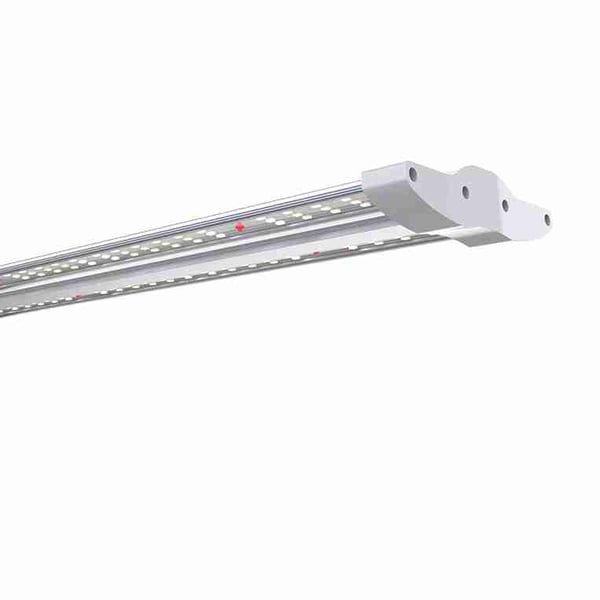
| VS06 vertical farming light | Add-on | Lighting an extra tier cheaply | £58 |
| Multi-layer grow cabinet | Multiple, enclosed | Turnkey leafy-green production | £4,019 |
Browse vertical growing equipment →
Grower's Tip: light every tier, and mind the heat that rises
The shelf above shades the one below, so a single ceiling light leaves your lower tiers leggy and weak. Fit a slim LED bar under each upper shelf. Watch heat too: warm air rises, so the top tier runs hottest. A small fan moving air through the rack keeps every level even and stops the top shelf drying out first.
Which crops suit vertical growing?
Short, fast crops that do not need much headroom. Leafy greens are the headline act: lettuce, spinach, pak choi, chard and kale crop in weeks and stay compact. Herbs such as basil, coriander and parsley thrive on a tier, and microgreens are made for it, cropping in 7 to 21 days. Seedlings and cuttings also love the controlled light of a rack before they move on.
What does not fit is anything tall or fruiting. Tomatoes, peppers and chillies want height and heavy light a tiered shelf cannot give, so grow those in a cabinet instead. For the leafy crops that do suit it, our guides to indoor herbs and salad and growing microgreens are the natural next reads. The hydroponic systems explainer covers what feeds each tier.
"We stock modular racks rather than fixed shelving because growers never stop at one tier. You start with two, get the lighting right, then add a third. The trays are the same ebb and flow trays we sell on their own, so nothing about the method changes as you climb. That is the point: scale up without starting over."
- Matt W, Hydroponics UK
Frequently asked questions
What is vertical farming in simple terms?
Growing crops in stacked layers instead of one flat area. Each tier has its own light and tray, so a small floor footprint produces several times the crop.
Does each shelf need its own grow light?
Yes, because the shelf above blocks the light from below. Fit a slim LED bar under each upper tier or the lower plants grow weak and leggy.
What can you grow on a vertical rack?
Leafy greens, herbs, microgreens and seedlings. Short, fast, compact crops suit tiers. Tall fruiting plants like tomatoes and chillies need a cabinet instead.
How much space do you need between tiers?
Around 40 to 60cm for leafy greens. Microgreens manage on less. The gap must clear the mature crop plus the light fixed above it.
Is vertical growing worth it at home?
Yes, if floor space is your limit, not headroom. A two-tier rack doubles your crop on the same footprint, which is the best yield-per-floor of any method.
Can you use ebb and flow on a vertical rack?
Yes, modular racks are built around ebb and flow trays. The same trays sit on each tier and drain to one shared reservoir, so the growing method stays identical.