NFT vs DWC: Which Hydroponic System Is Better?
Written by Matt W on 20th Aug 2026.
NFT suits repeated lettuce and herb crops in narrow channels. DWC suits fewer plants with larger root systems. DWC is simpler to understand. NFT uses space efficiently, but loses water flow immediately when its pump stops.
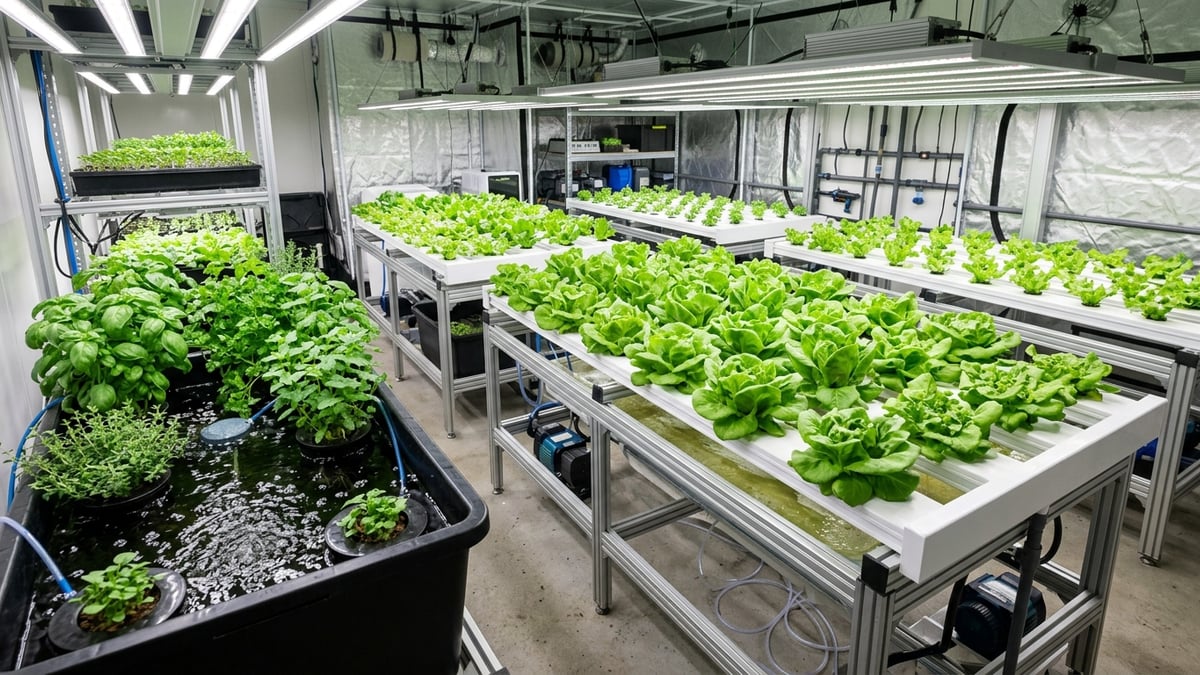
NFT vs DWC at a glance
| Question | NFT | DWC |
|---|---|---|
| Best crop fit | Lettuce, basil and compact herbs | Lettuce, basil and larger individual plants |
| Root position | Lower roots touch a moving film | Roots hang in aerated solution |
| Main pump | Submersible water pump | Air pump and diffuser |
| Failure speed | Fast when flow stops | Slower while oxygen declines |
| Cleaning | Channels, inlets and return | Bucket, lid, airline and diffuser |
| Expansion | Add channels and rebalance flow | Add buckets or a recirculating loop |
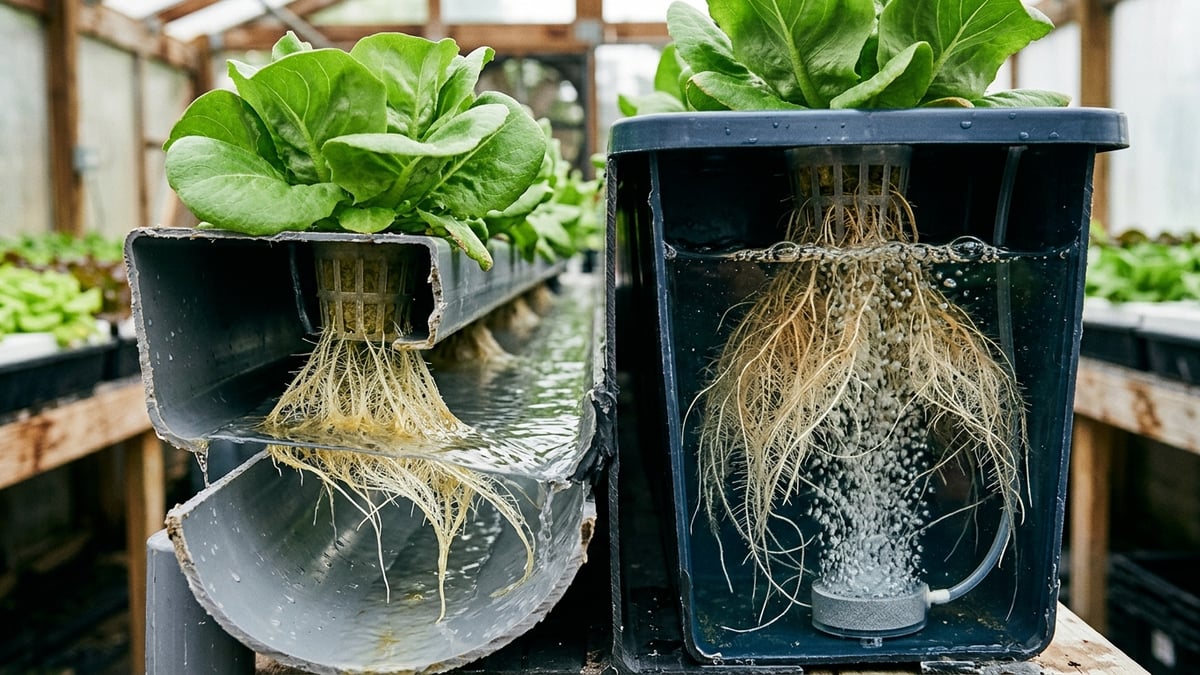
NFT means nutrient film technique. A pump lifts solution to slightly sloping channels. DWC means deep water culture. It suspends roots in a deeper, aerated nutrient solution.
Read our NFT setup guide for channel slope and flow. Our DWC setup guide covers water level and first-week checks.
Choose by crop, not by fashion
NFT makes sense when you want several similar leafy plants. Each channel needs even flow and sensible spacing. Large roots can obstruct the return or create deep pools.
DWC gives each plant more root volume. A bucket or lidded tote can support bushier basil and other larger plants. The container must exclude light and hold enough solution for stable readings.
Which system is easier for a beginner?
A single DWC container has fewer water connections. You can see bubbles, lift the lid and inspect every root. That makes cause and effect easier to learn.
NFT adds channel slope, inlet flow, return capacity and pump lift. None is difficult alone. Together, they create more places for a small error.
Passive growing is simpler again. Compare it in our Kratky guide if silence and no mains pump matter most.
Pump failure changes the answer
An NFT root mat holds little free solution. A stopped pump therefore interrupts delivery at once. Warm, dry rooms shorten the safe response time.
DWC roots remain submerged when the air pump stops. Dissolved oxygen then declines rather than disappearing instantly. Restore aeration promptly and inspect the roots.
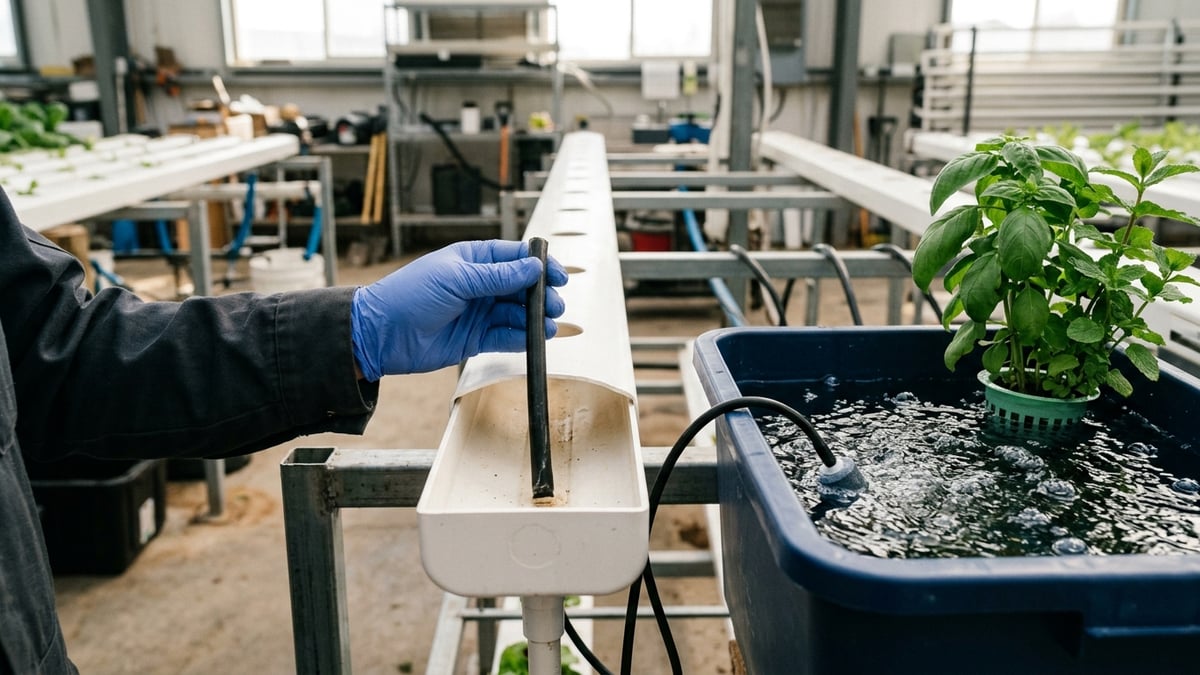
Use a correctly sized pump, clean inlets and accessible electrics. A non-return valve protects an air pump placed below water level. Placing the pump above the reservoir is safer.
Running costs and maintenance
Both systems recirculate nutrient solution. Electricity use depends on actual pump wattage, not the system name. A multi-channel NFT layout may need one water pump. DWC needs continuous air delivery to each container.
NFT cleaning takes longer because roots enter channels and fittings. DWC containers are simpler to scrub, although diffusers can clog. Opaque lids reduce algae in both systems.
Compare them against your room
Low shelves favour NFT because channels need little vertical root depth. Allow space below them for the reservoir and return pipe.
DWC buckets use more floor height. Their lids must also lift without striking a lamp. Measure this service space before choosing a container.
Noise has two sources. Air pumps can vibrate against hard shelves. NFT returns can splash into the reservoir. Soft pump feet and a correctly positioned return help.
Heat changes both systems. A small reservoir warms quickly, while a large volume changes slowly. Keep tanks away from radiators and direct sunlight.
Plan the harvest pattern
NFT channels work well with plants of similar age and size. Their nutrient demand and root spread develop together.
Mixed ages can be awkward. Mature roots may restrict flow before young plants need harvest. Separate channels make staggered sowing easier.
DWC containers isolate plants more clearly. One crop can be removed without pulling a long root mat from a shared channel.
For regular salads, NFT offers useful planting density. For occasional larger herbs, separate DWC containers are usually easier to manage.
A sensible first purchase
Do not buy by outlet count alone. Match airflow to reservoir depth, diffuser resistance and the number of containers. The AutoPot quad-outlet pump gives four separate airline connections for a divided setup.

Buy the AutoPot quad-outlet air pump for £36 →
Browse watering systems and reservoir equipment before finalising pipework.
My practical recommendation
I would start with one DWC container when learning active hydroponics. It exposes the important variables without asking you to balance several channels.
Choose NFT first when lettuce volume and shelf space are the real goals. Measure delivered flow at the channel inlet before adding plants.
Pre-purchase checklist
- List the crops and their mature size.
- Measure floor space and usable height.
- Choose where the reservoir can be cleaned.
- Check that replacement pumps are available.
- Plan how spills stay away from sockets.
- Decide how often you can inspect flow.
Frequently asked questions
Is NFT better than DWC?
Neither is universally better. NFT favours compact rows; DWC favours simpler, deeper root zones.
Which uses less water?
Both recirculate water. Actual use depends on plant mass, leaks, evaporation and reservoir management.
Can I grow tomatoes in NFT?
Possible, but heavy plants and large roots make DWC or media systems easier to support.
Does NFT need an air pump?
Not always. Good return agitation helps, while warm or crowded reservoirs may benefit from aeration.
Can DWC run without bubbles?
Not as normal DWC. Use continuous aeration or choose the passive Kratky method.
Which system is quieter?
That depends on pump vibration, water return noise and how equipment is mounted.
Related reading
Technical references: Virginia Tech NFT guidance and Virginia Tech DWC guidance.