Hydroponic pH Keeps Rising? Find the Cause Fast
Written by Matt W on 20th Aug 2026.
Hydroponic pH often rises because bicarbonate alkalinity in the source water neutralises acid. Growing plants can also shift the solution's ion balance. A faulty meter, algae and a small reservoir can accelerate the drift. Keep most crops between pH 5.5 and 6.5. Calibrate first, then compare an adjusted water sample with the live reservoir over 24 hours before adding more acid.
Key takeaways
- Most hydroponic crops suit pH 5.5 to 6.5.
- Water alkalinity above 75 ppm can cause repeated upward drift.
- Take four readings over 24 hours instead of correcting one reading repeatedly.
- Log pH, EC and water level together because the three trends reveal different causes.
- Shade every reservoir opening because algae can create light-linked pH movement.
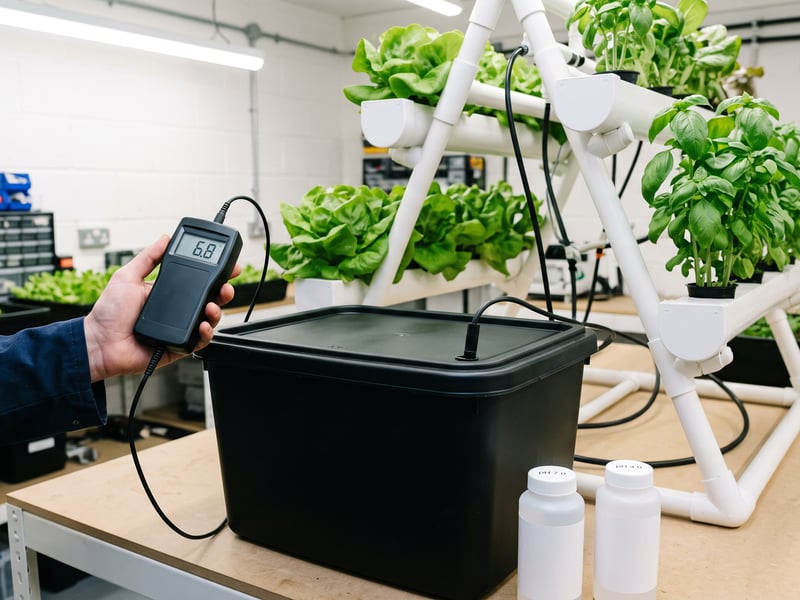
Browse reservoir and irrigation equipment
Grower's note
I treat rising pH as a trend, not a single bad number. I calibrate the meter, record EC and water level, then wait. Four timed readings tell me far more than four quick doses of pH Down. If the untreated evidence is missing, every correction becomes guesswork.
Why does pH keep rising in hydroponics?
Rising pH means the solution is becoming less acidic, but the cause is not always the same. In many UK homes, bicarbonates in hard tap water neutralise each acid dose. The water can therefore rebound after looking correct initially. Oklahoma State University notes that alkalinity above 75 ppm can raise nutrient-solution pH.
Plant feeding changes pH too. Nitrate uptake can produce an alkaline root-zone response, while ammonium tends to acidify it. The exact movement depends on crop, nutrient formula and growth rate. A University of Florida hydroponic study found different basic or acidic responses across eight vegetable and herb species.
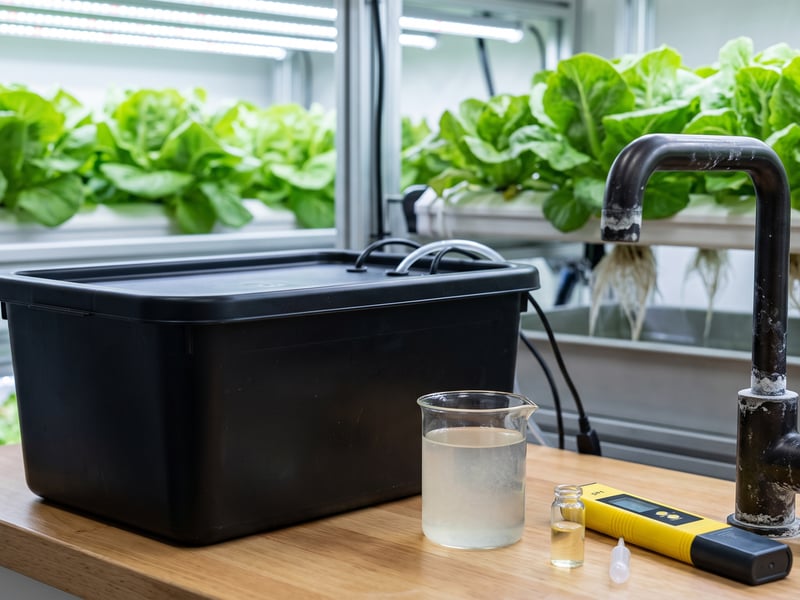
How can you tell whether hard water is causing it?
Test alkalinity, not just the tap water's starting pH. pH describes the water at that moment. Alkalinity describes how strongly bicarbonates resist an acid correction. Two water supplies can start at pH 7.5 but require very different amounts of acid.
Check your water supplier's report for alkalinity or bicarbonate. The figure may be listed as mg/L CaCO3. If it is absent, use an aquarium KH test or a laboratory water test. The Oklahoma State hydroponics guide recommends water analysis before setting nutrient targets.
Do not switch straight to domestic softened water. Ion-exchange softeners commonly replace calcium and magnesium with sodium. Reverse-osmosis water is a different treatment, but it needs mineral-aware nutrient management.
What is the 24-hour pH drift test?
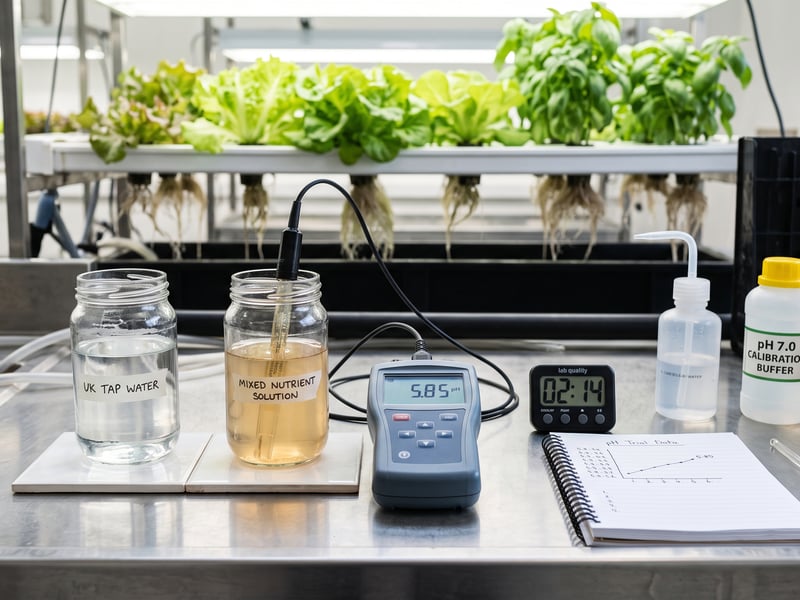
The test separates source-water rebound from changes caused inside the growing system. Use a clean two-litre container and the same water used in the reservoir. Keep the sample beside the system so temperature is similar.
- Calibrate the meter using fresh pH 7.0 and pH 4.0 buffers.
- Mix two litres of water with the normal nutrient dose.
- Wait 30 minutes, stir, then adjust the sample to pH 5.8.
- Record sample and reservoir pH at 0, 2, 8 and 24 hours.
- Record reservoir EC and water level at the same times.
If the plant-free sample rebounds, water chemistry or nutrient buffering is responsible. If only the reservoir rises, inspect crop demand, volume, roots and light leaks. This comparison avoids treating every upward movement as a hard-water problem.
| Observed trend | Most likely cause | Next check |
|---|---|---|
| Sample and reservoir both rise | Alkalinity or nutrient-buffer reaction | Check bicarbonate or KH |
| Sample stable, reservoir pH rises and EC falls | Active nutrient uptake | Check crop stage and reservoir volume |
| pH and EC rise while water falls | Water use exceeds nutrient uptake | Top up correctly, then rebalance |
| Movement follows the light cycle | Algae or biological activity | Block light and inspect surfaces |
| Repeat readings disagree | Meter, probe or calibration fault | Retest fresh buffer solution |
 |
Matt's pick for a small external reservoirBest for: storing up to 50 litres of prepared feed beside a compact watering system. Why we rate it: the opaque, collapsible tank keeps the solution shaded and stores flat between crops. Important: more volume slows sudden change but does not remove bicarbonate alkalinity. Price: £49 |
Can algae make hydroponic pH rise?
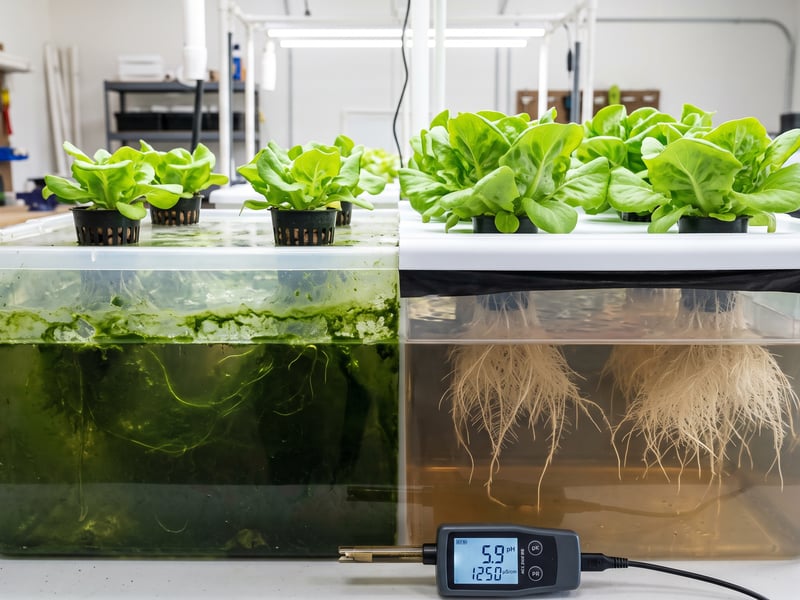
Yes, algae can produce a light-linked pH swing. During photosynthesis it removes dissolved carbon dioxide, which can raise pH. The effect often changes after lights go off. Green film, slippery surfaces and exposed nutrient solution strengthen this diagnosis.
Cover the reservoir and every unused planting hole. Use opaque tubing where practical. Clean affected surfaces during the next full solution change. Do not rely on repeated acid doses while light still reaches the water.
How do you stop hydroponic pH rising?
Fix the identified driver and make small corrections only after the solution is fully mixed. A stable plant-free sample means the source water is probably not the main culprit. A rising sample points towards alkalinity or the nutrient mix.
- Meter fault: clean, hydrate and calibrate the probe before replacing it.
- High alkalinity: test the water and follow the nutrient or acid manufacturer's directions.
- Small volume: increase working volume where the system allows it.
- Algae: exclude light, clean the reservoir and remove dead material.
- Normal uptake: log the daily movement and correct in measured steps.
Missouri Extension gives pH 5.5 to 6.5 as a rule of thumb for most hydroponic crops. Its nutrient-solution guide also explains why the required acid depends on alkalinity.
Safety note: never add concentrated acid near roots
Follow the product label and wear the stated protective equipment. Pre-dilute only when the manufacturer permits it. Add small measured amounts to circulating water, then wait before retesting. Never mix acid directly with concentrated nutrients.
When should you replace the nutrient solution?
Replace it when corrections stop behaving predictably, contamination appears or the planned change interval arrives. Repeated topping-up cannot restore the original nutrient ratio. The RHS advises replacing hydroponic solution about every two weeks, while crop demand and system design can shorten that interval.
Our pH and EC overview covers daily targets. Use the reservoir sizing guide when volume is the suspected cause. DWC growers should also check aeration and water level in the UK DWC setup guide.
“A pH correction is useful only when you know what moved the number. The water-only comparison prevents needless dosing. It also tells you when a larger reservoir will help, and when it will not.”
Matt W, Hydroponics UK
Frequently asked questions
Is it normal for hydroponic pH to rise?
A gradual rise can be normal during active plant growth. Calibrate the meter and track pH with EC before deciding whether intervention is needed.
Why does pH rise again after adding pH Down?
Bicarbonate alkalinity often neutralises the acid over time. Test alkalinity or run the 24-hour sample comparison before adding another dose.
What pH should a hydroponic reservoir be?
Most crops suit pH 5.5 to 6.5. Individual crops and nutrient products may specify a narrower working range.
Does aeration raise pH in hydroponics?
Aeration can change pH as dissolved gases reach equilibrium. A continuing daily rise usually needs water, nutrient and plant-demand checks too.
Can a small reservoir cause rapid pH drift?
Yes, a small water volume changes faster under the same plant demand. Increase working volume only after ruling out alkalinity and meter error.
Should I use softened water for hydroponics?
Avoid sodium-softened water unless its mineral content is verified. Reverse osmosis is different and requires a suitable nutrient plan.