DWC Root Rot: Brown Roots and Recovery
Written by Matt W on 20th Aug 2026.
Brown DWC roots are not automatically root rot. Nutrients can stain firm roots. Root rot is more likely when roots feel slimy, smell unpleasant, shed tissue or accompany wilting.
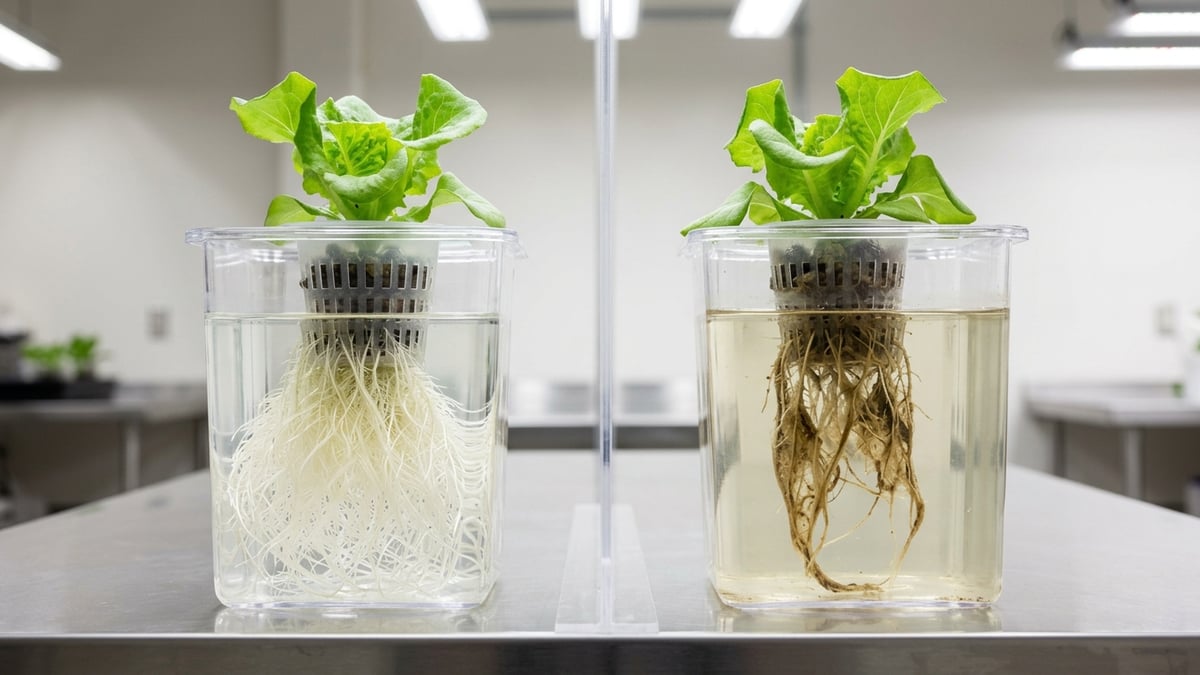
Check these signs first
| Sign | Likely staining | Likely root damage |
|---|---|---|
| Texture | Firm strands | Soft, slimy or shedding |
| Smell | Neutral or nutrient-like | Stale or unpleasant |
| Spread | Even colour after feeding | Patches advancing from damaged roots |
| Plant | Growing normally | Wilted, stalled or yellowing |
| Water | Clear but tinted | Cloudy, foamy or debris-filled |
Lift the lid in good light. Do not diagnose from one photograph alone. Feel a small root section and check whether the outer tissue slips away.
Our DWC setup guide explains the normal water level and root-zone arrangement.
Why DWC roots deteriorate
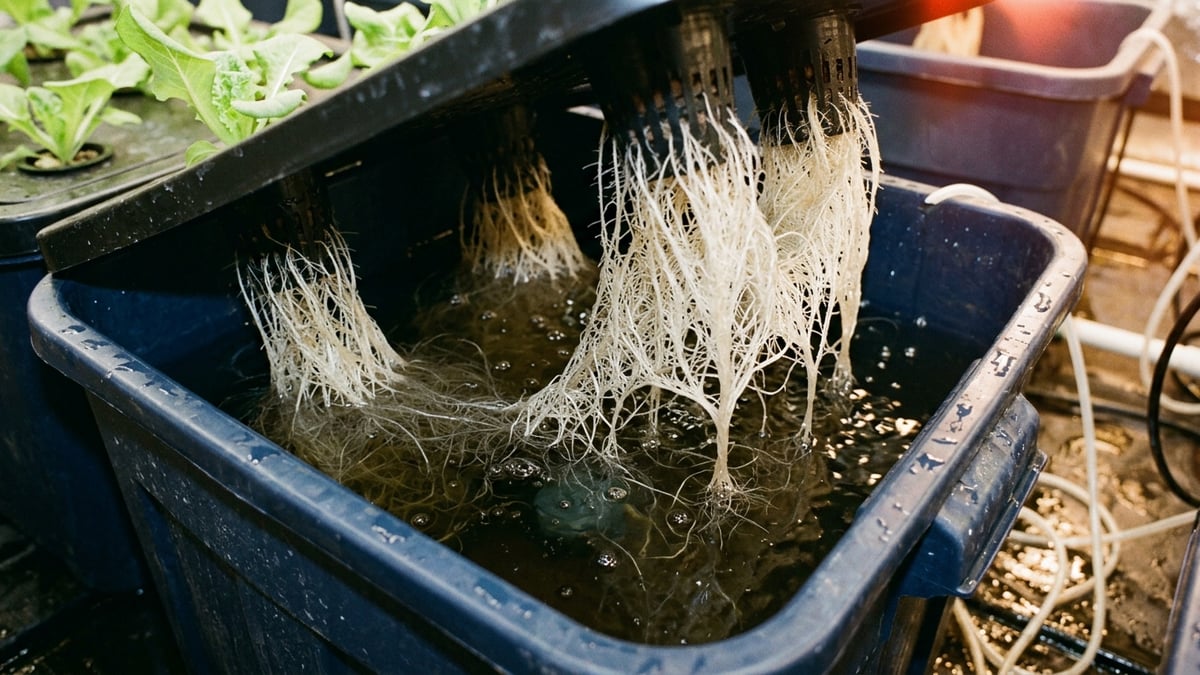
Roots need oxygen as well as water. Warm nutrient solution holds less dissolved oxygen. A weak pump, blocked diffuser or deep reservoir can further reduce delivery.
Light entering the container supports algae. Dead roots and organic residue feed microbes. Crowded roots create slow-moving pockets around the centre.
A calm recovery sequence
- Move the plant away from unaffected systems.
- Record pH, EC and solution temperature.
- Inspect the pump, hose and diffuser.
- Prepare fresh nutrient solution in a clean container.
- Remove detached debris without tearing firm roots.
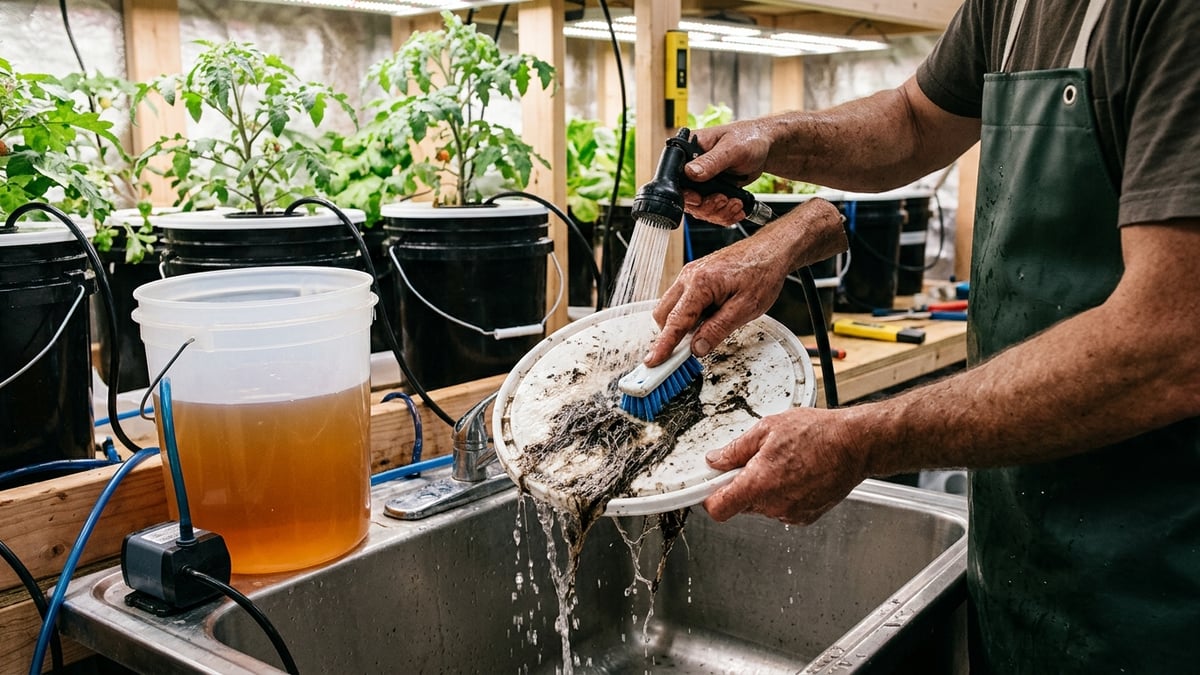
- Clean and rinse the reservoir and lid.
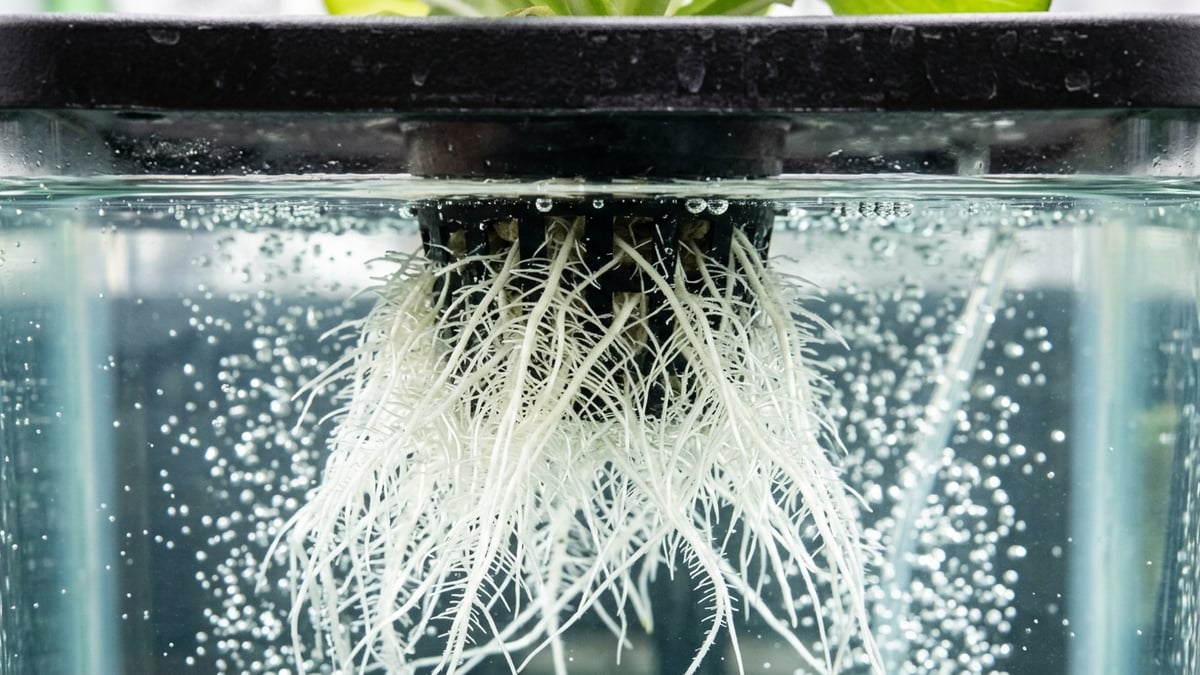
- Restore strong, even aeration.
- Monitor new root tips and leaf posture.
Use clean tools if trimming clearly dead tissue. Avoid stripping away every discoloured root. The plant still needs intact roots to recover.
What not to do
Do not make several chemical changes at once. You will lose the ability to identify which correction helped or harmed.
Do not scrub healthy roots aggressively. Fine root hairs are easy to damage and difficult to distinguish under poor lighting.
Do not return dirty airline, net pots or measuring tools to fresh solution. Clean the complete contact path.
Do not share equipment between affected and healthy reservoirs. Label separate jugs and pipettes until the affected plant recovers.
Do not hide a persistent smell with fragrance. Locate trapped organic matter in lids, pipes, diffusers and corners.
Check temperature without chasing one magic number
Measure the solution, not only room air. Lamps, pumps and direct sunlight can warm a dark container differently.
If temperatures rise each afternoon, increase shading and room airflow. A larger reservoir changes temperature more slowly than a small bucket.
Use our reservoir-size guide to build more buffer into the next setup.
Restore aeration properly
A diffuser can still bubble while delivering poorly. Compare its output with a clean spare at the same depth.
The AutoPot twin-outlet pump can feed two separate diffusers when its delivery matches the reservoirs.

Buy the AutoPot twin-outlet air pump for £33 →
Our air-pump sizing guide covers depth, pressure loss and outlet balancing.
Watch recovery over several days
Old damage may remain brown after conditions improve. Look for new pale tips, firmer roots and better leaf posture.
Record pH, EC, temperature and water level at the same time daily. A stable trend matters more than one reading.
Reduce plant stress while roots rebuild. Avoid major pruning, intense heat and abrupt nutrient changes during the same period.
Replace the solution if it becomes cloudy or smelly again. Repeated decline means the underlying source remains in the system.
Protect other containers
Shared recirculating water can move debris and organisms between plant sites. Isolate the affected site when the design allows.
Clean hands and tools before touching healthy roots. Start inspections with the healthiest reservoir and visit the suspect one last.
Keep splash from one air stone out of neighbouring lids. Small droplets can travel farther than expected around a busy shelf.
After harvest, dismantle fittings that trap residue. A clean-looking bucket can still hold material inside grommets or hose ends.
Keep a simple incident record
Write down the first symptom, date and affected container. Add temperature, pH, EC and recent maintenance changes.
Photograph roots under the same lighting each day. Consistent pictures make new tips and spreading damage easier to compare.
Record which parts were cleaned or replaced. This prevents an old diffuser or hose returning unnoticed during the next crop.
The notes also reveal repeated seasonal patterns. Afternoon heat or a monthly cleaning delay may become obvious after two incidents.
Prevent the next problem
- Exclude light from every hole and gap.
- Keep the air pump above water level.
- Inspect bubbles and roots every day.
- Remove dropped leaves promptly.
- Clean equipment between crop cycles.
- Avoid letting water expose a running submersible device.
Browse watering and reservoir equipment when replacing worn parts.
Frequently asked questions
Are brown DWC roots always rotten?
No. Nutrient staining can colour roots while they remain firm, clean-smelling and productive.
What does DWC root rot smell like?
An unpleasant stale smell alongside slime and tissue breakdown supports a root-rot diagnosis.
Should I cut off every brown root?
No. Remove only clearly dead, slipping tissue with clean tools and preserve firm roots.
Can a plant recover from root rot?
It may recover when healthy tissue remains and the underlying conditions are corrected promptly.
Does more air cure root rot?
Better aeration helps, but cleanliness, temperature and damaged tissue also require attention.
Why do roots turn brown after nutrients?
Some nutrient ingredients stain roots. Check texture, smell, water clarity and plant growth.
Related reading
Reference: Virginia Tech DWC guidance.