DWC Air Pump Size: A Practical UK Guide
Written by Matt W on 20th Aug 2026.
Size a DWC air pump by delivered airflow, outlet count and reservoir depth. Do not rely on watts alone. Each container needs visible circulation across its root zone, with enough margin for airline and diffuser resistance.
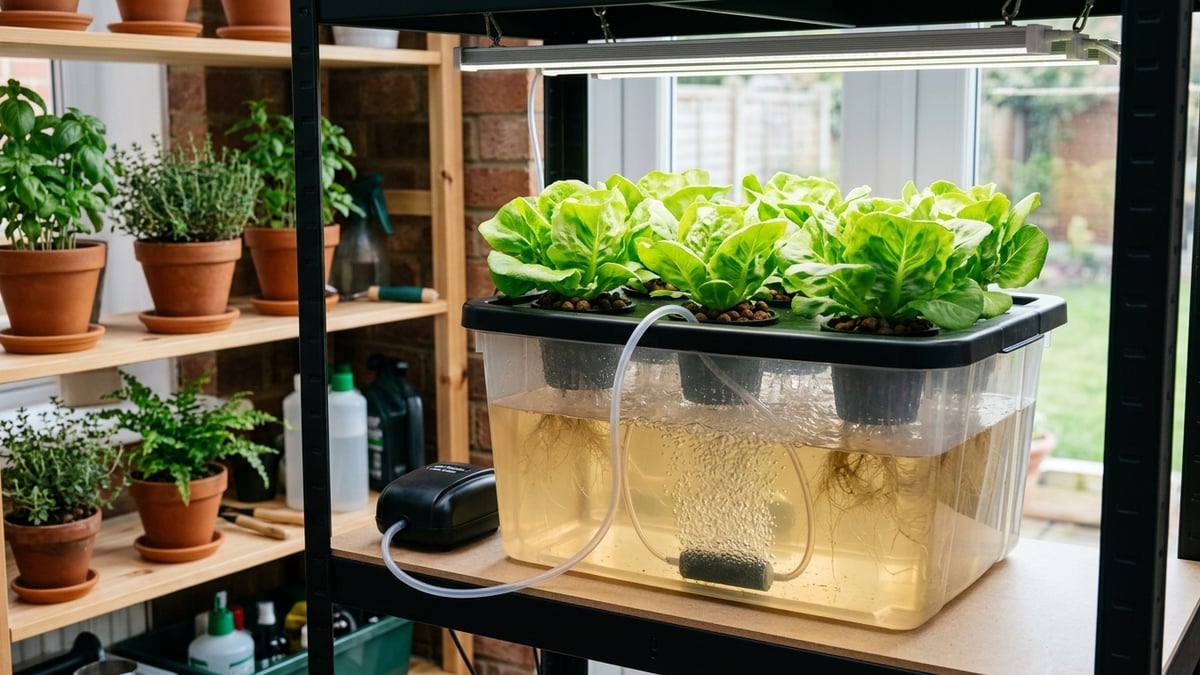
What size air pump does DWC need?
There is no universal litres-per-hour answer. Diffuser type, water depth, hose length, non-return valves and manifolds all reduce delivered airflow.
Start with one controllable outlet per container. Choose a pump with spare output, then judge circulation after the full system is assembled.
| Setup | Starting arrangement | Check before planting |
|---|---|---|
| One small bucket | One outlet and one diffuser | Bubbles spread under the root area |
| Two containers | Twin outlet or balanced manifold | Neither line steals most airflow |
| Four containers | Four outlets with equal hose runs | All diffusers remain active |
| Deep reservoir | Higher-pressure pump | Flow remains strong at working depth |
Our DWC setup guide explains water level, light exclusion and daily checks.
Why the pump label is not enough
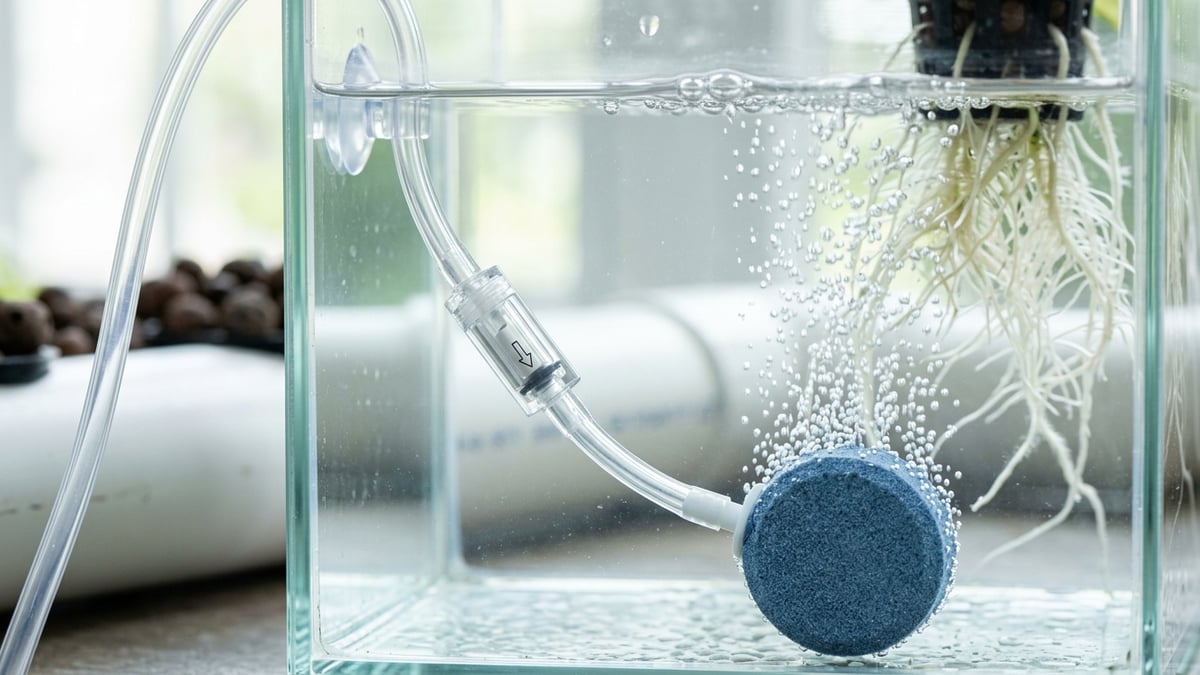
Published airflow is normally measured under favourable conditions. A diffuser beneath deeper water creates back pressure. Fine-pore stones also need pressure before producing bubbles.
Long narrow hose, tight bends and dirty diffusers add resistance. Compare pumps using airflow and pressure data when both are available.
Use this sizing process
- Measure the working solution depth in every container.
- Count the diffusers that will run at the same time.
- Keep hose runs similar where outlets share one pump.
- Add a valve only where balancing is needed.
- Test with water at full working depth.
- Confirm bubbles reach the whole root area.
A twin-outlet model is often easier than splitting one small outlet. The AutoPot twin-outlet air pump is active and in stock.
How many air stones should you use?
One well-positioned diffuser can serve a small container. A long tank may need two so circulation reaches both ends.
More stones do not create more pump capacity. They divide available air and may weaken every outlet. Add diffusers only with enough delivery.
A worked two-bucket example
Imagine two identical DWC buckets on one shelf. Each has one diffuser beneath the centre of its lid.
A twin-outlet pump avoids an extra splitter. Cut equal hose lengths and place both diffusers at the same working depth.
Fill both buckets, start the pump and compare the bubble fields. Swap the hoses if one side looks weaker.
If weakness follows the hose, inspect its valve and diffuser. If it stays at the same pump outlet, check the pump documentation.
Add plants only after both buckets circulate evenly. Recheck when root mass begins surrounding each diffuser.

Signs your DWC needs more air
- Bubbles stop after the diffuser is lowered.
- One outlet weakens when another is connected.
- Roots become slimy or smell unpleasant.
- Water circulates only around the diffuser.
- Plants wilt despite correct pH and solution strength.
Brown colour alone is not proof of disease. Nutrients can stain firm roots. Use texture, smell and plant response in your diagnosis.
Follow our DWC brown-root troubleshooting guide when roots feel soft or smell stale.
Single, twin or multi-outlet?
A separate outlet for each container makes balancing clearer. It also avoids a cheap manifold becoming the narrowest point.
The AutoPot single-outlet model suits one airline. Its live price is inserted automatically below.

Buy the AutoPot single-outlet air pump for £27 →
See more components under watering systems.
Airflow during warm weather
Warmer solution holds less dissolved oxygen. Increasing bubbles cannot remove the heat source, although it may improve circulation.
Measure solution temperature during the warmest part of the day. Shade the reservoir and improve room ventilation where needed.
Do not place frozen bottles into a crowded root zone without cleaning them. Rapid local cooling can also create uneven conditions.
A larger covered reservoir changes temperature more slowly. It still needs adequate airflow across the whole volume.
Control noise without restricting air
Place the pump on a stable rubber mat and keep its intake clear. Do not wrap it in insulation, which can trap heat.
Hanging pumps can transfer vibration through hooks and shelves. A level surface with soft feet is usually simpler.
Listen for a new rattle or hum. A sound change can reveal a loose cover, blocked intake or worn diaphragm.
Keep the model number nearby so replacement parts match correctly.
Maintenance that preserves airflow
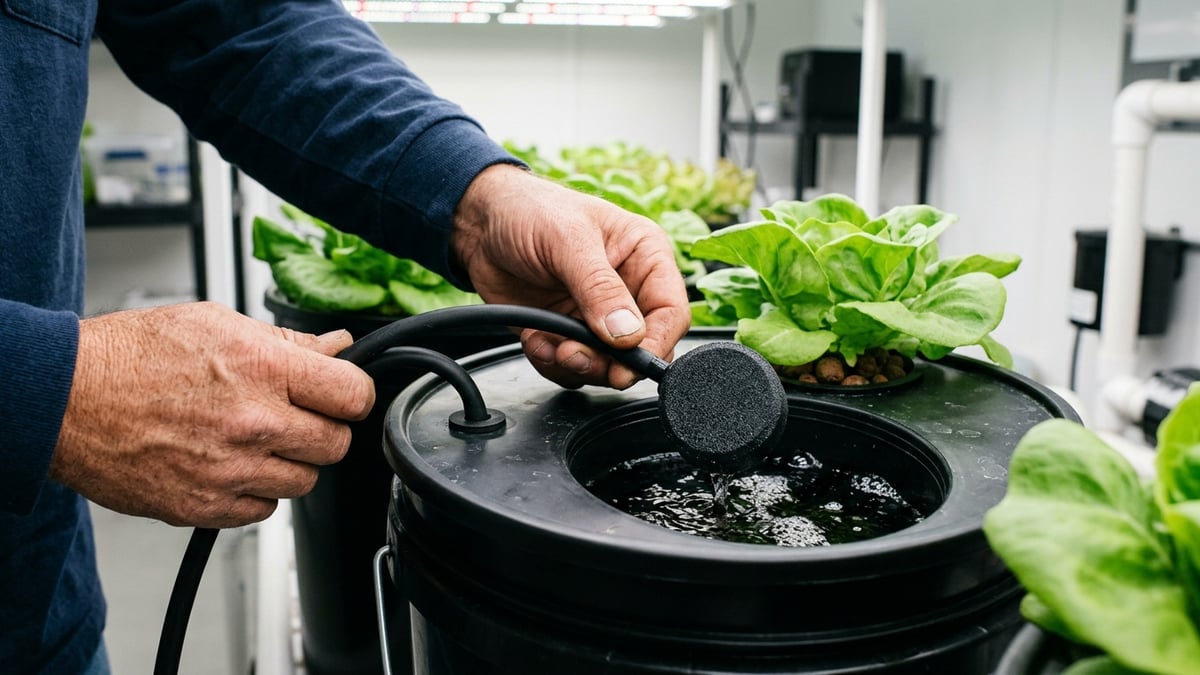
Inspect hoses for water, kinks and loose joints. Clean or replace diffusers when bubble coverage declines. Keep the pump intake free from dust.
Do not wash a running electrical pump. Disconnect it first and follow its instructions. Keep spare hose and a diffuser ready.
Frequently asked questions
Can a DWC air pump be too powerful?
Yes. Excess turbulence can splash stems, increase noise and waste electricity. Use controlled, even delivery.
Should bubbles touch the roots?
They should circulate oxygenated solution throughout the root zone. Direct bubble contact is not the sole aim.
Can one pump run four buckets?
Yes, when pressure and total delivered airflow remain adequate across four balanced outlets.
Should the air pump run overnight?
Yes. Standard DWC needs continuous root-zone aeration, including during the dark period.
Why is one air stone weaker?
Check hose length, depth, valves, blockages and diffuser resistance before blaming the pump.
How often should I replace an air stone?
Replace it when cleaning no longer restores even bubbles at the normal working depth.
Related reading
Reference: Virginia Tech DWC system guidance.