Hydroponic Reservoir Size: Litres per Plant
Written by Matt W on 20th Aug 2026.
A larger hydroponic reservoir changes more slowly, but capacity alone does not guarantee stability. Size the tank for plant demand, pump clearance, maintenance access and a safe operating range.
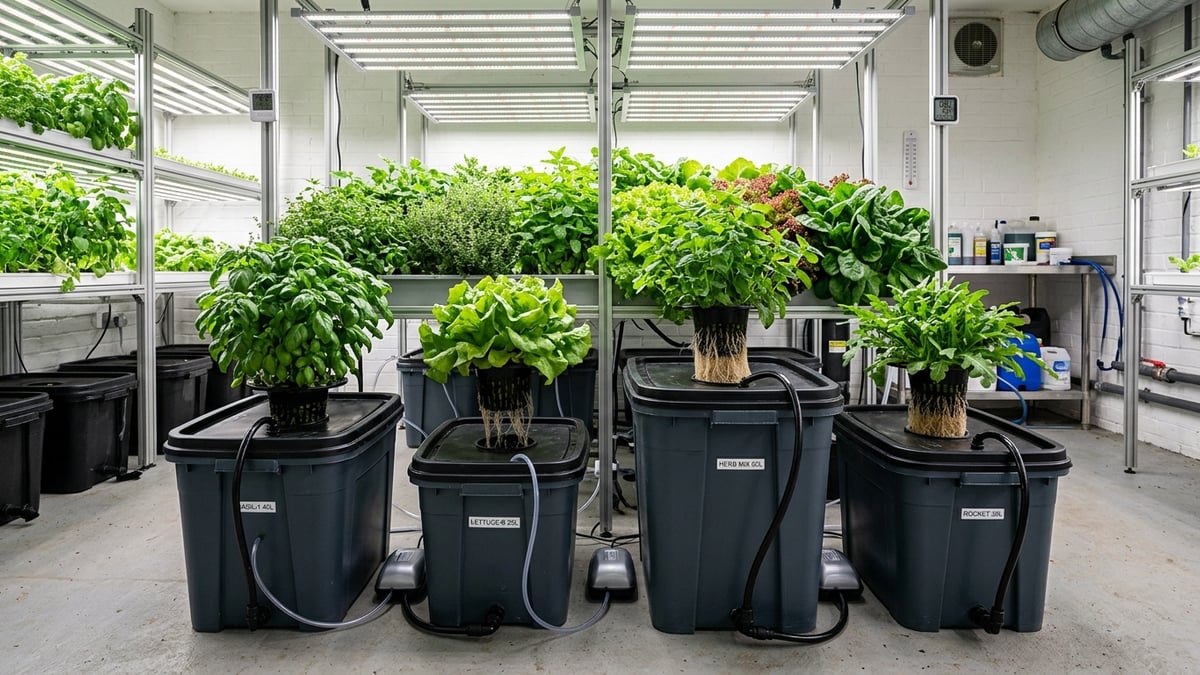
Start with usable litres
A tank advertised as 47 litres may not hold 47 working litres. Leave space below the lid and above a submersible pump’s minimum level.
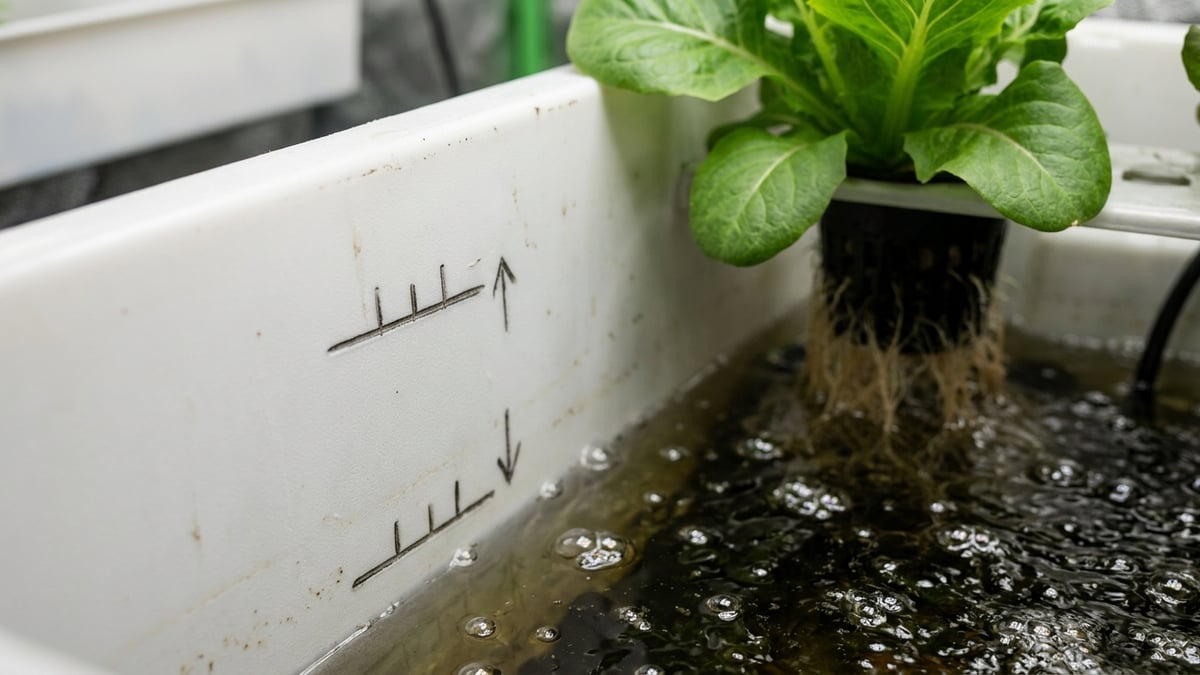
Roots, pipe returns and internal fittings also displace water. Mark minimum and maximum operating levels after the system is assembled.
| Question | Why it matters |
|---|---|
| How many plants? | More leaf area usually increases daily water use |
| Which crop? | Fruiting crops create greater peak demand than seedlings |
| Which system? | DWC holds roots in solution; NFT stores solution below channels |
| How often can you check? | Long gaps require more reserve capacity |
| Where is the pump? | Submersible pumps need safe water coverage |
A practical sizing method
- Estimate the system’s normal working volume.
- Add the expected daily plant demand.
- Allow for the longest interval between checks.
- Add pump and return safety margin.
- Confirm the full tank is supported safely.
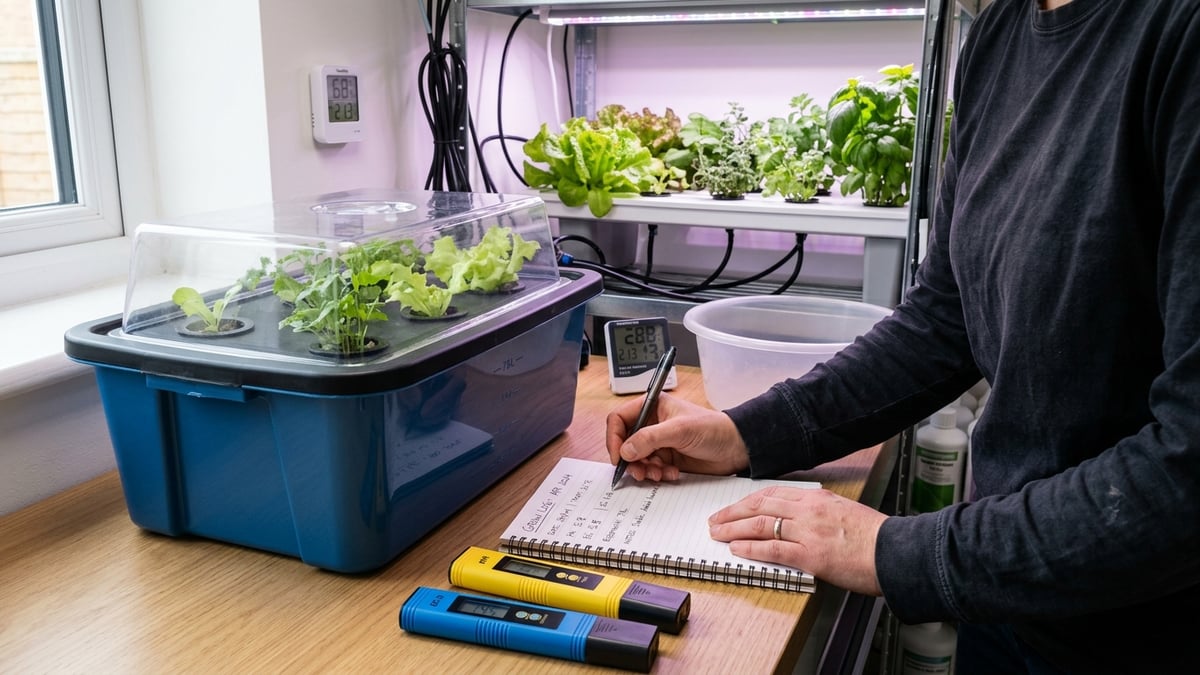
Record water use for seven days once plants establish. Your measured peak demand is more useful than a generic litres-per-plant rule.
Reservoir size by system
DWC: each container is the root zone. Allow root space, an air gap where appropriate and enough depth for circulation.
NFT: the tank must hold the returning solution without overflowing. It must also cover the pump while channels are full.
Ebb and flow: the reservoir must supply the flooded tray and accept all drainage. Our ebb-and-flow guide explains the flood cycle.
Kratky: the initial volume supports the crop while the level falls. Read our Kratky guide before topping up.
Two worked examples
A compact NFT shelf might circulate 25 working litres and lose three litres between checks. A submerged pump needs five litres of coverage.
Its minimum practical capacity is therefore above 33 litres. Extra room is needed for water returning after the pump stops.
A DWC container may hold one plant directly. The roots displace increasing volume, so brim capacity overstates the usable solution space.
Fill the empty system, mark its working level and record each measured addition. That gives a reliable baseline for later top-ups.
Why bigger can be easier
More water creates a buffer against rapid pH, EC and temperature changes. It also increases total weight and takes longer to replace.
One litre of water weighs about one kilogram. A 47-litre working volume therefore needs substantial support before adding the tank itself.
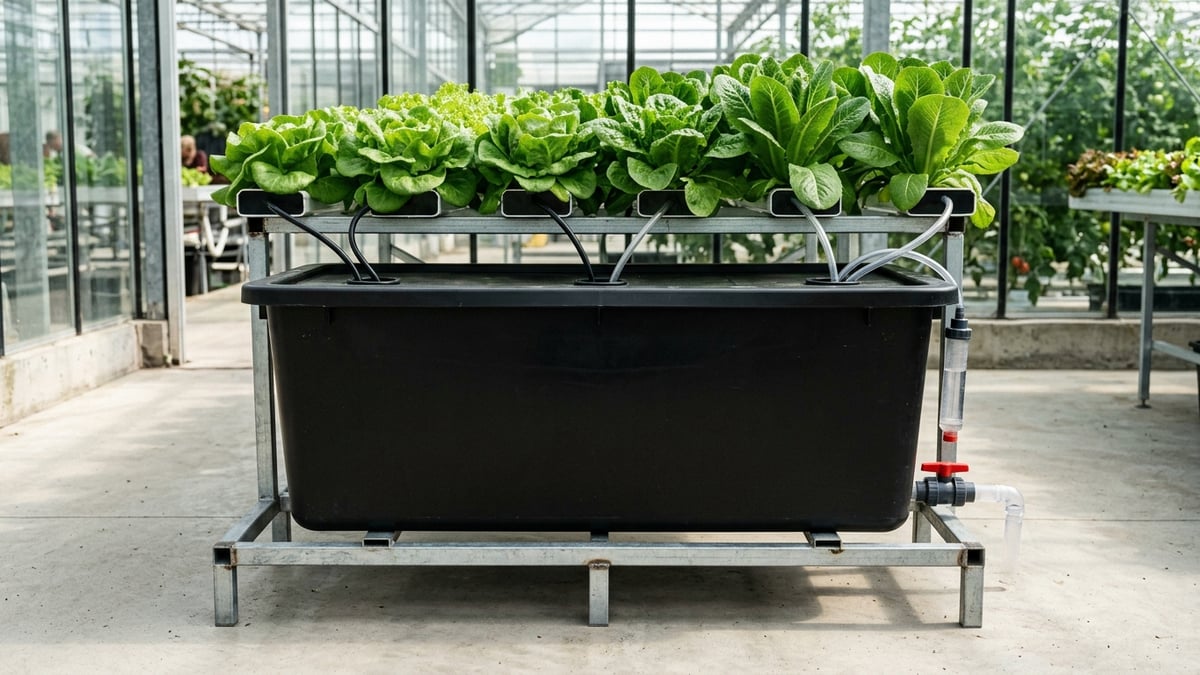
Choose the tank around maintenance
A lid should lift without moving plants or lights. The drain, pump and filter should remain reachable. Awkward tanks are cleaned less often.
Opaque walls restrict light and algae. Avoid containers that previously held unsuitable chemicals. Food-safe materials are the sensible choice.
Top-ups are not full changes
Replacing evaporated or consumed water restores volume. It does not remove accumulated salts, debris or an imbalanced nutrient ratio.
Measure pH and EC after the fresh water circulates. Adding concentrated nutrient directly beside roots or a pump intake can create local extremes.
Plan a full change around crop stage, water quality and measured behaviour. Clean accessible sediment while the reservoir is empty.
Keep notes on every addition. Unexpectedly high loss may indicate a leak rather than thirsty plants.
A useful compact reservoir
The AutoPot 47-litre reservoir includes a lid and grommet. It is active and in stock, with a live price below.

Buy the AutoPot 47-litre reservoir for £36 →
Smaller layouts can use the 30-litre AutoPot reservoir. Browse the wider watering systems range.
Check the reservoir daily
- Read the level at the same time.
- Confirm the pump remains covered.
- Look for leaks around every fitting.
- Check pH and EC after circulation.
- Inspect the return for roots and debris.
- Keep the lid closed between checks.
Positioning checklist
- Support the full water weight.
- Keep the base level and stable.
- Leave room to remove the lid.
- Route mains connections above spill level.
- Avoid sunlight and radiator heat.
- Make drain and pump access straightforward.
- Protect hoses from sharp bends.
Allow for crop growth
Seedlings use little water compared with mature plants. A reservoir that seems generous in week one may need daily attention later.
Plan around expected peak leaf area, not only the starting plant count. Warm airflow can increase demand further.
Root mass also occupies space and may surround filters. Inspect internal clearance before adding more sites to an existing tank.
If top-ups become inconvenient, increase reservoir capacity or shorten the interval between checks. Never let pump protection depend on memory.
Frequently asked questions
How many litres per hydroponic plant?
Use crop demand and measured peak use. Generic per-plant figures cannot cover every system.
Can a reservoir be too big?
Yes. Excess size adds weight, cost and cleaning work without solving poor circulation.
Should the tank be completely full?
No. Maintain a marked working range with space for returns and operating changes.
Does a larger tank stabilise pH?
It slows concentration changes, although water, nutrients and root activity still affect pH.
Where should a reservoir sit?
Use a level, supported, accessible location away from direct sun and electrical hazards.
How often should I top it up?
Check daily. Top-up frequency depends on crop size, temperature, humidity and working volume.
Related reading
References: Virginia Tech NFT guidance and Virginia Tech DWC guidance.