How to Grow Strawberries Hydroponically in the UK
Written by Matt W on 13th Jun 2026.
You can grow strawberries hydroponically all year in the UK, and they reward it with clean, slug-free fruit. Use an everbearing variety for continuous cropping, feed at pH 5.5 to 6.2 and EC 1.4 to 1.8, and give 12 to 16 hours of strong light. The one job nature does outdoors that you must do indoors is pollination: no bees means a soft brush on every flower. This guide walks through variety, system, feed, light and pollination.
Key Takeaways
- Everbearing or day-neutral varieties fruit repeatedly, the right choice for indoor growing
- Feed at pH 5.5 to 6.2 and EC 1.4 to 1.8 mS/cm, using a bloom-stage nutrient
- Strawberries need brighter light than leafy greens: 12 to 16 hours of strong LED
- Indoors there are no pollinators, so hand-pollinate each open flower with a soft brush
- An ebb and flow tray suits strawberries well, keeping crowns above standing water
- Expect fruit roughly 8 to 12 weeks from established plugs, then repeat cropping
Grower's Note
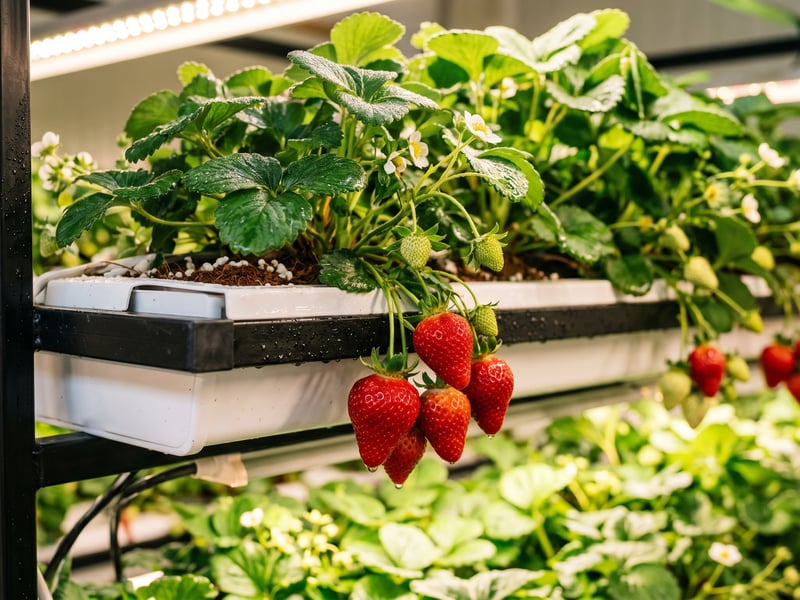
Strawberries are the crop that converts people to indoor growing. Outdoors they fight slugs, rain and a short season. Indoors, hydroponically, they fruit clean and on your schedule. The catch nobody mentions is pollination. Without insects, an unpollinated flower makes a small, misshapen berry. Brush each flower and you get the big, even fruit the supermarket charges a fortune for. Two minutes a day, and it is the difference between a crop and a disappointment.
Can you grow strawberries hydroponically?
Yes, and they take to it well. Strawberries have shallow, fibrous roots that suit a soil-free tray, and they crop earlier and cleaner without soil pests. Commercial growers raise most UK glasshouse strawberries hydroponically in raised gutters for exactly these reasons. At home the same logic applies on a smaller tray: cleaner fruit, no slugs, and fruiting through winter when outdoor plants are dormant.
The plant is also compact, so it fits a tray or a tier on a rack. That makes strawberries one of the best fruiting crops for a small indoor setup, alongside herbs and salad. The difference is that strawberries flower and fruit, which raises the bar on light and adds the pollination job.
Which strawberries grow best hydroponically?
Everbearing or day-neutral varieties. Unlike June-bearing types, which crop in one heavy flush tied to daylight length, everbearers flower and fruit repeatedly through the season regardless of day length. That suits indoor growing under a fixed light schedule, giving a steady trickle of fruit rather than one short glut. Start from cold-stored runners or plug plants for the fastest route to fruit.
Buy certified disease-free stock. A hydroponic system is clean by design, and starting with healthy plugs keeps it that way. One tray of a dozen everbearing plants supplies a household with fresh berries for months.
What system is best for hydroponic strawberries?
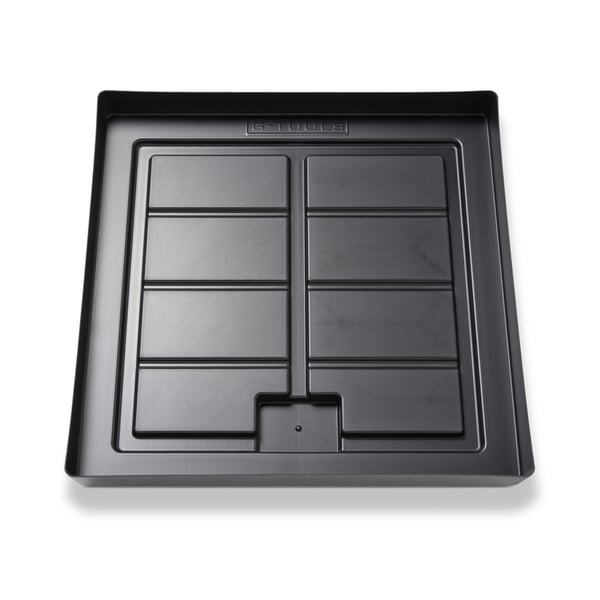
Ebb and flow is the easy, reliable choice. It floods the tray to feed the roots, then drains so the crowns never sit in water, which is important because a waterlogged strawberry crown rots. A grow table holds the tray at a comfortable working height and lets fruit hang clear. Drip systems also work well, feeding each plant to demand. Whichever you choose, our explainer on hydroponic systems covers the differences.
|
Matt's Pick for StrawberriesBest for: a first tray of a dozen everbearing strawberry plants Why we rate it: a compact ebb and flow tray is the cleanest way to grow strawberries indoors. It floods to feed, then drains so the crowns stay dry and rot-free. Set it on a grow table at waist height and the fruit hangs over the edge, clean and easy to pick. Pair it with a reservoir, pump and timer to complete the system. Price: £59 |
What pH and EC do strawberries need?
Hold pH between 5.5 and 6.2, and EC between 1.4 and 1.8 mS/cm. Strawberries are moderate feeders: too strong a solution scorches the leaf edges and sours the fruit, too weak and the berries stay small and pale. Move to a bloom-stage nutrient once flowers appear, because flowering and fruiting demand more potassium and phosphorus than leafy growth. A reliable meter keeps both numbers honest.
The full feeding routine, mixing order and reservoir management is in our guide to nutrients, pH and EC. The kit below is what a strawberry tray needs alongside the system itself.
| What you need | Why | Our pick | Price |
|---|---|---|---|
| Ebb and flow tray | Feeds roots, keeps crowns dry | 0.52m tray | £59 |
| Grow table | Working height, fruit hangs clear | 0.52m grow table | £155 |
| Bloom nutrient | Potassium for sweet, sized fruit | TriPart Bloom | £9 |
| Grow light | 12 to 16 hours of strong light | Sanlight Flex II 20 | £84 |
| pH & EC meter | Keep feed in the right band | Combination digital meter | Compare current meters |
How much light do strawberries need?
Twelve to sixteen hours of strong light a day, noticeably brighter than leafy greens. Fruiting takes energy, and dim light gives you leaves and runners instead of berries. A good LED bar over the tray supplies it without the heat of old lighting. Strawberries do not need the brutal intensity of a fruiting tomato, but they want more than a salad crop, so do not under-light them.
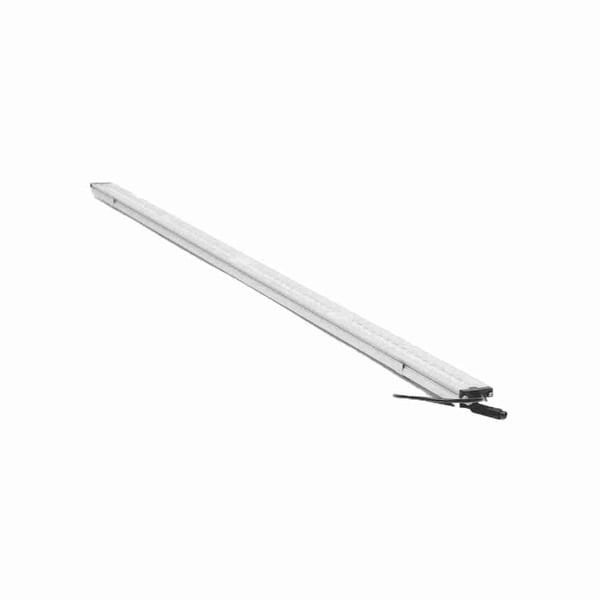
Running costs matter once a light is on 12 hours or more a day, so size the LED to the tray rather than over-buying. Our breakdown of LED grow light running costs does the electricity maths.
Grower's Tip: pollinate by hand, every flower
Indoors there are no bees, and an unpollinated strawberry flower makes a tiny, lopsided berry. Once a day, brush the centre of each open flower with a soft artist's brush, moving from bloom to bloom to spread the pollen. A gentle fan helps too. Do this and you get full, even fruit. Skip it and you get the deformed berries that put people off growing indoors.
How long until hydroponic strawberries fruit?
Roughly 8 to 12 weeks from established plug plants to the first ripe fruit, then repeat cropping from everbearers. Cold-stored runners are quicker to flower than seed, which can take a year. Once a plant settles into a lit, fed routine it flowers in flushes, so staggering a few plants keeps fruit coming rather than arriving all at once.
Pinch off the first flowers on a young plant so it builds roots and leaves before fruiting. It feels wrong, but a plant allowed to establish first crops far more heavily over the season than one rushed into early fruit.
"Strawberries are the crop we most often hear back about, because the first clean, hand-pollinated berry in January sells the whole hobby. We point people at an ebb and flow tray and a bloom nutrient, and we always, always mention the brush. The kit is simple. The pollination is the bit that makes the difference between fruit and frustration."
- Matt W, Hydroponics UK
Frequently asked questions
Can you grow strawberries hydroponically indoors?
Yes, all year, with cleaner fruit than outdoors. Soil-free trays avoid slugs and soil disease, and an everbearing variety fruits through winter under a grow light.
What EC do hydroponic strawberries need?
Between 1.4 and 1.8 mS/cm. Strawberries are moderate feeders. Too strong scorches leaves and sours fruit; too weak gives small, pale berries.
Do indoor strawberries need pollinating by hand?
Yes, because there are no bees indoors. Brush each open flower daily with a soft brush. Unpollinated flowers make small, misshapen fruit.
How much light do hydroponic strawberries need?
12 to 16 hours of strong LED a day. Fruiting needs more light than leafy greens, so do not under-light them or you get leaves instead of berries.
Which strawberry variety is best for hydroponics?
An everbearing or day-neutral variety. These fruit repeatedly regardless of day length, suiting a fixed indoor light schedule far better than June-bearing types.
How long do hydroponic strawberries take to fruit?
About 8 to 12 weeks from established plug plants. Pinch off the first flowers so the plant establishes, then it crops in repeated flushes through the season.